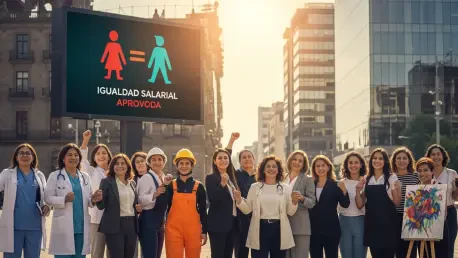

Mexico is currently navigating a profound legislative transformation as the Senate advances a series of sweeping reforms aimed at dismantling the deep-seated wage inequalities that have historically marginalized women in the workforce. This shift marks a departure from purely symbolic gestures, moving instead toward a rigorous, data-driven framework designed to institutionalize transparency across all sectors of the national economy. By amending Article 86 of the Federal Labor Law, the government intends to replace the theoretical promise of “equal pay for work of equal value” with an enforceable legal mandate that demands accountability from both public and private employers. This initiative, championed by Senator Ruth González and the Green State Party, reflects a growing recognition that systemic compensation disparities cannot be rectified through voluntary corporate social responsibility alone. Rather, the state must play an active role in monitoring pay structures and sanctioning non-compliance to ensure that economic fairness becomes a fundamental pillar of the modern Mexican labor market.
Establishing a National System of Economic Indicators
The cornerstone of this legislative push is the creation of a sophisticated national indicator system specifically calibrated to track and analyze the gender pay gap with unprecedented precision. The Ministry of Labor and Social Welfare (STPS), in collaboration with the Ministry of Finance (SHCP), is now tasked with developing a standardized methodology that moves beyond broad national averages to examine granular data sets. This system will scrutinize compensation figures based on specific industry sectors, hierarchical levels within organizations, and geographic regions to identify where disparities are most concentrated. By focusing on the evolution of wages over time, lawmakers aim to address the fluid nature of pay gaps, which often widen during periods of corporate restructuring or internal promotion cycles. This level of detail is essential for creating a transparent environment where salary decisions are based on objective performance metrics rather than subjective biases that have long disadvantaged female employees in various professional fields.
To ensure administrative feasibility, the reform specifies that the development and maintenance of this indicator system will be absorbed into the existing budgets of the relevant ministries, avoiding the need for additional public expenditure. Once the legislation is fully enacted, the STPS will have a 180-day window to release the technical guidelines and reporting requirements that will govern how companies submit their payroll data. This structured timeline provides a clear roadmap for compliance, giving labor inspectors the specific tools and metrics needed to identify high-disparity sectors. By moving toward an evidence-based model, the government can issue targeted directives that force employers to justify their pay scales or face corrective measures. This transition toward a more assertive regulatory environment signals that the Mexican government is no longer willing to wait for the market to correct itself, instead opting for a proactive strategy that utilizes data as a catalyst for systemic cultural and economic change.
Redefining Wage Inequity as a Violation of Human Rights
This latest reform represents the culmination of a multi-year legal evolution that has sought to strengthen the protection of women’s rights within the Mexican workplace. In late 2025, the Senate significantly expanded the authority of labor inspectors, granting them the specific power to conduct audits focused entirely on pay equity and demand immediate remediation when discrepancies are discovered. These audits have fundamentally altered the relationship between the state and the private sector, shifting the burden of proof onto the employer to demonstrate that their compensation practices are non-discriminatory. This assertive approach to enforcement is designed to close the gap between legislative intent and the daily reality of the workforce, ensuring that legal protections are not just words on a page but are actively applied during routine inspections. The focus has moved from mere observation to active intervention, creating a more robust compliance-based environment for all businesses.
In a landmark decision in March 2026, the legislative body took the significant step of officially classifying the gender pay gap as a form of “workplace violence.” By expanding the legal definition of labor violence to include discriminatory hiring practices and unequal compensation, the government has elevated wage parity from a simple administrative issue to a serious violation of human and civil rights. This categorization dramatically increases the legal stakes for non-compliant employers, as it opens the door to more severe penalties and legal challenges based on constitutional protections. This shift acknowledges that financial discrimination is not an isolated economic oversight but a systemic form of exclusion that compromises the dignity and security of female workers. By framing pay equity as a matter of justice and safety, the reform seeks to foster a culture of respect and fairness, signaling that the era of treating women’s labor as a discounted commodity has officially come to an end in the formal economy.
Quantifying the Cost of the Motherhood Penalty
The urgency driving these legislative changes is underscored by sobering statistics provided by the Mexican Institute for Competitiveness (IMCO), which reveal a persistent “gender discount” that hinders national growth. On average, women in Mexico earn approximately 13% less than their male counterparts, meaning that for every 100 pesos earned by a man, a woman receives only 87 pesos for performing comparable work. However, when examining broader metrics from the World Bank that account for total lifetime earnings and workforce participation rates, the disparity is estimated to be as high as 34%. This massive gap represents a significant loss of human capital and economic potential, as millions of women are prevented from reaching their full financial capacity. The lack of standardized data has historically made it difficult for policymakers to address the root causes of this inequality, as individual corporate reports often lack the comparability required for large-scale national intervention and policy adjustment.
A particularly striking finding mentioned in recent Senate debates is the prevalence of the “motherhood penalty,” a phenomenon where women face an average 33% reduction in income after having children. This trend has devastating long-term ramifications, as lower earnings during the peak of a woman’s career translate into significantly smaller pension contributions. Data from the International Monetary Fund (IMF) indicates that these reduced lifetime earnings result in pension levels that are up to 20% lower for women than for men, perpetuating a cycle of poverty and financial vulnerability into old age. The current reforms aim to break this cycle by mandating transparency in how parental leave and career interruptions affect long-term compensation. By shining a light on these specific points of divergence, the government hopes to encourage employers to implement more equitable promotion tracks and support systems that prevent motherhood from becoming a permanent obstacle to financial security and professional advancement.
Bridging the Gap in Technical Sectors and Informal Labor
Beyond the issues of direct wage discrimination, the Mexican labor market continues to struggle with structural barriers such as labor informality and the unequal distribution of domestic labor. More than half of the national workforce currently operates in the informal sector, where workers lack access to social security, formal contracts, and basic legal protections. Women are disproportionately represented in these precarious roles, often because the informal market offers the flexibility needed to manage household responsibilities that men do not typically share. Statistics show that women in Mexico spend an average of four more hours per day on unpaid care work and domestic chores than men, creating a “double burden” that limits their ability to seek high-responsibility roles or pursue continuous professional development. Legislative efforts are now focusing on how to extend the benefits of formal labor reforms to these marginalized groups, while also encouraging a more equitable distribution of caregiving duties.
Furthermore, the gender gap in Science, Technology, Engineering, and Mathematics (STEM) has become a focal point of the debate regarding Mexico’s future competitiveness in the global digital economy. Although women represent 54% of university enrollment, they account for only one-third of students in STEM fields, often remaining tethered to traditionally lower-paying sectors like healthcare and education. This occupational segregation ensures that women are excluded from the high-growth, high-paying technical roles that are increasingly dominating the modern workforce. While women with STEM degrees earn significantly more than their peers in other fields, a noticeable pay gap still persists even within these high-tech industries. Major corporations have begun to integrate diversity metrics into their strategic planning, but lawmakers argue that these private initiatives must be reinforced by state-level mandates. By standardizing pay data in technical fields, the government aims to ensure that as Mexico undergoes its digital transformation, the benefits of innovation are shared equally across all demographics.
Implementing Strategic Solutions for Sustainable Equity
The successful implementation of these reforms will require a shift in perspective from viewing pay equity as an optional benefit to seeing it as a prerequisite for national economic success. Moving forward, the Ministry of Labor must prioritize the rigorous enforcement of the newly established technical guidelines, ensuring that the 180-day window for releasing metrics is met with clear, actionable standards for all employers. Companies should be encouraged to conduct internal audits before formal inspections begin, identifying and rectifying pay discrepancies in their own ranks to avoid legal repercussions. This proactive approach will be particularly important in the STEM sectors, where the demand for talent is high and the cost of excluding women is even higher. By fostering a culture of transparency and accountability, Mexico can position itself as a leader in labor rights within the region, attracting international investment from organizations that prioritize social responsibility and equitable governance.
Ultimately, closing the gender pay gap in Mexico requires addressing the intersection of formal legislation and cultural change regarding the distribution of unpaid care work. Future considerations should include the expansion of public childcare services and the implementation of parental leave policies that encourage fathers to take a more active role in domestic life, thereby reducing the “motherhood penalty.” Additionally, the government must find innovative ways to bridge the gap between the formal and informal sectors, perhaps by offering tax incentives to small businesses that transition their female employees into formal contracts with full benefits. By treating wage equity as a multifaceted challenge that involves data transparency, legal protection, and social support, Mexico can create a more resilient and inclusive economy. The move to standardize pay data was a vital first step, but the long-term success of this initiative will depend on the sustained commitment of the state and the private sector to dismantle the structural barriers that have long held women back.