
The rapid evolution of the professional landscape has introduced a permanent shift in how nonexempt employees interact with the physical office, leading to a complex web of payroll questions that demand immediate attention from compliance officers and human resources departments alike. As companies strive to maintain the flexibility that modern workers crave, they often find themselves caught in a legal gray area regarding the Fair Labor Standards Act and the nuances of travel compensation. This confusion primarily arises when nonexempt staff members decide to divide their productivity between a traditional corporate facility and a home-based workspace during a single shift. In response to these growing concerns, the Department of Labor has recently provided definitive guidance to help organizations navigate these waters. On July 22, 2026, the agency released Opinion Letter FLSA2026-9, which serves as a vital roadmap for determining when travel time during a split workday must be compensated. By addressing the intersection of personal convenience and professional obligations, this document provides the necessary framework for maintaining federal compliance.
Regulatory Framework: Modern Commuting Patterns
Voluntary Travel: Analyzing Commute Constraints
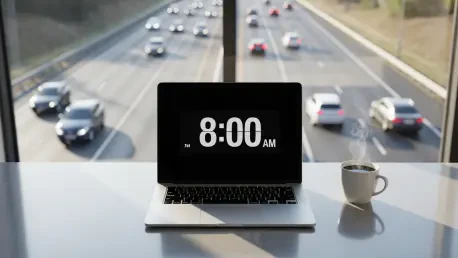
The Department of Labor specifically examined the implications of voluntary travel within the context of a split workday, particularly when an employee chooses to start their morning at home to circumvent the frustrations of heavy traffic. In these instances, a worker might log into their system at 8:00 AM to handle administrative tasks or respond to emails before transitioning to the physical office at 10:00 AM. According to the latest federal guidance, this period of travel is generally considered a normal commute and does not require compensation under the Fair Labor Standards Act. Because the decision to begin work at home was made primarily for the convenience of the employee—such as avoiding peak congestion or enjoying a more relaxed morning routine—the travel between the home and the worksite remains a non-compensable activity. This remains true even though the employee had already performed work-related duties earlier in the morning, provided that the travel itself is not part of their essential job functions.
This regulatory logic extends to situations where external factors, such as the rigid schedules of public transportation, dictate an employee’s movements during the day. Consider a scenario where a nonexempt staff member must leave the office at 3:30 PM to catch the last available bus that services their neighborhood, only to resume their duties from a home computer an hour later. The Department of Labor clarifies that the time spent on that bus journey is not considered hours worked, as the employee is effectively choosing to move their workspace to accommodate a personal logistical constraint. Since the individual is entirely relieved of their professional responsibilities during the commute and can use that time for personal activities, like listening to music or reading, the travel is viewed as a personal choice rather than an employer mandate. Consequently, organizations are not legally required to pay for the time spent traveling between the two locations, even if work is performed both before and after the commute takes place.
Employee Choice: Distinguishing Personal Preferences
Distinguishing between travel mandated by an employer and travel undertaken for personal reasons is the cornerstone of the Department of Labor’s recent clarification. When an employee is given the freedom to choose where they perform their work, the travel that occurs between those locations is typically categorized as a standard commute, which has historically been unpaid under federal law. This distinction is crucial because it protects employers from being forced to pay for travel time that is essentially a result of an employee’s lifestyle preferences or residential location. For example, if a worker prefers to finish their day at home to be present for a family dinner, the drive from the office to the residence is non-compensable, even if they log back in for an hour of data entry before bed. The agency emphasizes that the key factor is whether the employee is truly relieved from duty and whether the travel is a necessary part of the work day or merely a bridge between two different voluntary work environments.
The concept of the normal commute remains the default assumption even in a world where the traditional nine-to-five office structure has fragmented into various hybrid models. Employers must recognize that as long as they are not requiring the employee to travel between specific worksites during a continuous workday to perform specific tasks, the financial burden of the commute remains with the worker. The Opinion Letter highlights that the distance or time spent traveling does not change its status as a commute; whether it takes fifteen minutes or two hours, it remains unpaid if the transition is for personal convenience. This provides a level of protection for businesses that might otherwise face astronomical payroll increases due to the geographic dispersion of their workforce. By maintaining a clear line between work-related transit and personal commuting, the federal government ensures that the flexibility offered by hybrid work does not inadvertently become a mandatory financial liability for the business.
Legal Implications: Nonexempt Staff Compensation
The Rule: Continuous Workday Exceptions
One of the most complex aspects of the Fair Labor Standards Act is the continuous workday rule, which generally stipulates that all time between the first and last principal activities of a shift must be paid. However, the Department of Labor has clarified that the split workday in a hybrid environment creates a distinct exception to this rule, provided the employee is sufficiently relieved of their duties. When a nonexempt worker chooses to stop working at one location and travel to another for personal reasons, the continuous workday is effectively paused, creating a gap that does not count as compensable time. This interruption is permissible because the employee is not “engaged to wait” or under the direct control of the employer during that period. During this transition, the individual has the freedom to run errands, stop for a meal, or engage in any other private activity, which confirms that they are not performing labor that benefits the organization during the travel interval.
This relief from duty must be authentic and comprehensive to ensure that the time remains non-compensable under federal guidelines. If an employer were to require an employee to join a conference call or monitor urgent alerts while driving from their home to the office, the nature of that travel would immediately change from a commute to a compensable work activity. To avoid this, companies must ensure that their policies explicitly prohibit nonexempt staff from performing any tasks while in transit during a split day. The Department of Labor’s guidance suggests that the break in the workday must be long enough for the employee to use the time effectively for their own purposes. If the transition is so brief that the employee cannot realistically use the time for themselves, the interruption might not be sufficient to break the continuous workday. Therefore, documenting these “off-duty” periods becomes essential for organizations looking to mitigate the risk of back-pay claims and potential audits.
Practical Applications: Split Shift Scenarios
In practical terms, the Department of Labor’s guidance allows for a variety of flexible scheduling arrangements that benefit both the employer and the employee without creating undue financial stress. For instance, a customer service representative could work from 7:00 AM to 11:00 AM at home, take a two-hour break to manage personal appointments and drive to the office, and then work from 1:00 PM to 5:00 PM on-site. Under the clarified rules, the two hours in the middle of the day are entirely unpaid, as they represent a voluntary split shift designed to accommodate the employee’s life. This clarity allows businesses to support diverse work-life balance initiatives without fearing that every minute of a worker’s day will be subject to overtime calculations. It encourages a more transparent relationship where employees understand the financial boundaries of their flexibility, ensuring that the benefits of hybrid work are not overshadowed by payroll disputes or administrative headaches.
Management teams successfully aligned their operations with these guidelines by implementing rigorous time-tracking technologies and clear communication channels. Companies adopted digital tools that required nonexempt workers to explicitly clock out when leaving one workspace and clock in only upon arrival and readiness at the next. This created a verifiable trail of evidence that demonstrated the employee was relieved of duty during their transit. Furthermore, HR departments updated their employee handbooks to define the “home office” as a voluntary location for personal convenience, which helped distinguish it from a secondary business site. These proactive steps ensured that supervisors did not inadvertently assign tasks during travel periods, thereby maintaining the non-compensable status of the commute. By taking these actions, organizations protected themselves from legal liabilities while continuing to offer the high-value flexibility that has become a staple of the modern professional environment in the current economic landscape.