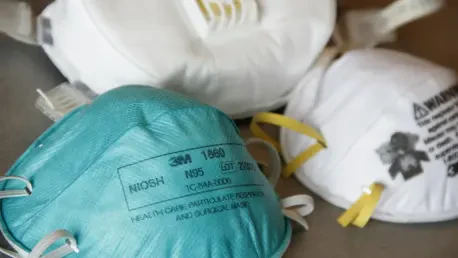

The explosive growth of the legal cannabis industry has created tens of thousands of jobs across the nation, but this green rush has also cast a long shadow over the health and safety of the very workers fueling its success. For years, a significant blind spot has existed regarding the potential long-term respiratory effects on employees who handle, process, and cultivate cannabis daily, exposing them to a unique cocktail of dust, mold, and plant-based allergens. Researchers from the University of Washington’s Department of Environmental & Occupational Health Sciences are now at the forefront of a groundbreaking investigation, aiming to illuminate these occupational hazards and establish a foundation for worker safety in a sector where such data has been critically absent. The urgency of this work is amplified by recent fatalities attributed to work-related asthma, signaling that the risks are not merely theoretical but a present and serious danger requiring immediate and thorough scientific examination.
Bridging a Critical Knowledge Gap
The primary obstacle to understanding these workplace risks has been the long-standing federal classification of cannabis as a Schedule I drug, a status that historically stifled any large-scale, federally funded research into its occupational impacts. This left state-level regulators and individual employers to navigate safety protocols with little to no scientific evidence, often relying on anecdotal information or standards borrowed from other industries that may not be applicable. Callan Krevanko, a UW PhD student leading the field research, emphasized that their investigation stands as one of the very first comprehensive studies of its kind. The investigation gained significant momentum following two tragic worker deaths—one in Massachusetts and another in California—both officially linked to occupational asthma. These incidents transformed abstract concerns into a clear and present need for a formal scientific inquiry, compelling organizations to look beyond assumption and address the potential for life-threatening respiratory conditions within their facilities.
Led by principal investigators Christopher Simpson and Coralynn Sack and backed by crucial funding from the National Institute for Occupational Safety and Health (NIOSH), the extensive study was designed with an ambitious and thorough scope to generate a robust dataset. The research team planned comprehensive visits to approximately ten different cannabis cultivation and processing facilities throughout Washington state, strategically selecting a mix of small-scale operations and major employers to ensure the data would be diverse and broadly representative of the industry. Their methodology involved a multi-faceted approach, with researchers spending a full week embedded at each site. This included continuous monitoring of airborne contaminants, the collection of personal breathing zone samples from employees performing a range of distinct tasks like trimming flower and sealing vape cartridges, and conducting direct health screenings. Most notably, these screenings included allergy skin tests to accurately identify worker sensitivities to specific cannabis-related allergens, a key step in understanding individual risk profiles.
An Industry Acknowledging the Risks
A notable aspect of the research is the proactive participation from industry leaders, reflecting a growing consensus that potential health hazards are a reality that must be addressed with scientific rigor. Nick Cihlar, co-founder of the Ferndale-based producer Subdued Excitement (SubX), openly welcomed the UW team, stating his firm belief that the study will likely identify significant and actionable problems related to workplace conditions. He pointed to insufficient air filtration systems and the inconsistent use of proper protective gear as probable areas of major concern across the industry. Cihlar specifically identified the process of trimming dry cannabis flower as an inherently hazardous activity, describing how it inevitably generates an “unavoidable particulate cloud” that workers are directly exposed to. While his company already encourages mask use and has installed air filters at individual workstations, he stressed the critical need for “hard data” to replace assumptions and guide the implementation of more robust, evidence-based safety measures.
Cihlar also offered a valuable perspective by framing the issue not as a uniquely modern problem but as one rooted in long-standing agricultural challenges, suggesting that while the cannabis industry is legally new, its core operational hazards are familiar. The dust and particulates generated during harvesting and processing are analogous to the occupational risks faced for decades by workers in traditional farming, such as grain handlers who are susceptible to respiratory conditions like “farmer’s lung.” This viewpoint helps demystify the issue and connects it to a broader history of workplace safety, reinforcing the need for tailored research. Although general hazards are known, the unique properties of the cannabis plant—including its specific allergens, terpenes, and other bioactive compounds—require a dedicated scientific study. Simply adopting standards from other agricultural sectors would be insufficient, highlighting the necessity of this focused research to develop effective protocols that address the specific risks posed by cannabis cultivation and processing.
Forging a Path Toward Safer Workplaces
The overarching goal of the UW study was intentionally collaborative and preventative, designed to empower the burgeoning cannabis industry rather than to penalize it for past oversights. The researchers aimed to translate their complex scientific findings into affordable, practical recommendations and best practices that could be readily implemented by their industry partners. These suggestions were expected to cover crucial areas such as the installation of improved local exhaust ventilation systems and clear guidelines for the selection and consistent use of appropriate personal protective equipment (PPE). The team committed to a true partnership model, providing individualized reports and data back to each participating business. By opening their doors to this level of scientific scrutiny, these companies demonstrated a proactive commitment to their workers’ health and well-being. Upon completing its field research, the team processed the extensive data collected to establish the first robust scientific foundation for workplace safety standards, providing clear, evidence-based guidance for an industry where specific regulations had, until that point, remained incomplete and dangerously inconsistent.