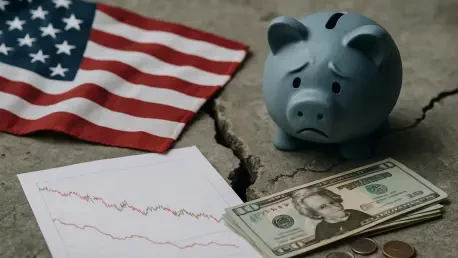

Fewer than 60% of modern workers possess a sufficient financial buffer to cover a basic emergency expense without halting their retirement progress entirely. This startling lack of liquidity is just one symptom of a broader breakdown in the financial machinery that once promised a stable transition out of the workforce. Current economic indicators suggest that the optimism which previously defined the American middle class is rapidly evaporating, replaced by a pervasive sense of vulnerability. The share of individuals actively increasing their retirement contributions has experienced a dramatic drop, falling from a robust 55% to a mere 39% in a very short span of time. This retreat from long-term wealth accumulation reflects a growing realization that traditional savings models are no longer sufficient to combat the compounding pressures of modern life. As confidence levels slide among both active workers and those already in retirement, it becomes clear that the financial landscape has fundamentally shifted, requiring a reassessment of what it truly takes to achieve security.
Economic Obstacles: The Forces Sabotaging Personal Savings
Debt and Housing: The Primary Barriers to Financial Stability
Household debt has become a formidable barrier, functioning as a silent predator that consumes the very capital intended for future independence. Approximately two-thirds of the current workforce reports that maintaining household debt is a persistent struggle, with a quarter characterizing the situation as a major financial crisis. The primary culprit in this scenario is the high-interest credit card balance, which often carries interest rates exceeding 22% in the current market. When nearly 30% of workers are carrying more than $25,000 in non-mortgage debt, the cost of simply servicing these obligations begins to outweigh the benefits of compound interest in a retirement account. This cycle of high-cost borrowing forces many individuals to prioritize past consumption over future stability, effectively stalling their momentum. Instead of building a nest egg, a significant portion of the population is trapped in a defensive posture, where every dollar earned is immediately redirected toward interest payments.
The escalating costs associated with basic shelter have further exacerbated this financial strain, as housing expenses continue to swallow a disproportionate share of the average monthly budget. Data suggests that roughly 70% of workers identify rising mortgages, property taxes, and rent as significant threats to their long-term retirement security. Unlike discretionary spending, which can be curtailed during lean periods, housing costs are largely fixed and non-negotiable, leaving little room for error or adjustment. In many metropolitan areas, the price of entry into the housing market has reached a point where the down payment and monthly carrying costs effectively deplete any surplus funds that would otherwise be allocated to 401(k) or IRA contributions. This systemic squeeze creates a bottleneck in wealth accumulation, where the immediate need for a roof over one’s head directly competes with the necessity of preparing for a time when active income will no longer be available.
Medical Obligations: The Hidden Cost of Longevity and Crisis
A profound disconnect persists between the public perception of medical expenses and the stark reality of healthcare costs in the later stages of life. While many workers acknowledge that healthcare is a concern, only a small fraction has actually attempted to calculate the specific financial requirements for medical care during their senior years. Current projections indicate that a 65-year-old individual might need to set aside between $100,000 and $200,000 specifically for medical bills, a figure that does not include the potential for long-term assisted living. Despite these looming obligations, fewer than half of the population has integrated these costs into their retirement blueprints. Consequently, about 40% of current retirees report that their medical expenses are significantly higher than they had originally anticipated. This lack of preparation creates a scenario where even a well-funded retirement can be quickly derailed by a single health crisis or a chronic condition.
The transition from a state of general optimism to one of systemic vulnerability defined the retirement landscape as the math governing traditional planning began to fail. It became clear that the path to a secure future required more than just passive participation in a workplace savings plan; it demanded a proactive shift toward structured, professional financial management. The most effective way to address this confidence crisis was through the engagement of fiduciary advisors who were legally obligated to prioritize the client’s interests. By focusing on the elimination of high-interest debt and the establishment of robust emergency funds, individuals started to build the resilience necessary to withstand external economic shocks. Success in this arena relied on the early integration of healthcare cost projections and the abandonment of the “work longer” fallacy in favor of realistic, data-driven timelines. Ultimately, the shift from survival to strategic planning provided the only reliable bridge to long-term stability.