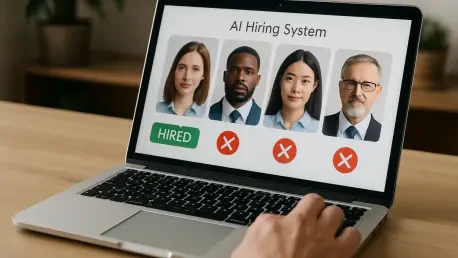

The rapid integration of artificial intelligence into the recruitment lifecycle has created a complex legal frontier where the efficiency of automated screening often clashes with established civil rights protections. In a landmark decision, a federal judge recently ruled that Workday, a major provider of human resources software, must face a class-action lawsuit alleging that its algorithmic tools facilitate discrimination against job applicants based on race, age, and disability status. This case, known as Mobley v. Workday, Inc., represents one of the most significant challenges to the tech industry’s proprietary hiring processes to date, as it questions whether software vendors can be held liable as employment agencies or indirect employers. The ruling signifies a shift in how the judiciary perceives the role of intermediaries in the modern workforce. By allowing the litigation to proceed, the court has signaled that the protective umbrella of federal anti-discrimination laws may extend beyond traditional employers to the developers who design the gatekeeping mechanisms of the digital age.
Navigating the Legal Landscape of Algorithmic Bias
Central to the legal battle is the interpretation of the Age Discrimination in Employment Act (ADEA) and whether its protections against disparate impact apply to job seekers rather than just current employees. Workday argued that because the statute does not explicitly mention applicants in certain sections, the case should be dismissed, pointing to conflicting appellate decisions in other jurisdictions. However, U.S. District Judge Rita Lin rejected this narrow reading, maintaining that long-standing precedents within the circuit remain the governing standard for these proceedings. The court also navigated the recent shift in administrative law regarding the end of Chevron deference, which previously required judges to defer to agency interpretations of ambiguous laws. Instead, Judge Lin applied the Skidmore deference standard, finding the Equal Employment Opportunity Commission’s long-standing position—that the ADEA does cover applicants—to be thoroughly persuasive and legally sound for this specific context.
The lawsuit posits that Workday functions as more than a simple tool provider, effectively acting as an employment agency or an indirect employer due to the sheer volume of candidate filtering its software performs. This distinction is critical because it determines whether a software firm can be held liable under Title VII of the Civil Rights Act and the Americans with Disabilities Act. The plaintiffs allege that the algorithms used to screen candidates are essentially the decision-makers, creating a situation where the software vendor exerts significant control over employment opportunities. While Workday maintains that its technology is merely a support system designed to assist human recruiters, the court found the allegations sufficient to move the case into the discovery phase. This phase will likely involve a deep dive into the inner workings of the algorithms, examining how they process data points and whether they inadvertently penalize protected groups. The outcome will set a vital precedent for how accountability is distributed between those who build tools and those who use them.
Evaluating the Scope of Algorithmic Accountability
The primary plaintiff, Derek Mobley, claims he was rejected from more than 100 positions after applying through Workday’s platform, despite meeting the qualifications for many of those roles. This staggering number of rejections serves as the foundation for the argument that the software’s filtering mechanisms harbor systemic biases. While the judge allowed the core discrimination claims to proceed, she did dismiss several state law claims and specific disability allegations brought by a cancer survivor who suffered from asthma. The court ruled that the current complaint lacked the necessary factual specificity to prove how the software’s design specifically targeted or excluded individuals with those particular medical conditions. However, the plaintiffs were granted the opportunity to amend their filing to provide more detailed evidence of these alleged failures. This partial victory for Workday highlights the high burden of proof required when challenging complex automated systems that do not explicitly use protected characteristics as input data.
The legal developments in this case established a clear mandate for companies to prioritize transparency and rigorous auditing of their artificial intelligence implementations starting in 2026. Legal experts recommended that organizations move beyond simple surface-level checks and instead adopt comprehensive bias-testing protocols that mirror the standards set by emerging regulations like Colorado’s AI law. This legislation required developers and users of high-risk AI systems to exercise reasonable care in preventing algorithmic discrimination, a standard that became a benchmark for the industry. Vendors and employers were encouraged to collaborate on data validation strategies to ensure that the training sets used for recruitment tools did not reflect historical inequities. By documenting these efforts and maintaining clear human oversight, businesses prepared themselves for a future where technical complexity no longer served as a shield against legal responsibility. The resolution of this litigation ultimately provided a roadmap for building more equitable digital infrastructure.