
The traditional reliance on federal agencies to champion workplace civil rights is facing a structural reconfiguration as private litigation emerges as the primary vehicle for legal accountability. While administrative priorities often fluctuate based on the political climate, the judicial system remains a consistent venue where statutory interpretations are tested and upheld. This shift suggests that the perceived safety provided by shifting federal guidelines may be an illusion for employers who ignore the persistent power of independent legal action through the courts.
This transition is particularly evident where executive directives have narrowed the scope of federal oversight regarding gender identity. When the U.S. Equal Employment Opportunity Commission (EEOC) retreats from active litigation, it creates a regulatory vacuum that is rapidly being filled by the private sector and advocacy groups. This dynamic ensures that fundamental protections afforded by Title VII of the 1964 Civil Rights Act remain enforceable through the initiative of private citizens and their legal representatives.
The Resurgence of the Private Plaintiffs’ Bar
Data and Trends: Independent Employment Litigation
Recent shifts in litigation volume demonstrate a divergence between federal policy goals and courtroom reality. As the EEOC adjusts its strategy to align with mandates prioritizing a restrictive definition of sex, employment discrimination filings have not decreased. Instead, a rise in cases led by non-profit advocacy organizations indicates that the “gap-filling” phenomenon is a sustainable model for maintaining workplace protections when government support fluctuates.
Furthermore, the professionalization of the private plaintiffs’ bar allows for the pursuit of complex cases previously reserved for federal regulators. These firms often leverage state-specific laws that offer broader protections than current federal interpretations. By using a combination of state statutes and federal precedents, private litigants challenge corporate policies that might have been shielded by administrative pivots, thereby decentralizing the enforcement of equality.
Real-World Application: The Lush Handmade Cosmetics Settlement
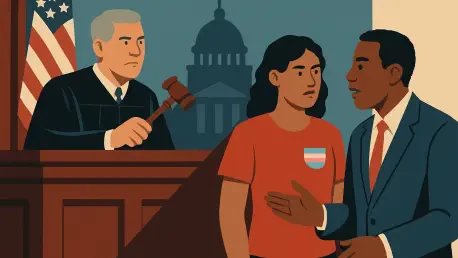
The resolution of the lawsuit against Lush Handmade Cosmetics provides a blueprint for how private intervention sustains legal momentum when federal support vanishes. The case involved allegations that the company failed to protect a nonbinary employee from harassment. When an executive order mandated a “binary” focus on sex, the EEOC withdrew, yet the employee secured private counsel, intervened, and successfully negotiated a settlement that held the employer accountable.
This case highlights the fragility of administrative protection and the robustness of the private legal market. The transition from a government-led suit to a private settlement shows that the legal merits of a claim do not vanish when an agency changes its ideological stance. For employers, the Lush case serves as a warning that federal withdrawal is not synonymous with immunity, as it often triggers a phase of litigation where private entities seek direct redress.
Expert Perspectives: Ideological Shifts and Liability
Legal scholars highlight a disconnect between current executive guidance and judicial precedent. While federal agencies emphasize a “binary nature of sex” to satisfy political mandates, Supreme Court rulings regarding Title VII continue to influence how courts evaluate discrimination. Experts warn that businesses adopting aggressive new policies based on executive orders act on a precarious foundation, as these shifts offer little defense against private lawsuits citing case law.
Moreover, legal thought leaders emphasize that the risk for employers is compounded by varying standards across different states. While the federal government may de-emphasize certain protections, many state legislatures have codified these rights into law. Analysts suggest that the most prudent strategy involves maintaining inclusive standards that exceed federal minimums, thereby insulating the organization from state-level actions and private litigation, which carry high financial stakes.
The Future: Workplace Protections and Employer Risk
As the legal landscape fragments, the role of “interventionist” litigation is expected to expand, with private firms stepping into the shoes of the EEOC. This evolution leads to a litigious environment where high-impact cases are driven by advocacy groups rather than a central federal authority. For employees, this means a greater reliance on private resources, while for employers, federal silence does not equate to safety when local statutes impose stricter standards.
The shift toward decentralized enforcement also influences how corporate boards approach risk management. A trend is emerging where proactive compliance becomes a competitive advantage, as companies maintaining robust anti-discrimination policies are less likely to become targets. The future of workplace standards will be defined by the tension between administrative deregulation and judicial persistence, with the burden of ensuring a fair workplace shifting back to the private sector.
Summary: Strategic Outlook for Employment Equality
The analysis of the Lush settlement and broader litigation trends revealed that private action functioned as a critical fail-safe for civil rights enforcement. This shift demonstrated that administrative policy changes were unable to fully shield employers from the legal consequences of discriminatory practices. By intervening where federal agencies retreated, private counsel ensured that Title VII protections remained active, reinforcing that justice was not solely dependent on Washington.
The strategic outlook for employment equality moved toward a model where internal policies had to be resilient against both federal shifts and local challenges. It became clear that the most effective way to mitigate risk was to uphold inclusive standards that survived political transitions. The conclusion of these legal battles suggested that while the source of enforcement changed, the requirement for a discrimination-free environment persisted, pushing businesses toward more proactive human resources strategies.