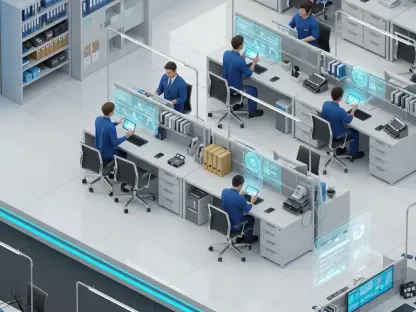

The contemporary professional landscape has transformed the traditional concept of dedication into a relentless systemic crisis where grind culture dictates the daily rhythm of millions of employees. As the sun sets, the digital glow of monitors remains the primary light source for a workforce increasingly tethered to virtual desks by invisible but rigid expectations. Recent data suggests that workaholism has morphed from a personal choice into a structural requirement that threatens global productivity and mental stability. This analysis examines the statistics driving this shift, the psychological triggers involved, and how corporate leadership can pivot toward a more sustainable, results-oriented future.
Measuring the Surge: Data and Real-World Indicators
Statistical Breakdown of the State of the Workweek Findings
Research involving 800 full-time professionals reveals that nearly half of the modern workforce—45%—now explicitly identifies as being definitely workaholic. This surge indicates that those maintaining a traditional 40-hour schedule have become a distinct minority, as the somewhat workaholic demographic continues to expand across diverse industries. Despite these long hours, a striking productivity paradox exists among these professionals. Approximately 80% of workers admit that exceeding a standard workweek yields no measurable improvement in the quality of their output, suggesting a massive waste of human capital.
Real-World Catalysts for the Always-On Culture
Internal company culture stands as the primary driver for this behavior, with 47% of employees blaming their workplace environments for these excessive demands. Many individuals engage in defensive overworking, where 25% of professionals log extra hours primarily to mitigate the fear of potential layoffs in a volatile market. Moreover, the erosion of digital boundaries prevents 31% of the workforce from disconnecting. This struggle stems from the convergence of professional and personal life, as mobile technology ensures that an employee is never truly away from the office.
Expert Perspectives on the Productivity Paradox and Health
Organizational psychologists observe that roughly half of the workforce suffers from chronic anxiety and burnout fueled by the pressure of performative busyness. This obsession with visible activity often masks a decline in actual efficiency and creativity, leading to a cycle of exhaustion. On a physical level, nearly 49% of employees report disrupted sleep and reduced physical activity, creating a health crisis that leads to long-term attrition. Financial pressure also plays a significant role, with 28% of workers citing economic necessity as a leading cause of unsustainable habits.
The Future Outlook: Shifting from Endurance to Outcomes
Forward-thinking organizations are beginning to transition away from tracking hours logged toward transparent, results-oriented metrics. This shift requires boundary-first policies that mandate disconnection to preserve the mental health and long-term retention of top-tier talent. Recruitment processes must also evolve to include explicit job expectations, ensuring that new hires are selected for their specific impact rather than their sheer physical endurance. Organizations that fail to dismantle these exhausting cultures will likely face diminishing returns and a significant loss of competitive advantage to more balanced peers.
Conclusion: Breaking the Cycle of Diminishing Returns
The industry recognized that the disconnect between excessive hours and quality contributions necessitated a fundamental shift in corporate values. Leaders prioritized employee well-being as a prerequisite for growth, rather than a luxury to be sacrificed for short-term gains. HR departments implemented structures where success was measured by tangible impact, effectively fostering environments that valued restoration as much as output. These proactive steps ensured that the workforce remained resilient and prepared for the challenges of a rapidly changing economic environment.