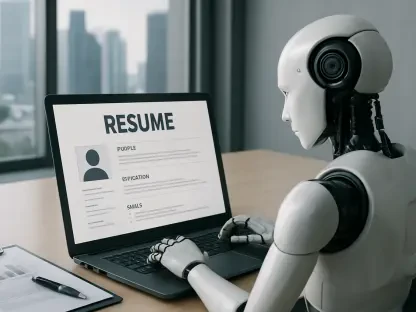

The corporate landscape of 2026 is defined by a striking contradiction where announcements of ambitious hiring initiatives are frequently followed, sometimes in the very same week, by news of substantial workforce reductions. This trend, now widely termed “workforce rebalancing,” signals a profound strategic shift in how organizations manage talent in an era of rapid technological and economic change. This analysis dissects the data behind this dual movement, explores the strategic drivers shaping the modern workforce, examines the intricate role of artificial intelligence, and provides a roadmap for navigating this new employment landscape.
The Rebalancing Act Data and Dynamics
A Tale of Two Trends Concurrent Hiring and Layoffs
The most recent data paints a picture of a job market in a state of controlled chaos. A December 2025 report from Resume.org, which surveyed 1,000 U.S. hiring managers, reveals that an overwhelming 92% of companies plan to hire new workers this year. In a seemingly contradictory move, however, 55% of these same companies also anticipate conducting layoffs. This is not a year-long, evenly distributed phenomenon; the activity is intensely front-loaded, creating a period of concentrated churn.
The first quarter has been the epicenter of this activity, with 86% of all planned hiring and 48% of layoffs projected to occur within this initial period. This frenetic pace is not expected to last. The report indicates a significant cooldown in hiring momentum as the year progresses. By the final quarter, a mere 6% of companies foresee maintaining active recruitment efforts, suggesting a market that will move from explosive expansion and contraction to a more selective and stabilized state.
Strategic Realignment Who Is In and Who Is Out
Beneath the surface of these numbers lies a deliberate strategic realignment. The roles being eliminated are not random; they fall into specific categories that signal a shift in business priorities. Companies are trimming high-cost positions, roles with a slower or less tangible return on investment, and certain layers of middle management that are seen as impeding agility. Furthermore, jobs tied to legacy processes or outdated technologies are being phased out in favor of more streamlined, modern functions.
In direct contrast, the hiring surge is highly targeted toward functions that drive immediate value and future growth. Organizations are aggressively seeking professionals for roles directly linked to revenue generation, business transformation, and enhanced efficiency through automation. The demand is also exceptionally high for talent in data analysis and customer retention, underscoring a corporate focus on leveraging information to secure and expand market share in an increasingly competitive environment.
Expert Insight The Strategy Behind the Shake Up
According to Kara Dennison of Resume.org, it is a mistake to view these widespread workforce adjustments as simple cost-cutting measures. Instead, they represent a conscious and calculated effort by companies to overhaul their talent composition. This strategic intent is focused on actively realigning staff to meet new operational models and evolving business priorities.
This shake-up is about moving away from rigid, outdated organizational structures and toward a more agile and impact-driven workforce. Companies are essentially trading roles that supported a previous version of their business for talent that can build the next one. The goal is to create a leaner, more dynamic organization capable of responding swiftly to market shifts and technological advancements.
The AI Factor Catalyst or Convenient Scapegoat
AI’s Dual Role in Reshaping the Workforce
Artificial intelligence has emerged as a central figure in the workforce rebalancing narrative, though its role is far more nuanced than often portrayed. While 44% of companies cite AI as a top driver for layoffs, a closer look at the data reveals it is not a direct replacement for human labor in most cases. A mere 9% of firms state that AI has completely taken over jobs previously performed by employees.
Instead, AI is more frequently functioning as a “hiring slowdown tool.” Forty-five percent of companies report that the integration of AI has partially reduced the need for new hires by automating certain tasks and increasing the productivity of existing teams. This indicates that AI’s primary effect is on the rate of job creation rather than the mass elimination of current roles, acting as a catalyst for efficiency that reshapes future staffing needs.
The Narrative of Disruption vs Financial Reality
Perhaps the most revealing finding is the strategic use of AI in public-facing communications. A critical 59% of companies admitted to framing layoffs as being driven by AI because it is a more palatable explanation for stakeholders than citing financial constraints or poor performance. This suggests that AI has become a convenient scapegoat for difficult business decisions.
Using the narrative of technological disruption allows companies to project an image of being forward-thinking and innovative, even when the underlying reason for downsizing is financial pressure. The implication is significant, as it can obscure the true health of a company and create a skewed public perception of technology’s impact on employment, blurring the lines between genuine transformation and strategic public relations.
Navigating the 2026 Job Market A Guide for Candidates
From Mass Hiring to Precision Targeting
For professionals navigating this landscape, the primary takeaway is that the employment market has not stalled; it has become intensely selective. The era of mass hiring for generalist roles is fading, replaced by a precision-targeting approach where companies seek candidates with specific, high-impact skills. The “who’s in” and “who’s out” dynamic means that opportunities are abundant for those whose expertise aligns with the new strategic priorities of business.
Success now hinges on a candidate’s ability to demonstrate a clear and direct contribution to a company’s core objectives, whether that be driving revenue, optimizing operations, or enhancing the customer experience. Job seekers must therefore shift their focus from simply finding an open position to identifying how their unique skill set can solve the specific problems that companies are hiring to address.
The Must Have Skills for a Rebalanced Workforce
The Resume.org report clearly identifies the attributes that employers are prioritizing in this new environment. Technical proficiency alone is no longer sufficient. Topping the list is a demand for strong problem-solving skills, with 54% of hiring managers citing this as a critical attribute. This reflects a need for employees who can navigate complexity and devise effective solutions independently.
Following closely is the ability to learn and adapt to new tools and technologies quickly, highlighted by 44% of companies. In a world of constant technological evolution, employers value talent that can remain current and integrate new systems seamlessly. Finally, excellent communication skills remain a cornerstone, with 43% of employers emphasizing the need for professionals who can articulate ideas clearly and collaborate effectively across a transforming organization.
Conclusion Embracing a State of Constant Flux
The phenomenon of workforce rebalancing confirms that the coexistence of aggressive hiring and significant layoffs is the new standard. This is not a temporary market fluctuation but a fundamental restructuring driven by a strategic realignment of roles to meet modern business demands. The complex role of AI as both a genuine catalyst for efficiency and a convenient narrative for difficult financial decisions adds another layer to this transformation. Ultimately, the market has shifted to a model where specific, adaptable skills are paramount. For both organizations and individuals, navigating this landscape successfully depends on an unwavering commitment to agility, continuous learning, and the capacity to thrive in a state of perpetual change.