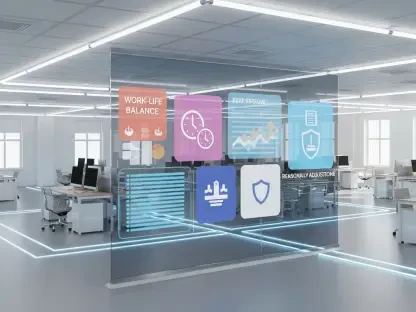

The recent whirlwind of mass resignations and career pivots that defined the post-pandemic labor market has decisively subsided, giving way to a more pragmatic and cautious approach from the global workforce. A new professional era is dawning, one where the pursuit of personal fulfillment and passion projects is taking a backseat to the fundamental need for stability and reliability. This significant shift in employee priorities, driven by persistent economic uncertainty, reflects a recalibration of the unwritten contract between employers and their teams. Today’s workers are increasingly prioritizing tangible job security, a stable income, and the credibility of their organization above all else. This evolving landscape demands that companies recognize this change, fostering an environment where professional agility and resilience are not just encouraged but are actively supported through robust corporate structures and genuine investment in their people, signaling a clear departure from the volatile trends of the past few years.
The Internal Mobility Impasse
A critical chasm has emerged between the security employees crave and the opportunities companies provide, particularly concerning internal mobility. A recent comprehensive analysis reveals a startling disconnect, with nearly two-thirds of organizations admitting they struggle to effectively transition their own employees into new internal roles. This failure is not a matter of chance but a direct result of systemic oversight. Shockingly, only a third of companies are investing in the essential data analytics required to understand the existing skills, competencies, and potential within their own workforce. Without this foundational knowledge, identifying suitable candidates for internal transfers or promotions becomes a guessing game rather than a strategic decision. This inability to facilitate internal growth directly undermines the very job security that employees now value so highly, creating a cycle of frustration where talented workers feel stagnant and undervalued, ultimately looking elsewhere not for passion, but for a clear path forward that their current employer fails to provide.
The consequences of this stalled internal mobility extend far beyond individual employee dissatisfaction, posing a substantial threat to overall organizational health and agility. When companies fail to build clear and accessible pathways for advancement, they inadvertently foster a culture of stagnation. Employees who see no future within the organization are less engaged, less productive, and more likely to leave, taking valuable institutional knowledge with them. This constant churn hinders a company’s ability to adapt to market changes, innovate, and maintain a competitive edge. Furthermore, the lack of internal promotion pipelines forces an over-reliance on external hiring, which is often more costly and time-consuming. Building a resilient and future-proof workforce begins from within. By failing to invest in the systems and strategies that support internal talent development, businesses are not only betraying the trust of their employees who seek stability but are also crippling their own capacity for sustained growth and long-term success in an increasingly complex economic environment.
Shifting Sentiments and Hiring Realities
In an unexpected turn of events, a notable shift in workforce sentiment has seen blue-collar workers now expressing greater confidence in the fairness of their compensation than their white-collar counterparts. This development marks a significant inversion of historical trends and is largely attributed to the acute and unyielding demand for skilled manual labor across numerous industries. While foundational elements like competitive pay and workplace flexibility remain crucial bargaining chips, especially for front-line employees who bear the brunt of operational demands, a more nuanced priority has gained prominence: the desire for clear, tangible pathways for professional advancement. Workers across the board are signaling that a steady paycheck is no longer enough. They are looking for employers who will invest in their long-term careers, providing opportunities for skill development and upward mobility. This rising expectation places a new onus on companies to look beyond immediate compensation and build comprehensive career-mapping frameworks.
Despite the prevailing economic caution, the hiring outlook for the early part of the year appears surprisingly robust, with a solid two-thirds of U.S. hiring managers indicating plans to expand their headcount. However, this optimism is tempered by several important caveats that reveal a more strategic, and perhaps cautious, approach to growth. The hiring surge is not uniform across all departments; instead, it is highly concentrated in functions directly tied to revenue generation, business transformation, and operational efficiency. This targeted approach suggests companies are prioritizing roles that offer a clear return on investment. Compounding this challenge is the persistent skills gap that continues to plague the labor market. More than a third of hiring managers report a significant disconnect between their needs and the available talent pool, citing that candidates frequently lack the relevant experience or specific skills required to fill open positions. This highlights a critical need for better alignment between educational systems, corporate training programs, and the evolving demands of the modern economy.
Bridging the Gap Between Technology and Talent
The rapid integration of artificial intelligence into daily operations has created an urgent need for a more cohesive and forward-thinking workforce strategy, one that skillfully balances technological advancement with human-centric development. A prevailing paradox has emerged where workers themselves often demonstrate a strong willingness and aptitude for adapting to new AI tools, with many feeling their personal knowledge of these technologies surpasses the training provided by their employers. This enthusiasm presents a golden opportunity for organizations to leverage their internal talent to drive innovation and efficiency. However, the reality is that many businesses are lagging, failing to meet the burgeoning demand for upskilling and reskilling initiatives that would empower their employees to work effectively alongside intelligent systems. This gap between employee readiness and corporate action represents a significant risk, threatening to leave both workers and their companies unprepared for the next wave of technological disruption.
Ultimately, the unfolding narrative has revealed a workforce that has fundamentally redefined its relationship with employment, moving from a quest for passion to a demand for partnership and stability. The data illustrates that businesses failing to invest in robust upskilling programs and clear internal mobility pathways are not merely letting their employees down; they are actively stunting their own potential for growth. The most successful organizations are those that recognize this new paradigm and act decisively. They build frameworks that identify and nurture internal talent, invest in continuous learning, and create a culture where technological adoption is a collaborative effort rather than a top-down mandate. By doing so, these companies not only enhance employee loyalty and retention but also cultivate a more agile and resilient workforce, one that is well-prepared to navigate the complexities of a rapidly evolving economic landscape.