
Listen to the Article
The relentless pace of global digital transformation has pushed the modern professional workforce into a state of chronic psychological exhaustion that traditional corporate wellness programs can no longer mitigate effectively. It’s a widespread phenomenon known as burnout, and one no longer viewed as merely an individual struggle with time management, but as a systemic issue that threatens the core operational stability of high-performing HR functions and people-centric HR leaders. When top-tier talent hits a metaphorical wall, the resulting decline in collective morale, innovation, and productivity creates a ripple effect that compromises the enterprise’s long-term viability.
It’s clearer than ever that traditional interventions, such as isolated mental health days or generic wellness webinars, frequently fail because they only address surface-level symptoms rather than the structural causes of exhaustion. Emerging as a transformative force is artificial intelligence, which delivers a sophisticated framework for identifying early warning signs and rebalancing inequitable workloads. By moving beyond reactive measures, AI-driven solutions provide the data-driven insights necessary to foster a culture of proactive prevention and sustainable performance.
To take advantage of the improvements artificial intelligence can bring, the modern corporate landscape requires a shift from viewing burnout as a personal failure to recognizing it as a business risk that demands a technical solution. With employees finding themselves trapped in a cycle of “survival mode,” where the sheer volume of administrative tasks and the erosion of work-life boundaries prevent meaningful cognitive recovery, AI represents the edge managers need to protect their team’s well-being and build an accurate support system.
Leveraging Artificial Intelligence for Workforce Resilience
Artificial Intelligence serves as a powerful diagnostic engine capable of uncovering the subtle behavioral shifts that precede a total collapse in employee engagement and performance. Unlike human supervisors, who may miss the gradual decline in a staff member’s responsiveness, artificial intelligence platforms can analyze digital footprints in real time to flag irregular communication patterns or erratic work hours. For example, a sudden increase in the time taken to respond to routine queries or a shift in the linguistic tone of internal messages can serve as early indicators of rising frustration or cognitive withdrawal. By monitoring these subconscious patterns, HR teams and people analytics functions can intervene with personalized support long before an employee reaches the point of resignation. This predictive capability transforms the management role from crisis control to strategic preservation, ensuring that the most valuable human assets are protected from the detrimental effects of unmanaged stress.
Workplace imbalance remains one of the most pervasive drivers of burnout, yet it is often the most difficult factor for leadership to track without technological support accurately. AI-powered resource management tools provide a transparent, data-driven view of team capacity, enabling the equitable distribution of high-pressure tasks based on actual availability rather than historical habits. These systems can identify “bottleneck” individuals who are consistently overloaded with low-impact administrative work, preventing them from contributing to creative projects that foster a sense of professional accomplishment. By reallocating these responsibilities through intelligent automation, HR leaders and workforce planning experts can ensure that top performers are not penalized with more work simply because they are efficient. This rebalancing not only alleviates individual pressure but also improves overall output quality by ensuring that every team member operates within their optimal cognitive range.
Beyond structural management, technology is increasingly being utilized to reclaim the mental “white space” necessary for deep work and emotional recovery. The erosion of boundaries in remote and hybrid environments has created an expectation of constant availability, leading to what many describe as “digital exhaustion.” Artificial intelligence integrations can act as digital boundary enforcers by proactively limiting after-hours notifications and scheduling mandatory focus blocks where interruptions are silenced. For instance, smart calendars can identify when an employee has been active for too many consecutive hours and suggest a transition to offline recovery. By automating the enforcement of these boundaries, HR policy designers move away from a culture of “always-on” performance toward a model of sustainable intensity.
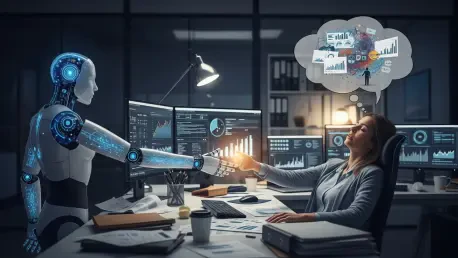
The automation of “work about work” (the repetitive administrative functions that drain mental energy) emerges as perhaps the most immediate relief that artificial intelligence offers the overextended employee. A large portion of daily stress stems from managing overflowing inboxes, triaging non-critical data, and navigating complex internal bureaucracies. Generative artificial intelligence and automation platforms are now capable of assuming these burdens, allowing human workers to dedicate their cognitive bandwidth to high-value, creative problem-solving. When the administrative weight is lifted, the sense of “treading water” is replaced by a sense of progress, which is a primary psychological defense against burnout.
Unleashing Sustainable Human Capital with Strategic Integration and Ethical Oversight
The successful implementation of artificial intelligence as a solution for burnout depends heavily on the establishment of trust between leadership and the workforce regarding data privacy and surveillance. Many professionals initially feared that well-being monitoring was a pretext for intrusive oversight and potential replacement, which could have inadvertently increased the very anxiety the technology was designed to alleviate. This paradox must be navigated by forward-thinking HR leaders through the adoption of policies for radical transparency, ensuring that all collected data is anonymized and used exclusively for supportive, rather than punitive, purposes. By baking privacy into the system by design, these companies can demonstrate that the technology is an investment in the individual’s health rather than a tool for micromanagement.
Furthermore, integrating AI-driven mental health support provides a necessary safety net for employees working in high-pressure sectors where human resources are often stretched thin. On-demand AI chatbots and wellness platforms provide immediate, non-judgmental guidance for managing acute stress or practicing cognitive-behavioral techniques in real time. While these tools can never replace professional medical intervention, they bridge the gap during the moments of peak intensity when a human manager or therapist might have been unavailable. The combination of these automated support systems and a culture of psychological safety enabled organizations to maintain a high-performance environment without sacrificing their staff’s physical or mental health.
The long-term economic benefits of utilizing technology to combat exhaustion became undeniable as organizations reported significant reductions in absenteeism and turnover costs. By shifting the focus toward “thrive-first” environments, businesses can realize that a healthy, engaged workforce is their most potent competitive advantage. The data-driven insights provided by AI enable a more nuanced understanding of the relationship between employee well-being and the bottom line, demonstrating that sustainable work practices are inherently more profitable than the traditional “burn-and-turn” model. Leaders who prioritize the symbiotic relationship between human creativity and artificial intelligence have created resilient cultures better equipped to navigate the complexities of the modern economy. Ultimately, the strategic deployment of these tools transformed the professional landscape, moving the needle from a reactive struggle against burnout to a proactive commitment to human flourishing.
Conclusion
The integration of advanced analytics and automated support systems establishes a new benchmark for organizational health that prioritizes the longevity of human capital. By moving beyond reactive crisis management, HR decision-makers can use AI-driven tools to build a sustainable infrastructure that anticipates their teams’ needs. This evolution proves that technology, when guided by ethical principles and human empathy, could effectively mitigate the structural stressors that previously led to widespread attrition. Organizations that successfully adopt these strategies will observe a marked improvement in both employee satisfaction and operational efficiency, securing their position in a competitive marketplace. Moving forward, the continued refinement of these AI-driven frameworks will remain a critical priority for any enterprise committed to fostering a resilient and high-performing workforce.