
Countless qualified professionals meticulously craft their resumes, submit them into the digital void of online job portals, and are met with a deafening silence that has become the hallmark of the contemporary career hunt. This frustrating experience is not merely a symptom of a competitive market; it points to a fundamental breakdown in the hiring process, where the very technology designed to connect people with opportunities is often the primary barrier. The modern job search is broken, but a new application of artificial intelligence is emerging not to filter candidates out, but to pull the right ones in.
The Resume Black Hole Why Your Application Never Gets a Response
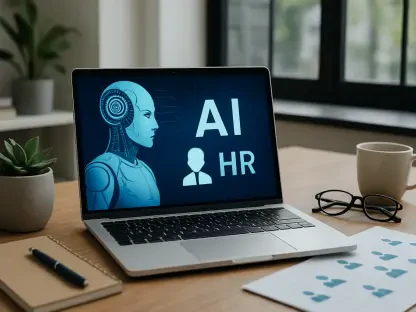
The central question for millions of job seekers is why their applications disappear without a trace. The answer often lies in the automated systems working behind the scenes. An estimated 60-70% of companies now utilize AI-powered Applicant Tracking Systems (ATS), but their primary function is not to identify the best candidates. Instead, these platforms are programmed for mass disqualification, automatically screening out the vast majority of applicants before a human recruiter ever sees their credentials.
This reliance on automated rejection creates a paradox where technology, meant to increase efficiency, inadvertently locks qualified individuals out of consideration. Minor formatting inconsistencies, the absence of specific keywords, or unconventional career paths can trigger an automatic rejection, leaving both the candidate and the potential employer at a disadvantage. The system is designed for exclusion, perpetuating a cycle of frustration and missed opportunities.
Stuck in the Past How Digital Hiring Still Operates Like Newspaper Classifieds
Despite the digital interface, the core philosophy of modern hiring remains stuck in a bygone era, operating on an employer-centric model analogous to newspaper classifieds. This legacy framework encourages a high-volume, low-success strategy where employers post a job and are subsequently inundated with applications, creating a phenomenon known as “application spam.” Job seekers, in turn, feel compelled to apply for dozens or even hundreds of positions to increase their chances of a response.
This inefficient dynamic yields negative consequences for everyone involved. For job seekers, the process leads to overwhelming frustration and low success rates, contributing to widespread workforce disengagement and underemployment. For employers, the flood of irrelevant applications makes it difficult and costly to identify the right talent, prolonging hiring cycles and leaving critical positions unfilled. The system fails to serve its primary purpose: efficiently connecting qualified talent with suitable roles.
The Two Faces of AI Gatekeeper vs Matchmaker
Currently, the most common application of AI in hiring functions as a rigid gatekeeper. This approach leverages algorithms as automated rejection tools, programmed to disqualify candidates who do not perfectly match a predefined set of criteria. This method is prone to significant model errors, as it often fails to recognize transferable skills, contextual experience, or the nuanced potential of an applicant, unfairly penalizing highly qualified individuals.
In stark contrast, an emerging paradigm positions AI as a proactive matchmaker, fundamentally inverting the traditional job search model. Instead of requiring individuals to manually search and apply for jobs, this new system takes the entire universe of available positions and proactively matches them to the job seeker based on their skills, experience, and preferences. It replaces static keyword searches with real-time, dynamic matching that instantly updates as a user refines their profile or an employer modifies job requirements.
A New Philosophy AI as a Magnet to Pull People In
This shift represents a new philosophy where technology serves as a “personalized job agent,” according to Katrina Leslie, Founder and CEO of Swipejobs. The core principle is to use AI to facilitate connections and attract talent rather than creating obstacles. “The goal is to build a magnet to pull people in, not a wall to keep them out,” Leslie states. This vision is backed by a platform developed over a decade, initially focused on temporary and contract roles before expanding to permanent positions.
This long-term development reflects a commitment to building a more equitable and efficient job market. By focusing on connection rather than exclusion, the technology aims to restore agency to the job seeker and provide employers with a more direct and effective pathway to finding the talent they need. It is a strategic move away from automated filtration and toward intelligent facilitation.
Putting the Job Seeker in the Driver’s Seat
This user-centric AI model places control directly into the hands of the job seeker. The algorithm is not a static gatekeeper but a dynamic tool trained primarily by the user’s feedback. As an applicant indicates which matched opportunities are relevant and which are not, the AI continuously learns and refines its recommendations, improving the quality and accuracy of future matches. This interactive process ensures the technology serves the individual’s evolving career goals.
The tangible benefits of this approach are significant. It creates a more transparent, effective, and legally defensible hiring process by focusing on skills and suitability. For the job seeker, it dramatically reduces the time and frustration associated with the search. For the employer, empowering the applicant ultimately leads to better outcomes, as they are presented with a curated list of engaged, well-matched candidates.
The broken, employer-centric model of hiring, which for years had generated more frustration than opportunity, was finally being replaced. By leveraging AI not as a filter but as a sophisticated matchmaker, the industry saw a fundamental shift in power toward the job seeker. This evolution demonstrated that true efficiency was not achieved by excluding the many, but by intelligently connecting the right few, transforming the job search from a game of chance into a targeted, data-driven partnership.