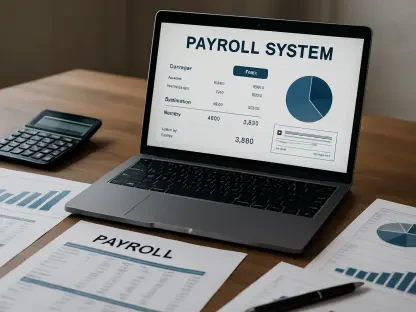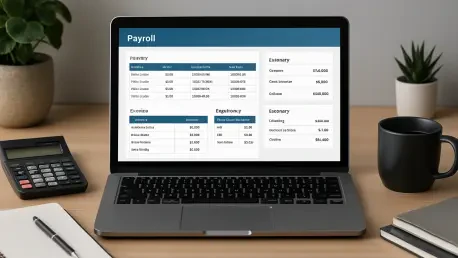

A single misplaced decimal in a payroll run can cascade into a crisis of employee trust and a maze of regulatory fines, underscoring the immense pressure on businesses to achieve perfect accuracy. The selection of a payroll provider has evolved into a strategic decision that deeply influences a company’s operational agility, legal standing, workforce morale, and ultimate capacity for growth. The ideal platform is no longer just an administrative utility for processing wages; it serves as the foundational core of a comprehensive human capital management strategy, directly shaping the relationship between an organization and its most valuable asset—its people. The core challenge for businesses of every scale lies in navigating the complexities and inherent risks of outdated or manual payroll systems. Without dedicated expertise, leadership is confronted with the formidable task of flawlessly calculating wages, managing an intricate array of deductions, and adhering to a relentless schedule of tax deadlines. These manual processes are not merely inefficient and time-consuming; they are a breeding ground for costly errors that can lead to severe financial penalties and irrevocably damage the crucial bond of trust with employees. The definitive solution is a modern, highly automated payroll system that brings precision and reliability to this critical function. A premium provider automates the most labor-intensive and error-prone aspects of payroll, from calculating tax withholdings and processing direct deposits to generating essential year-end forms like W-2s and 1099s. Critically, the most advanced systems integrate seamlessly with other essential HR functions, such as time and attendance tracking and benefits administration, creating a unified and cohesive platform that eradicates redundant data entry and drastically minimizes the potential for human error.
The Strategic Advantage: Key Benefits of Advanced Payroll Systems
Enhancing Operational Efficiency and Compliance
One of the most profound and immediate benefits of transitioning to a modern payroll system is the significant reclamation of time and intellectual resources. The automation of routine, repetitive tasks liberates human resources personnel from the administrative minutiae that have historically consumed their schedules, such as manual data entry, wage calculations, and cross-checking for errors. This newfound efficiency allows them to pivot from a reactive, transactional role to a proactive, strategic one. Instead of being bogged down by paperwork and deadlines, HR professionals can dedicate their expertise to high-value initiatives that directly contribute to the organization’s success. This includes focusing on talent acquisition and retention strategies, developing robust employee training and development programs, fostering a positive and engaging company culture, and providing strategic counsel to leadership on long-term workforce planning. The payroll system, in effect, becomes an engine of productivity that empowers the entire HR function to operate at a higher, more strategic level, transforming it from a cost center into a vital driver of business growth and innovation.
Beyond operational improvements, the adoption of a leading payroll software platform provides an indispensable shield of compliance in an ever-evolving regulatory landscape. The web of federal, state, and even local tax laws is extraordinarily complex and subject to constant change, making it nearly impossible for a non-specialist to maintain perfect adherence. A single oversight can result in substantial fines, audits, and legal liabilities that can jeopardize a company’s financial health. Premier payroll providers employ teams of compliance experts who continuously monitor legislative changes and update their software in real time to reflect new tax rates, withholding requirements, and reporting obligations. This automated compliance management ensures that all tax calculations are accurate and that all filings are submitted correctly and on time, effectively mitigating a significant area of business risk. The system handles the intricate details of wage garnishments, new hire reporting, and other regulated processes, allowing business leaders to operate with the confidence that their payroll practices are fully compliant and protected from costly penalties.
Boosting Employee Experience and Strategic Insights
The consistent and accurate delivery of pay is the most fundamental expectation an employee has of their employer, forming the bedrock of the entire employment relationship. A modern payroll system reinforces this trust by ensuring flawless execution while simultaneously enhancing the overall employee experience through powerful self-service capabilities. Employee self-service (ESS) portals have become a standard feature, empowering team members with direct, on-demand access to their personal compensation information. Through a secure web or mobile interface, employees can independently view and download current and past paystubs, access year-end tax forms like W-2s, manage their direct deposit accounts, and update their personal information without needing to submit a request to HR. This level of transparency and autonomy not only increases employee satisfaction and engagement but also significantly reduces the volume of routine administrative inquiries directed at the HR department, freeing up valuable time for more strategic tasks. A seamless and empowering payroll experience demonstrates an organization’s commitment to its people, fostering loyalty and contributing to a positive workplace culture.
Furthermore, a sophisticated payroll system transforms raw compensation data into a powerful source of strategic business intelligence. The platform captures a vast amount of information with every pay run, and its advanced reporting and analytics tools allow leaders to unlock actionable insights that can inform critical decisions across the organization. Instead of simply seeing a top-line number for total labor costs, managers can drill down into detailed reports to analyze overtime trends by department, compare labor expenses across different locations, and model the financial impact of potential changes to staffing or compensation structures. These data-driven insights are invaluable for strategic budgeting, enabling more accurate financial forecasting and resource allocation. By understanding the true costs and drivers of its workforce expenses, a company can optimize its operational efficiency, identify opportunities for cost savings, and make more informed decisions about future investments in talent and technology, ensuring that its workforce strategy is fully aligned with its overarching business objectives.
The 2026 Standard: Core Features of a Top-Tier Platform
Foundational Must-Haves for Modern Payroll
The most defining trend in the payroll technology sector is the decisive shift away from standalone, siloed applications toward fully integrated Human Capital Management (HCM) platforms. The intrinsic value of a payroll provider is now largely determined by its capacity for seamless connectivity with an organization’s broader ecosystem of HR and financial software. This deep integration is essential for establishing a single, authoritative source of truth for all workforce data, which effectively dismantles the data silos that lead to inefficiency, redundancy, and critical errors. When payroll, time tracking, benefits administration, and performance management systems operate from a unified database, any change—such as a new hire, a promotion, or a benefits election—is automatically propagated across the entire platform. This eliminates the need for manual, duplicate data entry, dramatically improving data accuracy and integrity. The leading providers further enhance this connectivity by offering extensive marketplaces of pre-built integrations with other popular business applications, from accounting software to project management tools, simplifying implementation and reducing the reliance on internal IT resources for complex custom configurations.
While the regulatory and computational logic behind payroll is inherently complex, the user experience of the software itself must be characterized by simplicity and intuitive design. A modern payroll platform should be engineered to mask its underlying complexity, presenting a clean, user-friendly interface that empowers HR managers to execute payroll with confidence and ease, regardless of their technical expertise. This is achieved through intelligent automation that handles the most intricate backend processes—such as calculating multi-jurisdictional taxes, processing wage garnishments, and filing quarterly reports—invisibly and flawlessly. A parallel imperative is scalability; the chosen platform must not only meet the company’s current needs but also possess the inherent flexibility to support its future growth. A truly scalable system can effortlessly accommodate a rising employee headcount, expansion into new states or countries with distinct labor laws, and the introduction of more sophisticated compensation models involving bonuses, commissions, and equity. The ability to grow with the business without necessitating a costly and disruptive platform migration is a critical factor in future-proofing the investment and ensuring long-term operational continuity.
Next-Generation Capabilities
In response to the increasingly dynamic and distributed nature of the modern workforce, comprehensive mobile accessibility has transitioned from a premium add-on to an indispensable core feature of any competitive payroll platform. This mobile-first approach delivers a powerful dual benefit that enhances productivity and engagement for both managers and employees. For leaders and supervisors, a robust mobile application provides the flexibility to manage critical workforce tasks from any location, at any time. They can review and approve employee timecards, authorize time-off requests, and access key performance reports directly from their smartphones or tablets, ensuring that business operations continue to move forward without being tethered to a desk. Simultaneously, mobile access empowers employees with unprecedented control and visibility over their own payroll and HR information. They can clock in and out for shifts, check their pay stubs, request vacation time, and access important company documents on the go, fostering a sense of autonomy and convenience that aligns with the expectations of today’s tech-savvy workforce. This ubiquitous access strengthens communication and engagement while streamlining administrative processes for everyone involved.
The most forward-thinking development in payroll technology is the integration of artificial intelligence (AI) and machine learning, which is fundamentally transforming the function from a reactive, historical process into a proactive and predictive strategic tool. AI-powered platforms are moving beyond simple automation to provide intelligent oversight and foresight. These advanced systems can analyze payroll data in real time to automatically flag anomalies and potential errors—such as an unusually high overtime payment or a duplicate entry—before the payroll run is finalized, allowing HR to correct issues proactively rather than reactively. Furthermore, AI can leverage historical data to generate sophisticated predictive analytics, offering valuable insights for strategic planning. This includes forecasting future cash flow requirements needed to fund payroll, modeling the financial impact of proposed changes to compensation plans, and identifying patterns in workforce data that might signal potential retention issues or opportunities for optimization. By embedding intelligence directly into the payroll process, AI elevates its role from a back-office necessity to a powerful engine for data-driven decision-making and strategic risk management.
A Comparative Look: Top Payroll Providers for Every Business Size
Solutions for Startups and Very Small Businesses
For startups and micro-businesses, typically with fewer than ten employees, the primary requirements for payroll software are simplicity, affordability, and a minimal implementation burden. These organizations often lack a dedicated HR or finance department, meaning the responsibility for payroll falls to a founder or office manager who needs a tool that is intuitive and efficient. SurePayroll is a provider that has built its entire model around serving this specific niche, including the unique needs of household employers. Its platform is intentionally streamlined, stripping away the complex features required by larger enterprises to deliver an exceptionally straightforward and user-friendly experience. The focus is on executing the core functions of payroll flawlessly: calculating wages, processing direct deposits, and, most importantly, managing and filing all federal and state taxes automatically. With its transparent, predictable pricing and quick setup process, SurePayroll offers a reliable and accessible solution that allows very small business owners to manage payroll with confidence and minimal time investment, freeing them to focus on growing their venture.
While simplicity is paramount for startups, another critical consideration is the integration of payroll with other essential business systems, particularly accounting. This is where QuickBooks Payroll establishes its distinct advantage. Designed specifically for the millions of small businesses that already rely on the QuickBooks accounting ecosystem to manage their finances, this payroll solution offers unparalleled, seamless integration. By operating within the same environment, it eliminates the need for manual data reconciliation and duplicate entry between payroll and the general ledger, creating a unified hub for financial management. This direct link ensures that all labor costs are automatically and accurately reflected in the company’s financial statements, simplifying bookkeeping, tax preparation, and overall business analysis. Beyond this core integration, QuickBooks Payroll provides valuable features tailored to its audience, such as integrated time tracking that flows directly into payroll and flexible direct deposit speed options. For businesses already invested in the QuickBooks platform, it represents a powerful and convenient choice that enhances operational efficiency across both finance and HR functions.
Powerhouses for Small to Mid-Sized Businesses (SMBs)
As small businesses evolve into mid-sized organizations, their needs become more complex, requiring a solution that balances robust functionality with an intuitive user experience. Gusto has carved out a significant market share by catering to modern SMBs and startups that prioritize a clean, user-centric design and a high degree of automation. Its platform is widely celebrated for its elegant and easy-to-navigate interface, which successfully unifies the often-disparate functions of payroll, benefits administration—including health insurance and 401(k) plans—and core HR tasks into a single, cohesive system. This all-in-one approach simplifies workforce management significantly, providing a central platform for everything from onboarding new hires to processing payroll and managing employee benefits. Gusto’s strong emphasis on the employee experience, exemplified by its excellent self-service portal, combined with its reliable automation of federal, state, and local tax filings, makes it a compelling choice for growing companies looking to implement a sophisticated yet simple HR and payroll infrastructure.
In contrast, some SMBs require more than just technology; they need access to expert guidance to navigate the complexities of compliance and human resources management. Paychex distinguishes itself in this segment by bundling its powerful and flexible technology with personalized advisory services. This model is ideal for companies that may not have the resources for an in-house HR expert but still face challenges related to employee relations, benefits strategy, or regulatory compliance. Paychex offers a modular platform, allowing a business to start with basic payroll services and then add more comprehensive HR solutions as its needs evolve and its operations expand. On the other end of the spectrum is Rippling, which presents a uniquely modern and integrated approach by unifying not just HR and Payroll, but also IT management, onto a single platform. This is a significant differentiator, as it enables the automation of the entire employee lifecycle, from provisioning software licenses and company devices during onboarding to seamlessly revoking all access upon offboarding. With its strong global payroll capabilities and tech-forward vision, Rippling is particularly well-suited for fast-growing technology startups and distributed companies that demand a comprehensive workforce management solution that transcends the traditional boundaries of HR.
Enterprise-Grade Platforms for Mid-Market and Large Companies
For mid-market and enterprise organizations, the primary challenge is managing increased operational complexity while maintaining efficiency and a unified view of the workforce. These companies require sophisticated solutions that can consolidate disparate systems into a single, cohesive platform. Paycor targets this segment with its powerful, unified HCM software, which tightly integrates payroll processing with advanced modules for talent management, time and attendance tracking, benefits administration, and in-depth analytics. A key feature of Paycor’s architecture is its reliance on a unified database, which serves as a single source of truth for all employee data. This eliminates the data redundancy and synchronization errors that plague systems cobbled together from multiple vendors, ensuring greater accuracy and reliability. With robust compliance management capabilities across all jurisdictions, strong reporting tools that deliver strategic insights, and full mobile access for both managers and employees, Paycor provides a comprehensive solution designed to streamline workforce management at scale.
Another leader in this space, Paycom, offers a similarly unified HCM platform built on a single database architecture, but it differentiates itself with a truly innovative approach to the payroll process itself. Its flagship feature, branded as Beti® (Better Employee Transaction Interface), represents a paradigm shift by making payroll an employee-driven activity. With Beti®, employees are prompted to review, verify, and approve their own paychecks before the payroll is processed. This proactive verification step empowers employees and effectively crowdsources error detection, allowing discrepancies to be identified and corrected at the source, which saves the HR and payroll departments a significant amount of time that would otherwise be spent on post-payroll corrections and adjustments. Alongside Paycom, Paylocity also offers a comprehensive and consolidated HCM platform aimed at mid-sized businesses. Paylocity focuses on reducing the administrative burden through extensive automation, providing a robust employee self-service portal to foster engagement, and ensuring meticulous tax compliance with automated filings and proactive regulatory updates, making it a strong contender for organizations looking to streamline their entire workforce management function.
Leaders in Complexity and Global Scale
When a business operates at a large scale, with employees distributed across multiple states or even globally, its payroll needs transcend standard processing and enter a realm of extreme complexity. This is the domain where industry leader ADP (Automatic Data Processing, Inc.) excels. As one of the most established names in the industry, ADP serves businesses of all sizes through a strategically tiered product lineup, including the agile RUN Powered by ADP for small businesses and the comprehensive ADP Workforce Now for mid-market and large organizations. ADP’s core strength lies in its unparalleled ability to manage the most intricate and demanding payroll scenarios. Its systems are engineered to handle the nuances of multi-state tax withholding, local tax compliance, and the labyrinthine regulations associated with a global workforce. Backed by decades of experience, ADP offers guaranteed accuracy, comprehensive compliance support across thousands of jurisdictions, and extensive capabilities for global payroll management, making it the go-to choice for large enterprises that cannot afford any margin of error in their complex payroll operations.
Similarly, UKG (Ultimate Kronos Group) provides powerful and highly configurable payroll and workforce management solutions that are particularly adept at navigating complexity. While serving organizations of all sizes, UKG’s platform truly shines in environments with diverse and intricate compensation structures. It is engineered to seamlessly manage complex pay rules, such as those involving union contracts, shift differentials, and variable commission payments. The system’s robust calculation engine automates tax withholdings with precision and effectively manages the complex rules associated with deductions like wage garnishments and child support orders, which often vary significantly by state. Coupled with strong mobile access that supports a dynamic workforce and highly customizable reporting tools that provide deep visibility into labor costs, UKG stands as a formidable choice for businesses with demanding and non-standard payroll requirements. For organizations where payroll is not just a routine task but a complex operational challenge, both ADP and UKG offer the industrial-strength capabilities necessary to ensure accuracy, compliance, and peace of mind.
A Strategic Retrospective on Payroll Selection
The process of choosing a payroll provider was revealed to be a critical strategic exercise, not merely a procurement task. A thorough assessment of a company’s unique context—including its current size, operational complexity, industry-specific needs, and projected growth trajectory—was the foundation for a successful decision. There was no single “best” solution; the optimal choice was entirely dependent on the specific circumstances and strategic goals of the individual business.
For small businesses and startups, the decision-making process prioritized solutions that delivered simplicity, intuitive ease of use, and predictable, transparent pricing. Growing companies, in contrast, found that they needed to look for scalable platforms with robust integration capabilities to accommodate increasing headcount and connect seamlessly with other essential business systems. Large enterprise organizations required sophisticated solutions characterized by powerful automation, advanced reporting and analytics, and unwavering multi-state and global compliance features. Ultimately, the successful selection and implementation of the right payroll software became a long-term investment that aligned with the company’s core values, empowering its HR function to evolve from an administrative department into a strategic driver of organizational success.