
Modern workforce statistics suggest that nearly four out of every five employees are navigating their professional lives in a state of psychological detachment or active disengagement. This pervasive “passion gap” represents more than just a lack of morale; it is a systemic failure in how talent is identified and deployed across the global economy. The DreamJob Type Indicator (DJTI) enters this space not as a traditional personality test, but as a specialized diagnostic tool aimed at synchronizing internal human energy with external professional requirements. Originally developed by Ken Steven through sixteen years of intensive research, the indicator has recently undergone a major transformation following its strategic acquisition by Careerz Group. This review examines how the technology differentiates itself in a crowded market of behavioral assessments.
Evolution of the DreamJob Type Indicator
The DJTI was born from a fundamental critique of the “skills-only” hiring model that has dominated human resources for decades. While most platforms prioritize what a person is capable of doing—their certifications, experience, and historical performance—the DJTI investigates the sustainability of those activities. It addresses the phenomenon of the “high-performing burnout,” where an individual excels at a task but finds it emotionally draining. By shifting the focus toward intrinsic motivation, the tool attempts to predict long-term retention rather than just immediate job fit.
Under the stewardship of Careerz Group, the technology has moved from a standalone psychometric book-based theory into a scalable digital asset. The acquisition marks a significant trend in the industry: the blending of deep qualitative psychological research with high-speed data processing. This integration allows the DJTI to function as a predictive layer within talent management suites, offering a more nuanced view of human capital than the broad-brush personality labels provided by older systems like the Myers-Briggs Type Indicator or DISC.
Core Components: The 4Ts Methodology
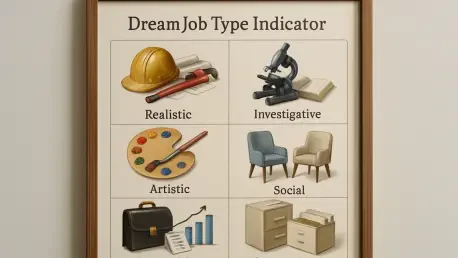
The structural integrity of the DJTI rests on the “4Ts” framework: Truths, Type, Traits, and Transition. This logical progression allows the system to distill complex human desires into twenty-one distinct “DreamJob Types.” Instead of providing a static profile, the methodology treats professional identity as a dynamic workflow preference. By analyzing these four dimensions, the indicator identifies the specific environments where a user feels most energized, effectively mapping out a blueprint for a career that feels like a natural extension of the self rather than an obligatory burden.
The unique value proposition here lies in the granularity of the “DreamJob Types.” While a standard assessment might label someone an “extravert,” the DJTI identifies the specific type of social workflow—such as mentoring, negotiating, or presenting—that provides the individual with a sense of purpose. This distinction matters because it helps users and employers avoid the trap of “paycheck purgatory,” a state where professional success exists without personal fulfillment. It provides a common language for discussing work satisfaction that is both objective and actionable.
Passion-Based DatThe Technical Edge
One of the most innovative aspects of the DJTI is its ability to quantify “passion-based data,” a metric traditionally considered too subjective for rigorous HR software. By integrating this data into existing AI platforms, Careerz Group has created a way to measure the “passion gap” during the recruitment process. This component functions by comparing a candidate’s natural workflow energy against the specific demands of a job description. If a role requires heavy administrative oversight but the candidate’s DreamJob Type is rooted in creative disruption, the system flags a potential long-term mismatch, regardless of the candidate’s skill level.
This approach offers a clear advantage over competitors who rely solely on algorithmic resume parsing. While AI can easily match keywords for “Project Management,” it rarely accounts for whether the candidate actually finds joy in the granular tasks of that role. The DJTI’s focus on the “whole person” ensures that the data used for hiring is multi-dimensional. This prevents the common corporate mistake of hiring a “perfect” candidate who resigns after six months due to a lack of alignment with the daily reality of the position.
Real-World Applications: Corporate and Coaching
In the corporate sector, the DJTI is proving to be a potent weapon against the high costs of employee turnover. Companies are utilizing the indicator to move beyond surface-level interviews and delve into the psychological compatibility of a team. By understanding the DreamJob Types of existing employees, managers can redistribute tasks to align with natural strengths, effectively “re-hiring” their current workforce into roles that spark renewed engagement. This application is particularly valuable in high-stakes environments where disengagement directly impacts the bottom line.
Beyond the boardroom, the framework provides career coaches with a repeatable and validated system for guiding clients through transitions. For professionals seeking a mid-career shift, the 21 DreamJob Types serve as a compass, allowing them to bypass the typical trial-and-error approach to job searching. This systematic clarity helps individuals identify exactly why previous roles failed to satisfy them, turning what was once a vague feeling of discontent into a structured plan for professional realignment.
Future Outlook: The Talent Optimization Trajectory
The long-term trajectory for the DreamJob Type Indicator involves a deeper immersion into the burgeoning field of talent optimization. As remote and hybrid work models continue to evolve, the need for data that reflects an employee’s internal drive becomes even more critical. Future iterations of the DJTI will likely involve real-time monitoring of engagement levels, using AI to predict when an employee’s passion for their current role is beginning to wane. This would allow for preemptive internal pivots, ensuring that talent is retained within the organization even as individual interests shift.
The final assessment of the DreamJob Type Indicator was overwhelmingly positive, as it successfully bridged the gap between human emotion and corporate utility. By standardizing the measurement of professional passion, the tool provided a viable path toward a more sustainable and productive global workforce. The integration into the Careerz Group infrastructure moved the methodology from a theoretical framework into a functional reality, signaling a future where the definition of a “good job” is no longer just about the salary, but about the profound alignment of duty and desire. Actionable steps for organizations now involve moving beyond the “skills gap” to actively diagnose the “passion gap” within their ranks.