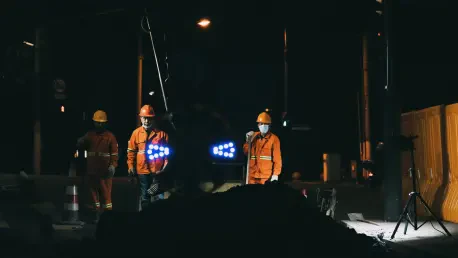

The integration of sophisticated neural networks into heavy machinery has transformed the traditional construction site from a place of manual labor into a high-tech ecosystem where data flows as freely as concrete. This shift is not merely about replacing human effort but rather about augmenting the physical capabilities of workers through advanced exoskeletons and computer-vision-enabled safety systems that prevent accidents before they occur. In the current landscape of 2026, the demand for skilled tradespeople who can operate and maintain these complex systems has surged, creating a new class of “new-collar” workers who blend traditional craftsmanship with digital fluency. As artificial intelligence becomes more deeply embedded in the physical world, the boundaries between software engineering and manual trades are blurring, forcing a complete revaluation of what it means to work in the industrial sector. This evolution has led to significant productivity gains while simultaneously raising questions about the necessity of rapid upskilling.
Industrial Transformation: Precision Engineering and Robotics in Construction
Robotic masonry systems and autonomous bricklayers have moved beyond the experimental phase to become standard features on large-scale infrastructure projects across North America. These machines utilize real-time spatial mapping and 3D modeling to lay bricks with a degree of accuracy that human hands cannot consistently match over an eight-hour shift. By employing these automated systems, construction firms are significantly reducing material waste and structural errors, which previously accounted for a substantial portion of budget overruns. Workers on these sites are no longer carrying heavy loads or performing repetitive motions; instead, they serve as fleet managers and quality control specialists who oversee several machines at once. This transition has dramatically lowered the rates of musculoskeletal injuries among aging workforces while attracting younger recruits who are drawn to the tech-centric nature of modern site management. The focus has shifted from brute force to technical oversight.
Furthermore, the deployment of autonomous earth-moving equipment in mining and site preparation has revolutionized how large-scale excavation is conducted in 2026. These heavy machines are equipped with light detection and ranging sensors that allow them to operate with centimeter-level precision, even in low-visibility conditions or hazardous environments. By removing human operators from the cabs of excavators and bulldozers, companies have seen a marked decrease in occupational hazards and a corresponding increase in operational efficiency. These machines can operate continuously without the need for breaks, optimizing fuel consumption through algorithmic pathing that minimizes unnecessary movement. The role of the heavy equipment operator has evolved into a remote monitoring position, where one individual might control a fleet of five or six machines from a climate-controlled command center miles away from the actual work site. This spatial decoupling of labor allows for more flexible scheduling and career paths.
Strategic Systems: Resource Management and Logistics Optimization
Warehousing and logistics sectors have undergone a radical transformation as generative AI and reinforcement learning models now dictate the flow of goods with unprecedented efficiency. Modern distribution centers utilize swarms of mobile robots that coordinate their movements through a centralized intelligence system to pick, pack, and sort items with minimal human intervention. This optimization extends to the very layout of the warehouse, which can now be dynamically reconfigured by AI based on predictive analytics regarding seasonal demand and supply chain fluctuations. Human workers in these environments have transitioned into roles that require high-level problem solving and the management of robotic fleets rather than the physical exertion of moving pallets. The implementation of augmented reality headsets provides these workers with real-time data overlays, guiding them through complex maintenance tasks or identifying bottlenecks. Consequently, the productivity of a single worker in a tech-integrated warehouse has tripled.
The integration of artificial intelligence into the blue-collar sector ultimately redefined the traditional career trajectory for millions of workers by prioritizing digital literacy over physical endurance. As these technologies matured through 2026, it became clear that the most successful organizations were those that invested heavily in comprehensive retraining programs and human-centric design. Policymakers and industry leaders recognized that while AI could perform repetitive tasks with flawless precision, the human element remained indispensable for complex decision-making and ethical oversight. Organizations found success by establishing continuous learning pipelines that allowed employees to rotate through various technical roles, ensuring a versatile and resilient workforce. Priority was given to the development of standardized certifications for AI-human collaboration to facilitate labor mobility across different industries. The focus remained on creating a symbiotic relationship where technology empowered workers.