
In a landscape where a single missed shift in a rural hospital or a shipping delay at a global distribution center can ripple through an entire supply chain, the necessity for instantaneous operational control has never been more urgent. The historical reliance on static data and reactive planning has become a liability for modern enterprises. As organizations grapple with labor shortages and fluctuating consumer demands in 2026, the focus has pivoted away from merely recording hours toward actively orchestrating talent in real-time. This evolution marks the rise of the “system of action,” a paradigm where software does more than store information—it dictates the most efficient path forward for a business and its people simultaneously.
The Shift From Tracking Time to Powering Real-Time Operations
The era of using static spreadsheets and reactive scheduling to manage a global workforce has officially come to an end. In the current business climate, companies no longer view workforce management as a back-office utility but as a front-line necessity. Organizations are gravitating toward platforms that provide a live pulse of their operations. UKG has positioned itself at the epicenter of this shift by transforming the traditional concept of workforce management into a dynamic, AI-first operating environment. This approach allows managers to move beyond the limitations of historical reporting, enabling them to make decisions based on what is happening on the floor at this very second.
By prioritizing an AI-first architecture, the platform proactively identifies potential disruptions before they manifest as costly errors. For example, instead of a manager noticing a staffing gap halfway through a shift, the system uses predictive analytics to flag the shortage hours in advance and suggests a qualified replacement. This transition from “looking back” to “acting now” has redefined operational excellence. It ensures that productivity remains high while reducing the stress on supervisors who previously spent hours manually reconciling schedules and attendance records.
Why the Integration of HCM and WFM Is the New Global Standard
The separation between Human Capital Management (HR and payroll) and Workforce Management (scheduling and timekeeping) has historically created massive data silos that hinder growth. In today’s volatile market, businesses with large frontline workforces—such as manufacturing, healthcare, and logistics—require a unified view to maintain agility. UKG’s dual recognition as a leader in both the Gartner® Magic Quadrant™ for Workforce Management and HCM Suites for large enterprises highlights a critical trend: the most successful companies are those that bridge the gap between long-term people strategy and hour-by-hour operational execution.
When HR data and operational data live in the same ecosystem, the benefits extend across the entire enterprise. Payroll becomes more accurate because it is fed directly by real-time timekeeping data, and employee engagement improves because workers have a clearer line of sight into their schedules and benefits. This integration removes the friction that typically exists between corporate headquarters and the frontline. By providing a single source of truth, the platform ensures that every decision, from a high-level hiring plan to a localized shift swap, is backed by comprehensive data.
The Architectural Pillars of the UKG Workforce Operating Platform
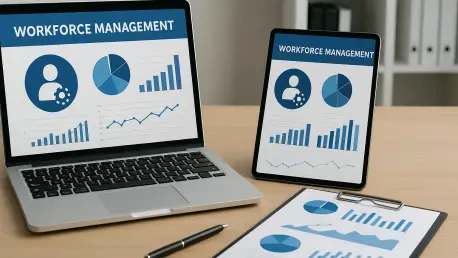
The Workforce Intelligence Hub serves as the central nervous system of this modern platform, integrating HR, payroll, and workforce management data to provide leaders with a single, real-time source of truth. This hub eliminates the need for manual data entry across different departments, ensuring that everyone in the organization is working from the same information. Complementing this is the Dynamic Workforce Operations tool, which continuously analyzes real-time demand signals—like patient census in a hospital or foot traffic in a store—and aligns them with labor availability. This allows managers to re-allocate resources instantly as conditions change throughout the day.
Engagement for the deskless worker is handled through UKG Talk and a mobile-first employee experience. By providing a dedicated communication tool for employees who do not sit at desks, the platform ensures that shop-floor and field staff remain connected to corporate strategy. Furthermore, AI-driven recruitment via UKG Rapid Hire automates up to 90% of repetitive hiring tasks. This enables high-volume employers to scale their workforces rapidly through a mobile-centric application process. For multi-national corporations, UKG One View centralizes global payroll across more than 120 currencies, ensuring compliance while providing a clear picture of total labor spend.
Industry Validation and the Rise of Agentic HR
UKG’s leadership is reinforced by the trust of 80,000 organizations, including two-thirds of the Fortune 1000. Experts point to the emergence of “Agentic HR”—where AI moves beyond simple automation to become a strategic partner that guides decision-making—as a primary driver of this success. This technology does not just perform tasks; it understands context and provides recommendations that align with business goals. Large-scale employers, such as FJ Management, credit their operational excellence to this robust AI roadmap, which allows them to reduce administrative burdens while simultaneously improving the accuracy and reliability of their frontline operations.
The move toward Agentic HR represents a fundamental change in how technology interacts with the workforce. Rather than being a tool that employees have to manage, the platform acts as an assistant that manages the complexities of the work environment for them. This shift has allowed HR professionals to step away from the minutiae of data management and focus on more strategic initiatives, such as talent development and organizational culture. The result is a more resilient business model that is capable of adapting to the rapid changes of the modern economy.
Strategies for Implementing a System of Action in Your Organization
To successfully transition to a system of action, organizations must prioritize real-time visibility. This involves moving away from historical data analysis and adopting tools that allow managers to see staffing gaps and labor costs as they fluctuate throughout a shift. Empowering the frontline workforce is equally important; implementing mobile-first communication and scheduling tools gives employees more control over their work-life balance while keeping them informed of company goals. Automation should also be utilized for high-volume tasks, such as shift swaps and initial candidate screenings, to free up human resources for more complex, strategic work.
Finally, unifying global operations is essential for companies operating across different regions. Consolidating disparate payroll and timekeeping systems into a single platform ensures compliance and provides a holistic view of labor productivity. Leaders found that the transition toward a system of action eliminated the friction between corporate strategy and the reality of the shop floor. Organizations realized that by treating frontline agility as a core metric, they secured a competitive advantage that transcended simple cost-cutting. The successful deployment of these strategies transformed how enterprises viewed their human capital, proving that the modern workforce required a platform capable of evolving in real-time. By embracing these insights, businesses prepared themselves for a future where adaptability was the only constant.