
Sofia Khaira is a distinguished specialist in diversity, equity, and inclusion, renowned for her transformative approach to talent management and development. As an HR expert, she bridges the gap between cutting-edge technology and human-centric workplace practices, ensuring that organizational growth is both equitable and efficient. With her deep background in fostering inclusive environments, Sofia provides a unique perspective on how the latest advancements in artificial intelligence and data integration are reshaping the recruitment landscape.
This discussion explores the evolution of the hiring funnel, moving from passive record-keeping to proactive, agentic systems. We delve into the mechanics of AI-driven screening and the importance of maintaining fairness, the psychological shifts required to improve candidate engagement through chat interfaces, and the strategic automation of talent pools. Sofia also shares insights on the critical role of fraud detection in protecting the integrity of the applicant pool and the long-term implications of synchronizing recruitment data with broader human capital management platforms.
AI agents now conduct first-round screenings to provide scored candidate answers at scale. How does this shift the recruiter’s daily focus, and what specific protocols ensure these automated scores remain consistent and fair across diverse applicant pools?
The introduction of agentic interviewers like Winston fundamentally changes the recruiter’s day by removing the heavy lifting of initial manual screening, which has historically been a major bottleneck. Instead of spending hours reviewing basic qualifications, recruiters can focus on high-level strategy and final-stage candidate relationships, especially since candidates recommended by these AI agents are 100% more likely to be selected for interviews. To ensure fairness, we utilize sub-scores for education, skills, and experience, which standardizes the ranking process and minimizes the “gut feeling” bias that often plagues human reviews. For a team to audit these results effectively, they should first establish a baseline by comparing AI scores against manual reviews for a diverse sample set, then regularly analyze the distribution of scores across different demographic groups to catch any skew. Finally, leadership must conduct monthly “calibration sessions” where they deep-dive into specific “Winston Match” scores to ensure the AI’s logic aligns with the evolving needs of the specific business unit.
Moving assessments and job-specific questions directly into chat interfaces can increase application completion rates to over 60%. Why do traditional application methods fail to keep candidates engaged, and what metrics should hiring managers monitor to ensure these chats provide high-quality data while reducing friction for the applicant?
Traditional application methods often feel like a one-way interrogation, involving tedious forms that require candidates to re-enter information already present on their resumes, leading to massive drop-off rates. By embedding assessments and Q&As directly into a conversational chat interface, we meet candidates where they are, resulting in completion rates as high as 66% in our recent deployments. Hiring managers should closely monitor the “drop-off point” within the chat—identifying exactly which question causes a candidate to stop responding—as well as the time-to-completion and the sentiment of the interactions. These metrics allow us to refine the conversational flow, ensuring it remains helpful and multilingual, which is essential for global talent pools. The goal is to make the process feel like a helpful consultation rather than a bureaucratic hurdle, which naturally invites more honest and detailed responses from the talent.
Transforming a CRM from a passive system of record into an active tool that automatically ranks and re-engages talent pools represents a significant shift. What are the practical steps for setting up automated outreach across multiple channels like SMS and WhatsApp, and how can recruiters maintain a personalized human touch?
Shifting to an agentic CRM means your database is finally working for you rather than just sitting idle; it’s about unlocking the latent value of people you’ve already sourced. To set this up, a team must first categorize their talent pools based on “recruiter intent,” allowing the system to surface and rank candidates who have the specific skills needed for new roles. Automated outreach via SMS and WhatsApp should be triggered by these rankings, but the content must be tailored and compliance-aware to avoid looking like spam. To maintain a human touch, we use these automated channels to handle the “check-in” and the “scheduling,” but the actual messaging should be drafted using conversational templates that reflect the company’s unique culture and voice. By the time a recruiter steps in, the candidate has already been warmed up through a familiar channel, making the eventual human-to-human conversation feel like a natural progression of a pre-existing relationship.
Identifying fraudulent applications now involves analyzing behavioral signals and device intelligence. How can organizations configure these fraud detection tools to minimize “false positives,” and what is the best workflow for routing suspicious candidates for additional verification without slowing down the entire hiring funnel for legitimate talent?
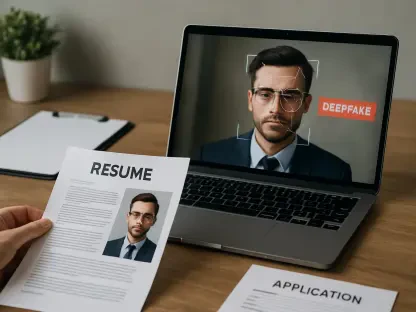
Fraudulent applications are a rising tide in the digital age, and protecting the integrity of the pool requires a sophisticated mix of device intelligence and network indicators. To minimize “false positives,” organizations must tune their risk thresholds based on their specific tolerance levels, ensuring that the system only flags truly anomalous behavioral signals. When a submission is flagged as high-risk, it shouldn’t just be deleted; instead, it should be automatically “quarantined” and routed to a specific verification track, such as an on-demand Winston Interview. This allows legitimate candidates who might have been flagged by mistake to prove their identity through a live-response format, while the recruiter’s main queue remains clear of suspicious noise. This “review queue” approach ensures that the hiring funnel stays fast and fluid for 99% of applicants while maintaining a rigorous gatekeeping process for the outliers.
Seamless integration between hiring software and broader human capital management platforms allows for deep visibility into employee performance and business growth. How does having access to these synchronized data sets change organizational intelligence, and what are the primary hurdles when migrating legacy data into these integrated ecosystems?
Synchronizing SmartRecruiters with platforms like SAP SuccessFactors creates a “closed-loop” system where we can finally see how a specific hiring decision impacts long-term business growth and employee performance. This visibility allows us to adjust our sourcing strategies in real-time; for example, if data shows that candidates from a certain background have a 75% higher retention rate, we can immediately instruct our AI agents to prioritize those skill sets. The primary hurdle is almost always the “messiness” of legacy data, which is why we’ve developed agentic migration tools that recommend field mappings and support rigorous data validation. These tools monitor for data-related failures during the transition, ensuring that when the switch is flipped, the intelligence is accurate from day one. It transforms HR from a reactive service department into a predictive powerhouse that can forecast talent needs based on actual business performance metrics.
What is your forecast for autonomous talent acquisition?
My forecast for 2026 and beyond is that we will move entirely away from “software as a tool” and toward “software as a teammate,” where autonomous agents handle the entire orchestration of the hiring funnel. We are already seeing a 75% reduction in time-to-decision using screening agents, and soon, these systems will not only find and rank talent but also predict a candidate’s future success within a specific company culture before the first interview even happens. This shift will make hiring truly “easy” by automating the administrative burden, but it will place an even higher premium on human-centric design. We will see a world where recruiters are freed from the “process” of hiring and can spend 100% of their time on the “art” of hiring—building deep, meaningful connections with the people who will drive their company’s future.