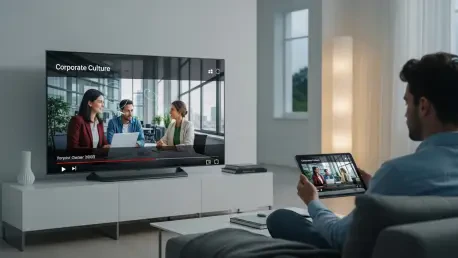

The quiet evening atmosphere of a modern living room has unexpectedly transformed into the newest high-stakes arena for corporate talent acquisition as professionals spend more time streaming than searching. While traditional job boards remain a functional part of the hiring ecosystem, forward-thinking organizations are now bypassing these crowded marketplaces to engage potential employees during their leisure hours. By leveraging Connected TV technology, recruiters can insert high-quality video messaging into the middle of popular series on platforms where audiences are most relaxed and receptive.
This transition reflects a fundamental shift in how human resources departments perceive the candidate journey, moving away from reactive posting toward proactive brand storytelling. Instead of waiting for a candidate to feel dissatisfied enough to visit a job site, companies are establishing a presence in the personal lives of top-tier talent. This ensures that their corporate culture becomes a household name long before a formal application is considered, effectively blurring the lines between home entertainment and professional networking.
Reaching Talent Through Premium Streaming
Moving Recruitment Up-Funnel: The New Visibility
Traditional hiring methods often rely on active job seekers who are already looking for a change, but modern recruitment marketing aims to capture a much wider and more diverse audience. By integrating high-resolution advertisements into premium streaming content on platforms like Netflix and Hulu, companies can build significant brand awareness long before a candidate starts a formal job search. This “up-funnel” strategy ensures that a company’s mission and core values remain top of mind, effectively turning the living room into a vital space for professional engagement.
When a viewer sees a compelling story about a company’s innovation or workplace environment between episodes of a hit show, the message carries a level of prestige that a standard job posting simply cannot replicate. This method allows organizations to cultivate a pipeline of interested talent that is familiar with the brand’s identity, reducing the friction usually associated with the initial stages of recruitment. This approach ensures that when a professional is finally ready for a career move, the employer’s name is already established as a top choice.
Engaging the Passive Job Seeker: Beyond Active Searching
A core theme in this modern approach is the “consumerization” of the job seeker, treating potential employees with the same level of care and precision as high-value customers. This philosophy shifts the recruitment process from a simple transaction to a sophisticated, long-term branding effort that specifically targets “passive candidates” during their downtime. These are highly skilled individuals who may not be actively browsing job boards but remain open to new opportunities when a compelling brand narrative catches their eye during their nightly entertainment routine.
By presenting career opportunities in a visually engaging format, companies can bypass the “application fatigue” that often plagues active seekers. This strategy relies on the idea that the best talent is often already employed and needs to be inspired rather than recruited. Capturing their attention in a relaxed environment creates a more positive and lasting impression of the employer, fostering a sense of familiarity that pays dividends when a position finally opens up. Treating the professional as a consumer allows for a more organic and persuasive interaction.
Precision Targeting and Practical Execution
Leveraging DatThe Science of Modern Hiring
One of the most effective aspects of using streaming platforms for recruitment is the ability to use advanced data sets for precision targeting that was previously impossible. Unlike old-fashioned linear television advertisements that cast a wide and often wasteful net, these digital solutions allow employers to focus on specific geographic areas, professional backgrounds, and even viewer interests. This data-driven method ensures that recruitment budgets are spent wisely, reaching only the most relevant audiences while providing clear metrics to track the success of each specific campaign.
Hiring managers can now see exactly how many viewers watched an entire recruitment spot and how many eventually navigated to the company’s career page. This level of granularity transforms the recruitment budget from an overhead cost into a measurable investment with a clear return. By utilizing first-party and third-party data, organizations can ensure their message reaches the exact demographic required for specialized roles, minimizing waste and maximizing the impact of every dollar spent. This scientific approach to hiring has removed much of the guesswork from traditional media buys.
Strategic Integration: Steps for Long-Term Success
Recruitment partners developed specialized creative support systems to help human resources teams produce high-quality video content without the traditionally high costs of a full-scale media production. These advertisements functioned as the primary touchpoint within a larger omnichannel strategy where a commercial viewed on a smart TV led naturally to a mobile application or a talent community via integrated QR codes. Real-world applications demonstrated that integrating professional opportunities into a candidate’s leisure lifestyle was the most effective way to build a strong workforce.
Forward-thinking organizations moved toward these integrated models by prioritizing authentic video storytelling and cross-device connectivity across all recruitment campaigns. They implemented tracking systems that linked television impressions directly to mobile applications, which ensured a seamless journey for the user from discovery to application. Marketing and human resources departments collaborated to produce content that resonated with viewers on a personal level, which ultimately reduced the average time-to-hire. These teams successfully adapted by treating the living room as a site for discovery.