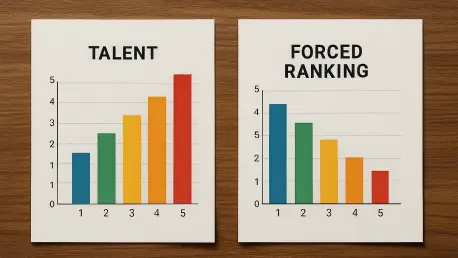

In the high-stakes world of corporate performance, the line between incentivizing excellence and creating a culture of fear can be razor-thin, a dilemma brought into sharp focus by Meta’s latest performance management overhaul. The pursuit of a high-performance culture has led many organizations down different paths, with two dominant philosophies emerging: one that seeks to reward talent based on individual merit and another that grades employees against a predetermined curve. Understanding the fundamental differences between these approaches is crucial for any leader aiming to build a motivated, collaborative, and successful team.
Understanding the Core Philosophies of Performance Management
At its heart, a talent-centric reward system is built on the principle of recognizing and compensating employees based on their unique contributions and impact. This approach is flexible by nature, allowing performance to be assessed in context and without artificial constraints. It operates on the belief that excellence is not a zero-sum game and that an entire team can, in theory, exceed expectations simultaneously. The goal is to foster an environment where individual growth and collective success are mutually reinforcing.
In stark contrast, forced ranking models operate on a philosophy of comparative evaluation. This system, which gained notoriety as the “rank and yank” method in the 1980s, presupposes that employee performance will always fit a bell curve. It mandates that managers categorize their team members into predefined tiers—a certain percentage must be top performers, a large majority must be average, and a specific portion must be labeled as underperformers. Meta’s “Checkpoint” system serves as a prominent modern case study. While the company frames it as a tool to simplify evaluations and reward its top contributors, its mechanics align squarely with the rigid structure of a forced ranking model.
A Comparative Breakdown of System Mechanics
Performance Distribution and Employee Categorization
The most significant operational difference between these two systems lies in how they handle performance distribution. A true talent-reward system allows for a natural spread of ratings determined purely by merit. If a team achieves outstanding results across the board, the evaluation system can reflect that reality without imposing limits on how many individuals can be recognized for excellence. This flexibility allows for a more accurate and context-aware assessment of performance, particularly in highly collaborative or project-based environments.
Meta’s Checkpoint, however, eliminates this flexibility by mandating a fixed distribution. The system predetermines that approximately 20% of employees will be rated “Outstanding,” 70% will be “Excellent,” 7% will “Need improvement,” and the bottom 3% will be “Not meeting expectations.” Managers are required to force their teams into these quotas, regardless of whether the team’s actual performance aligns with this statistical model. This rigid categorization transforms performance reviews from an assessment of individual merit into a mathematical exercise in slotting employees into predefined boxes.
Financial Incentives and Compensation Structure
Compensation structures under these two philosophies also diverge significantly. In a flexible talent-reward system, financial incentives are typically linked to a holistic view of an employee’s impact, considering factors like project success, skill development, and collaborative contributions. While performance ratings influence compensation, there is often room for nuance and managerial discretion.
Forced ranking systems, and Checkpoint in particular, create a much more direct and rigid link between an employee’s category and their financial reward. The system’s high-stakes bonus multipliers establish a stark financial hierarchy. A very small group achieving a “truly exceptional impact” rating can earn a 300% bonus multiplier, while those rated “Outstanding” receive 200%, and the “Excellent” majority gets 115%. The penalties are just as severe: those who “Need improvement” see their multiplier drop to 50%, and the bottom tier receives a 0% multiplier. This structure is explicitly designed to channel the vast majority of bonus funds to a small percentage of staff, creating intense financial pressure tied directly to the mandated ranking.
Managerial Autonomy and Perceived Fairness
Perhaps the most damaging difference lies in the level of autonomy granted to managers and the resulting perception of fairness among employees. Talent-focused models empower managers to use their judgment, assessing performance based on individual contributions, team dynamics, and situational context. This approach builds trust, as employees feel their direct supervisor can advocate for them based on the quality of their work.
Forced ranking severely constrains this autonomy. Under Checkpoint, a manager leading a team of high-achievers faces an impossible choice. Even if every team member has met or exceeded expectations, the manager is forced to categorize some as needing improvement simply to fulfill the 7% quota for that tier. This fundamentally undermines fairness, as a genuinely strong performer on an excellent team can be penalized. The system forces managers to make difficult, and often arbitrary, decisions that can damage morale and create resentment, shifting the focus from performance to politics.
Real-World Consequences and Cultural Impact
The implementation of a forced-ranking model often brings a host of negative organizational consequences, and the critiques leveled against systems like Checkpoint highlight these risks. The primary challenge is its potential to foster a toxic and counterproductive work environment. When employees know that their financial well-being and career progression depend on outranking their colleagues, collaboration can quickly give way to intense and unhealthy internal competition. The arbitrary nature of forcing people into a statistical curve erodes trust in leadership and the evaluation process itself.
This structure risks creating a culture of fear, where the focus shifts from achieving collective goals to ensuring individual survival. Good employees may be unfairly labeled as underperformers due to quota requirements, leading to disengagement and attrition among valuable team members. This echoes problems from Meta’s own history regarding its treatment of employees deemed “low performers,” suggesting that such a system may perpetuate, rather than solve, underlying cultural issues. The long-term impact can be a significant blow to team morale, innovation, and the spirit of teamwork that many modern companies strive to cultivate.
Summary and Recommendations: Choosing the Right Approach
In conclusion, while Meta’s Checkpoint was framed as a sophisticated tool to reward top talent, its core reliance on a forced distribution curve aligns it with the discredited “rank and yank” systems of the past. The model prioritizes a rigid, statistical framework over a fair and context-aware evaluation of individual performance. This approach fundamentally misinterprets human performance by assuming it will always conform to a bell curve, a premise that often fails in the real world of teamwork and collaborative success.
For most organizations, a flexible system that rewards talent based on merit and contribution is far better suited to fostering a positive culture, encouraging collaboration, and driving long-term success. The significant downsides of forced ranking—including its potential to damage teamwork, penalize good employees on strong teams, and erode morale—make it an unsuitable and high-risk strategy. Companies considering their performance management strategy should weigh these consequences carefully. An approach that empowers managers and trusts them to evaluate their teams fairly is more likely to build a resilient, motivated, and truly high-performing workforce than one that forces human achievement into a rigid mathematical formula.