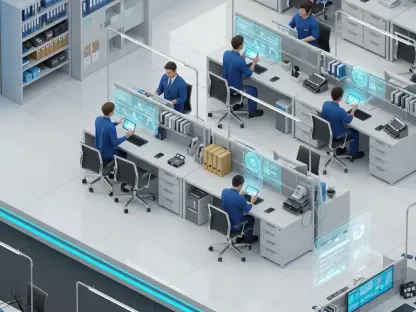
In a rapidly evolving job market where automation and artificial intelligence are reshaping entire industries, the very definition of a skilled employee is being fundamentally rewritten. As technology automates routine tasks, understanding which uniquely human and technical skills will be most valuable is no longer just a strategic advantage—it is a core necessity for professional survival. This analysis explores the key trends shaping the future of work, drawing on recent data to reveal the most sought-after competencies for 2026 and what this shift means for employees and employers alike.
The Emerging Skills Hierarchy A Data Driven Perspective
The Balanced Skill Set Data and Trends
A clear consensus is forming among hiring managers that the ideal employee possesses a hybrid of technical and interpersonal abilities. According to recent survey data from 2024, a commanding 62% of U.S. hiring managers view hard and soft skills as equally important, signaling an end to the era where technical prowess alone could guarantee a career. This balanced perspective is becoming the new standard for talent evaluation.
Furthermore, a significant shift is underway that places a premium on human-centric qualities. Nearly a quarter of employers now believe soft skills are more important than hard skills, a stark contrast to the mere 14% who prioritize technical expertise above all else. This trend is accelerating, with 60% of business leaders reporting that soft skills have become more critical to their operations now than they were just five years ago.
The Most In Demand Skills for 2026
The report identifies a specific list of competencies that will define the most valuable employees in the coming years. Among hard skills, proficiency in essential software tools leads the demand, followed by expertise in data analysis, cybersecurity, and project management. Competence in quality assurance and automation also ranks highly, forming the technical bedrock of the modern enterprise.
On the interpersonal front, communication stands out as the most vital soft skill, underscoring the need for clarity and collaboration in any role. Following closely are professionalism, time management, and accountability, which together create a foundation of reliability. Rounding out the list, resilience and problem-solving are seen as essential for navigating an increasingly complex and unpredictable business environment.
Expert Analysis Interpreting the Workforce Shift
The AI Paradox Why Foundational Tech Skills Still Reign
Despite massive corporate investment and media attention surrounding artificial intelligence, the ability to use “AI tools” ranked surprisingly low on the list of desired hard skills. This suggests a critical distinction in employer strategy: AI is viewed as a powerful supplementary tool, not a replacement for fundamental competence.
This “AI paradox” indicates that employers are prioritizing the foundational technical capabilities that underpin all core business functions. Expertise in software, data management, and security remains the bedrock of an effective and agile workforce. Before companies can fully leverage advanced AI, they need a talent pool that has mastered the essential technologies that power the organization day to day.
The Human Imperative Communication and Professionalism
The overwhelming emphasis on communication highlights the irreplaceable value of human interaction. In a workplace augmented by technology, the ability to convey ideas clearly, collaborate effectively with teams, and articulate complex information is more crucial than ever. It is the essential oil that keeps the gears of innovation and productivity turning smoothly.
The high ranking of professionalism is particularly noteworthy, with some experts viewing it as a direct response to a perceived decline in workplace etiquette and a growing casualness among new entrants. This signals a strong desire from employers for a return to reliability, decorum, and a shared understanding of professional conduct, which they see as vital for maintaining a cohesive and respectful corporate culture.
Future Outlook Confronting the Skills Gap
The Challenge of Workforce Readiness
A critical challenge emerging from the data is a widening skills gap, particularly among those just entering the professional world. A majority of business leaders feel that entry-level employees are increasingly unprepared for the demands of their roles. This lack of readiness is not a failure of technical knowledge but a significant deficiency in essential soft skills.
The most commonly cited shortcomings are in areas like accountability, time management, and proactive problem-solving. This disconnect between employer expectations and the capabilities of the incoming workforce poses a significant risk to organizational productivity, team cohesion, and the capacity for long-term innovation.
The Path Forward Upskilling and Organizational Investment
To remain competitive and bridge this gap, organizations must shift from being passive consumers of talent to active cultivators of it. The future demands a strategic and sustained focus on continuous learning, with companies investing in robust training programs that develop both technical prowess and the human-centric skills needed to thrive.
Ultimately, navigating the evolution of the labor market requires a collaborative effort. Educational institutions, corporate training departments, and individual professionals must work together to build a resilient, adaptable, and well-rounded workforce. Preparing for the challenges of tomorrow means creating an ecosystem of learning that anticipates and responds to the changing demands of the global economy.
Conclusion Architecting the Workforce of the Future
The labor market of 2026 was defined by a sophisticated and balanced demand for both hard and soft skills. While technical expertise in areas like data analysis and cybersecurity remained crucial, interpersonal abilities such as communication and professionalism gained unprecedented importance, becoming key differentiators for top talent.
A significant skills gap, particularly in these vital soft skills, challenged workforce readiness and prompted a strategic response. To thrive in an era of accelerating automation, individuals cultivated a more holistic skill set, and organizations committed to robust internal training and development. Building a future-proof workforce began with a shared understanding that our most human qualities had become our greatest professional assets.