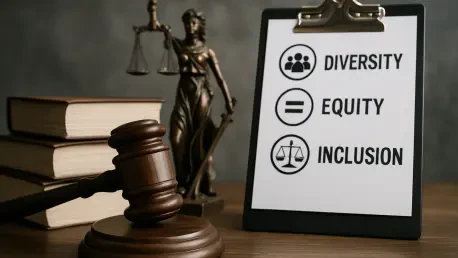

A profound reinterpretation of American civil rights law is quietly unfolding within a key federal agency, placing corporate diversity initiatives directly in the crosshairs of a new and aggressive enforcement regime. This significant policy pivot at the U.S. Equal Employment Opportunity Commission (EEOC) marks a crucial turning point for corporate Diversity, Equity, and Inclusion (DEI) efforts. The shift represents more than a simple change in priorities; it is a fundamental reinterpretation of civil rights law that positions Corporate America at a precarious legal crossroads. This analysis will dissect the ideological drivers of this trend, the key figures shaping the new agenda, the specific enforcement tactics being deployed, the legal opposition forming against it, and the far-reaching implications for the future of DEI initiatives nationwide.
The Evolving Landscape DEI Under Federal Investigation
The Ideological Pivot at the EEOC
The new direction at the EEOC is being spearheaded by its Trump-appointed Chair, Andrea Lucas, who is actively re-framing many corporate DEI programs not as tools for equity but as potential sources of unlawful discrimination. Lucas has publicly articulated a “conservative view of civil rights,” which involves “attacking” all forms of race-based discrimination, a category she explicitly extends to include many common corporate diversity practices. This agenda aims to scrutinize any program that could be perceived as giving preferential treatment based on a protected characteristic, fundamentally challenging the framework upon which many DEI initiatives were built.
This ideological shift is enabled by a new political reality on the commission. Following President Trump’s designation of Lucas as chair and the Senate confirmation of Republican Brittany Panuccio, the commission now operates with a 2-1 Republican majority. With Commissioner Kalpana Kotagal as the lone Democrat and two seats remaining vacant, this majority provides a clear pathway to implement its enforcement agenda without internal opposition.
The legal justification for this crackdown is a strict and literal interpretation of Title VII of the 1964 Civil Rights Act. Chair Lucas asserts that any employment decision, from hiring and promotions to marketing, that is motivated “in whole or in part by race or sex or any other protected characteristic” is “unlawful.” This interpretation suggests that a wide array of long-standing corporate practices, including targeted recruitment efforts, mentorship programs for underrepresented groups, and specialized Employee Resource Groups (ERGs), could now be vulnerable to federal investigation and litigation.
Corporate America’s Preemptive Retreat
In response to this shifting regulatory landscape, a clear trend of preemptive action is emerging across the business world. Several Fortune 500 companies, including industry giants like Target, Walmart, and Amazon, have already begun to scrap or significantly re-evaluate their DEI initiatives. This retreat is not a public disavowal of diversity goals but rather a strategic risk-management maneuver designed to avoid becoming a target of the EEOC’s new enforcement focus.
The actions being taken vary in scope and visibility. Some corporations are quietly removing DEI-related language from their policy documents, recruitment messaging, and public-facing websites. Others are taking more definitive steps, such as dissolving ERGs that are organized around specific demographic groups or terminating supplier diversity programs that set targets for contracting with minority- or women-owned businesses. These moves illustrate a tangible chilling effect, as companies recalibrate their programs to align with a more conservative legal interpretation of non-discrimination law.
The Political and Legal Battleground
White House Backing and the Conservative Mandate
The EEOC’s new direction is not operating in a political vacuum; it carries the full support of the White House. Affirming the administration’s stance, spokesperson Liz Huston stated that this rigorous enforcement is essential to end “illegal DEI-motivated race and sex discrimination.” This backing reinforces the view that many DEI programs have unfairly resulted in discrimination against other groups, particularly white men, and the administration has actively encouraged the submission of such complaints to the EEOC.
This policy pivot is a direct extension of a broader conservative movement and builds upon previous actions taken during the Trump administration. A series of executive orders had already targeted DEI initiatives, particularly mandatory racial equity training, which prompted an initial wave of reassessment among major corporations. The EEOC’s current strategy, therefore, represents the institutionalization of this political mandate within the very agency tasked with enforcing civil rights, signaling a sustained and strategic campaign against what it defines as discriminatory practices.
Counterarguments and Legal Hurdles
However, the EEOC’s new stance is far from universally accepted and is expected to face significant legal and political opposition. Civil rights advocates, Democrats, and many former agency officials argue that well-designed DEI policies are not only legal but are a necessary tool for dismantling systemic barriers and addressing long-standing structural inequities in the workplace.
In an open letter, a group of former EEOC officials, including former Commissioner Chai R. Feldblum, publicly contended that established legal principles permit employers to take proactive measures to identify and remove obstacles to opportunity for protected groups. They maintain that “properly constructed, such efforts are not discriminatory.” Furthermore, legal experts caution that the EEOC faces a high evidentiary bar. To successfully prosecute a company, the agency would likely need to prove a “pattern or practice of discrimination” in court, a standard that is historically difficult to meet and will likely be a central point of contention in future legal battles.
The Future of DEI Enforcement and Corporate Strategy
The EEOC’s Enforcement Playbook
The commission has made it clear that its scrutiny of DEI is not a temporary focus. Chair Lucas has confirmed that federal inquiries into corporate programs are already underway and are set to “intensify in 2026.” This timeline suggests that the agency is methodically building its cases and preparing for a major wave of enforcement actions.
To achieve its goals, the EEOC is developing new enforcement tools, including “expanded web-archive searches.” This tactic is specifically designed to identify and target companies that have made only superficial changes, such as altering the public-facing language of their programs without changing their underlying function. Lucas emphasized that the agency is looking past labels, stating, “It doesn’t matter if you call that DEI or belonging or ‘EO’ or anything: If it functions like that, it’s illegal.” This functional approach puts a vast range of initiatives under the microscope.
Ultimately, the EEOC’s stated goal is to achieve “strategic impact.” By targeting large-scale cases that involve “potentially thousands of people” or feature “very blatant racial or sex-discrimination-related restricted programming,” the agency aims to set a powerful legal precedent. A few high-profile victories could reshape corporate behavior nationwide, forcing a widespread retreat from established DEI practices.
Navigating the New Normal Risks and Re-evaluation
The broader implications for businesses are profound, as once-common practices like targeted recruitment, specialized leadership programs, and affinity-based ERGs are now under intense scrutiny. This creates a challenging legal tightrope for companies, as they now face potential litigation risks from both implementing and retracting DEI initiatives. Pulling back on diversity commitments can lead to shareholder lawsuits and employee backlash, while maintaining them invites federal investigation.
This trend signals a definitive shift in the corporate climate, moving away from an era of actively encouraging DEI to one defined by legal caution and risk aversion. The potential negative outcome is a significant chilling effect on all diversity efforts, as companies may choose to abandon even legally sound and effective programs to avoid the appearance of non-compliance. Corporate America is being forced into a complete strategic re-evaluation of how to foster diversity and inclusion within a new, contentious legal framework.
Conclusion A Fundamental Reckoning for Workplace Equality
This analysis has demonstrated that the EEOC’s policy has been deliberately realigned with a conservative political agenda, creating immediate and widespread repercussions for corporate DEI. The shift from encouraging diversity to investigating it has placed businesses in a precarious position, caught between competing legal and social pressures. This is more than a fleeting regulatory trend; it is a pivotal moment that is actively redefining the legal landscape of workplace equality and challenging decades of established corporate practice. As the EEOC’s enforcement actions are set to intensify, Corporate America is approaching a major reckoning in 2026, one that will force a complete re-evaluation of how to build an inclusive workforce in an increasingly polarized and litigious environment.