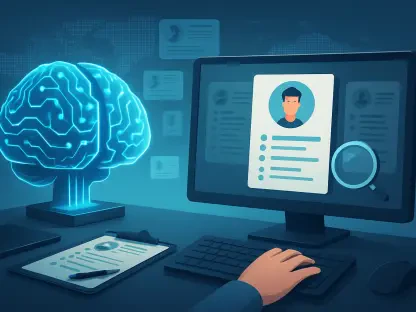

By early 2027, the standard starting point for workforce data analysis will shift from rigid report selection to natural language inquiries and visualized trends. This transformation marks a departure from the historical reliance on isolated administrative silos that have long hindered the growth of small and medium-sized businesses. For many HR professionals operating in the current climate of 2026, the daily routine remains dominated by a patchwork of disconnected systems where payroll data lives in one portal, employee performance reviews are stored in another, and leave requests are tracked via precarious manual spreadsheets. This fragmentation creates a persistent state of administrative friction, where simple inquiries about paycheck variances or state-specific tax compliance require an exhaustive search through multiple platforms. When nearly sixty percent of HR teams continue to depend on paper documents and manual tools, the opportunity cost becomes staggering. Business owners find themselves trapped in a cycle of redundant data entry, which not only increases the probability of human error but also diverts attention away from strategic initiatives like employee development and customer satisfaction. The move toward a unified ecosystem is not merely a technical upgrade; it is a fundamental shift in how organizations manage their most valuable asset—their people. By dismantling these digital barriers, the focus shifts toward creating a fluid, intuitive experience that mirrors the way human beings naturally think about the workforce lifecycle.
Deploying Practical AI for Daily Operations
Enhancing User Interaction: The Role of TriNet Assistant
The implementation of “Practical AI” within the modern HR framework is designed to prioritize immediate utility and tangible productivity gains over abstract or theoretical capabilities. At the forefront of this initiative is the TriNet Assistant, a sophisticated AI-powered interface that has already demonstrated immense value through more than 225,000 successful interactions by worksite employees. This tool bridges the gap between complex software architecture and the end-user by facilitating natural language interactions that simplify once-tedious tasks. In the current mobile-first landscape of 2026, the assistant has been further empowered with voice-activated support on the mobile app, allowing employees to check their remaining paid time off, verify enrollment deadlines, or review specific pay details hands-free. This level of accessibility is crucial for a workforce that is increasingly decentralized and on the move, ensuring that vital information is never more than a simple voice command away. By providing instant, accurate responses to routine inquiries, the technology alleviates the burden on HR departments, which would otherwise be inundated with repetitive questions, thereby allowing those teams to focus on higher-level organizational culture and employee engagement strategies.
As the platform reaches its next evolutionary stage in late 2026, the TriNet Assistant is poised to expand its reach specifically to serve HR administrators directly. This expansion is a calculated move to solve the “three-system login” problem, a common grievance among administrators who must navigate multiple disparate platforms to complete a single task. Instead of manually navigating through layers of menus to generate reports on bank debits, state-specific tax filings, or I-9 documentation, administrators will be able to query the system using everyday conversational language. The AI functions as an intelligent intermediary that understands the context of the request, identifies the precise location of the required data within the unified architecture, and presents the findings instantly. This capability effectively removes the technical barriers to data retrieval, ensuring that even those without specialized training in database management can access high-level insights. The transition from manual data hunting to conversational inquiry represents a significant milestone in reducing administrative noise, creating a streamlined environment where answers are provided in real-time rather than after hours of painstaking cross-referencing and manual synthesis.
Revolutionizing Analytics: Insights through Natural Language
The arrival of early 2027 will herald a fundamental shift in how small and medium-sized businesses interact with and interpret their workforce data. Historically, leveraging data to drive business decisions required a level of analytical expertise that many smaller organizations simply did not have in-house. Traditional reporting tools were often rigid, requiring users to select pre-defined parameters that might not always align with their specific business questions. The upcoming phase of TriNet’s AI rollout addresses this by making the conversational “question” the primary starting point for all data analysis. Whether a business leader needs to understand shifting headcount trends across different departments or analyze the root causes of turnover rates in specific regions, they will be able to do so using simple, natural language. This democratization of data ensures that sophisticated workforce analytics are no longer the exclusive domain of large enterprises with dedicated data science teams. By lowering the barrier to entry, the platform empowers SMB leaders to make evidence-based decisions that are grounded in the reality of their current operations rather than relying on intuition or outdated, months-old spreadsheets.
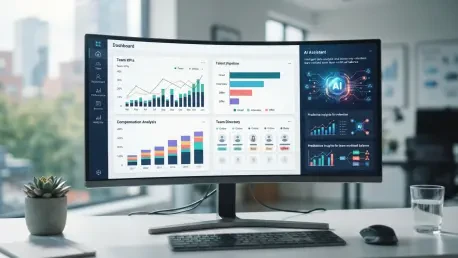
Furthermore, this intuitive approach to analytics does more than just answer the initial question; it provides a comprehensive visualization of the data and suggests logical follow-up inquiries to help leaders uncover deeper, often hidden insights. For instance, if an administrator asks about a rise in overtime costs, the system might not only provide a graph showing the increase but also suggest looking into specific staffing gaps or seasonal productivity fluctuations that could be contributing factors. This proactive assistance transforms the HR platform from a passive storage vault for employee records into an active strategic advisor. By 2027, the goal of a fully “connected experience” will be realized as data moves fluidly between different modules, allowing the AI to draw connections that a human observer might miss. This shift effectively ends the era where workforce information was buried under layers of technical complexity, replacing it with a transparent, accessible, and highly actionable ecosystem. The ability to visualize trends in real-time allows organizations to be more agile, adjusting their strategies quickly in response to changing labor market conditions or internal operational shifts.
Building a Unified Infrastructure for Business Growth
Streamlining Leave Management: Compliance and Recruitment
Managing leaves of absence represents one of the most significant legal and operational challenges for modern HR teams, as it requires navigating a complex web of FMLA regulations, state-specific mandates, and sensitive return-to-work protocols. Often viewed as a “black box” where visibility is limited for both managers and employees, the leave process can lead to significant compliance risks if handled improperly. To address this, the phased rollout of TriNet Leave, powered by Cocoon, begins in late 2026, offering a modern and transparent interface for planning and tracking absences. This integrated solution provides built-in compliance workflows that are automatically updated to reflect the latest legal requirements across all fifty states. By embedding the expertise of leave specialists directly into the technology, the platform ensures that disability claims, medical certifications, and payroll adjustments are handled with precision. This transparency reduces the anxiety often associated with long-term absences, as employees can clearly see their status and managers can plan for coverage without compromising the privacy of the individual on leave.
Building on this foundation of transparency, the integration of TriNet Recruit, powered by JazzHR, is scheduled to bridge the critical gap between candidate sourcing and employee onboarding by early 2027. Currently, the transition from a “candidate” in an applicant tracking system to an “employee” in a payroll system is often marred by manual data entry and fragmented communication. This new integration allows for the entire recruitment lifecycle—including job posting, applicant screening, interview scheduling, and offer management—to occur within the core HR platform. Once a candidate accepts an offer, their personal and professional information flows automatically into the new-hire workflow, completely eliminating the need for manual data re-entry. This not only significantly reduces the administrative overhead for the HR team but also creates a much more professional and seamless experience for the new hire. In a competitive labor market, the speed and efficiency of the onboarding process can be a deciding factor in employee retention, and by unifying these functions, TriNet provides its clients with a distinct advantage in securing and integrating top talent into their organizations.
Integrating Financial Management: The Impact of Unified Spending
The final pillar of this comprehensive HR evolution involves the deep integration of financial management tools through TriNet Spend, powered by Ramp, which is expected to be fully available by early 2027. Traditionally, business spending and human resources have operated as separate islands, leading to a manual, post-hoc process for managing expenses that often relies on paper receipts and the use of personal credit cards. This disconnected approach makes it difficult for business owners to maintain real-time visibility into their company’s financial health. TriNet Spend changes this dynamic by incorporating corporate cards, expense management, accounts payable, and travel booking directly into the HR ecosystem. By connecting financial outflows to specific employee records and payroll data, the system can automate reimbursements and ensure that spending is always aligned with company policy. This creates a controlled and transparent spending environment where every dollar can be accounted for in real-time, allowing for more accurate budgeting and forecasting without the need for manual reconciliation at the end of the month.
The successful implementation of these unified tools demonstrated that the era of standalone HR software has reached its conclusion. By merging recruitment, leave management, and financial oversight into a single source of truth, organizations effectively eliminated the “administrative noise” that previously hindered their strategic growth. To capitalize on these advancements, business leaders should have prioritized the migration of their manual records into this unified architecture to ensure data integrity across all modules. Those who embraced the transition found that they could leverage “Practical AI” not just as a novelty, but as a core component of their operational strategy, allowing them to focus on high-value human capital initiatives. Moving forward, the most successful companies will be those that continue to use these integrated insights to proactively address workforce trends before they become liabilities. The ultimate takeaway from this technological shift was that managing people, while inherently complex, no longer required a complex administrative framework. Instead, the focus returned to what truly matters: fostering a culture of excellence and driving sustainable business success through a well-supported and highly visible workforce.