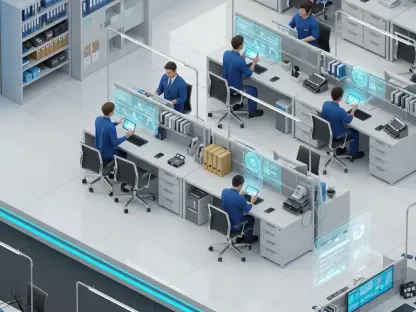

Corporate leaders across the United States are currently recalibrating their long-term growth strategies by shifting focus from aggressive external recruitment to the stabilization and development of their existing staff. This change represents a fundamental movement toward intentionality rather than the rapid, often unsustainable expansion observed in previous cycles. Recent industry data indicates that approximately 52% of organizations have officially prioritized keeping their current personnel, surpassing the 45% that remain centered on hiring from the outside. Such a pivot is largely driven by a tightening labor market where nearly 64% of decision-makers report significant difficulty in sourcing qualified candidates. By emphasizing the value of current contributors, businesses hope to insulate themselves from the high costs associated with turnover while fostering a culture of loyalty that can withstand market fluctuations. This strategic redirection suggests that the era of treating personnel as replaceable components is ending in favor of a model that views human capital as a core asset requiring continuous reinvestment and careful cultivation.
Facing the Realities of a Changing Labor Market
Strengthening Internal Capabilities: Solving the Skills Crisis
Organizations are increasingly recognizing that the difficulty in finding external talent is often a byproduct of a self-inflicted skills crisis where training has not kept pace with technology. To address this, many firms are pivoting toward robust internal upskilling programs designed to transform current employees into the specialists the company requires for future operations. About 74% of employers have committed to investing in artificial intelligence training or general skill enhancement this year to bridge persistent competency gaps. This approach allows businesses to bypass the competitive and expensive external market while ensuring that their workforce remains compatible with evolving digital tools. By focusing on internal development, companies can maintain institutional knowledge that is lost during traditional turnover. Furthermore, these investments signal a long-term commitment to career progression, which serves as a powerful incentive for high performers to stay.
Beyond simple training, the move toward internal growth involves restructuring how roles are defined and how potential is identified within the existing corporate hierarchy. Leaders are moving away from rigid job descriptions toward a more fluid skills-based architecture that allows employees to transition between departments as needs change. This flexibility is essential in a landscape where specific technical requirements can shift within months rather than years. Managers are now being tasked with identifying adjacent skills in their teams, where an employee’s current knowledge can be easily augmented to fill a high-demand niche. This systematic approach to talent mobility not only fills critical roles but also reduces the friction associated with onboarding external hires who may not align with the established company culture. Consequently, the focus on internal mobility has become a cornerstone of modern workforce planning, providing a sustainable path for growth.
Economic Factors: Influencing the Move Toward Retention
Widespread economic uncertainty has forced many hiring decision-makers to adopt a more cautious stance regarding their operational expenditures and personnel budgets. The persistent pressure to increase wages in response to inflation has made external hiring a far more expensive endeavor than it was in earlier market cycles. Instead of competing in bidding wars for new talent, companies find it more financially viable to optimize their current workforce through targeted raises and improved benefits. This shift is not merely about saving money on recruitment fees but about protecting the substantial investment already made in existing staff members. Large-scale organizations are finding that the “churn and burn” recruitment model is no longer sustainable when the cost of replacing a single mid-level professional can reach double their annual salary. As a result, maintaining a stable headcount has become a defensive strategy against the volatility of the broader national economy.
In addition to direct costs, the secondary impacts of high turnover, such as decreased morale and lost productivity, are driving employers to rethink their engagement strategies. When experienced employees depart, they take with them critical relationships and specialized process knowledge that are difficult for new hires to replicate quickly. This realization has led to a renewed emphasis on the employee experience, where leaders analyze every touchpoint of a worker’s tenure to identify reasons for attrition. By proactively addressing issues like burnout or lack of recognition, firms are attempting to build a resilient foundation that can withstand external economic shocks. The current trend suggests that stability is being prioritized over growth, as a lean and highly engaged team is often more productive than a larger, fragmented one. This emphasis on quality over quantity reflects a maturing understanding of how human resources contribute to the bottom line.
Modernizing Workforce Management Through Tech and Policy
Artificial Intelligence: A Catalyst for Operational Efficiency
The integration of artificial intelligence into the workplace has transitioned from a theoretical possibility to a fundamental component of standard human resource management. Currently, approximately 41% of companies have already implemented AI-driven tools to assist with administrative tasks, performance tracking, and talent development assessments. Another 31% of organizations are actively planning to adopt these technologies in the immediate future to streamline their internal operations. These tools are being utilized to analyze employee performance data more objectively, allowing managers to identify who is ready for promotion or who might need additional support before they consider leaving. By automating routine functions, organizations can redirect their focus toward the human elements of management, such as mentorship and strategic planning. The goal is to create a responsive environment where employee needs are identified through data-driven insights.
However, the deployment of AI is not without its complications, particularly regarding the need for clear communication and ethical standards in how these tools are applied. Employees often express concerns about how automation might impact their job security or how their performance is being monitored by non-human algorithms. To mitigate these anxieties, successful companies are pairing their AI rollouts with transparent policies that emphasize how technology is intended to empower rather than replace the human workforce. This includes providing clear pathways for employees to learn how to work alongside AI, turning a potential threat into a professional development opportunity. As firms continue to integrate these advanced systems, the focus remains on enhancing the efficiency of the existing team rather than finding new people to perform the same tasks. This technological synergy is essential for maintaining a competitive edge without constantly expanding the headcount.
Return-to-Office Mandates: Addressing the Friction of Flexibility
A significant point of contention in the modern labor market involves the persistent disconnect between corporate office policies and candidate expectations for flexibility. While many organizations are prioritizing retention, 54% of employers admit that strict return-to-office mandates have complicated their recruitment and retention efforts. Despite this friction, a vast majority of firms intend to maintain or even increase in-office requirements, citing the need for collaborative environments and cultural cohesion. This creates a challenging paradox where the policies intended to strengthen the company might simultaneously alienate the very employees they wish to keep. Leaders are now tasked with finding a middle ground that balances the organizational desire for physical presence with the worker’s demand for autonomy. Companies that fail to address this tension risk losing their most mobile and highly skilled talent to competitors who offer more hybrid opportunities.
To navigate this challenge, some forward-thinking businesses are redesigning the office experience to make physical attendance more purposeful rather than merely mandatory. This involves shifting the focus from individual desk work to collaborative project phases, where being in the same room provides a tangible benefit to the workflow. By clearly communicating the “why” behind office attendance, employers can reduce the resentment that often accompanies rigid mandates. Additionally, offering secondary forms of flexibility, such as compressed workweeks or choice in daily start times, can serve as a compromise for those who value work-life balance. Addressing these friction points is vital for any retention-focused strategy, as the workplace environment is often the deciding factor for employees considering a career move. Ultimately, the ability to adapt office culture to meet modern expectations will determine which companies successfully stabilize their internal teams.
Proactive Solutions for Long-Term Organizational Stability
The transition toward a retention-first strategy required a fundamental overhaul of traditional management practices to ensure long-term sustainability. Organizations successfully navigated this shift by prioritizing transparent communication regarding career paths and by fostering a culture where continuous learning was treated as a shared responsibility. Moving forward, leaders should consider conducting regular “stay interviews” to understand what keeps their top performers engaged rather than waiting for exit interviews to identify problems. Businesses that integrated personalized development plans and recognized the diverse needs of a multi-generational workforce established a much stronger foundation for growth. It became clear that investing in the existing team was not just a temporary fix for a difficult hiring market, but a superior long-term strategy for building a resilient enterprise. By focusing on these internal enhancements, companies ensured they were prepared for the complexities of the modern global economy.