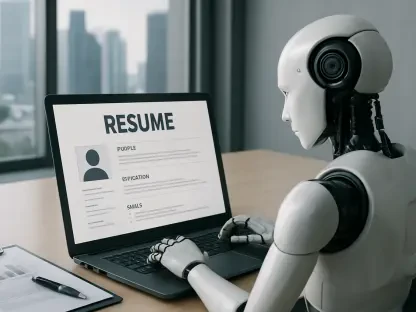

Imagine a world where an algorithm decides who gets hired, promoted, or even fired, without a human ever stepping in to question its fairness. This isn’t science fiction—it’s the reality many workplaces face today as artificial intelligence (AI) weaves its way into human resources (HR) processes. With AI reshaping everything from talent acquisition to performance reviews, the need for robust regulation has never been more pressing. Yet, the legal framework governing AI in employment remains a fragmented puzzle, with state-level laws pulling in different directions while federal guidance lags behind. This review dives into the current state of AI workplace regulation in the United States, exploring its features, performance in practice, and the implications for employers navigating this evolving terrain.
Understanding the Push for AI Regulation
AI’s integration into HR functions has been transformative, automating tasks like resume screening, employee assessments, and even training programs. However, this efficiency comes with significant risks—algorithms can perpetuate biases, infringe on employee privacy, and erode trust if left unchecked. The core drive behind regulating AI lies in addressing these concerns, ensuring fairness, transparency, and accountability. Without clear rules, employers risk legal challenges and reputational damage, while employees face potential discrimination from tools that lack oversight. The stakes are high, especially in a landscape where federal ambitions to lead globally in AI innovation often clash with state-level priorities focused on protecting workers.
What’s more, the regulatory environment is anything but uniform. States have taken the lead in crafting laws to govern AI use in employment, creating a patchwork of rules that multi-state employers must navigate. This fragmentation raises questions about how effectively these regulations can balance technological progress with employee rights. As AI continues to redefine workplace dynamics, understanding the nuances of these laws becomes not just a compliance issue, but a strategic imperative for businesses aiming to stay ahead of the curve.
Diving into State-Level Regulatory Features
Variability Across Jurisdictions
State laws regulating AI in the workplace vary widely in scope, focus, and timeline, reflecting diverse approaches to a shared challenge. For instance, New York City’s pioneering AI hiring law, already in effect, mandates audits and transparency for automated employment decision tools, setting a benchmark for localized oversight. In contrast, California’s amendment to the Fair Employment and Housing Act, effective since last year, emphasizes the safety of AI models themselves, indirectly shaping their use in HR by prioritizing risk mitigation over specific employment outcomes. Meanwhile, Texas’s Responsible Artificial Intelligence Governance Act, set to take effect next year, adopts a more permissive stance, largely exempting AI from strict employment regulation unless it poses direct harm, highlighting a stark philosophical divide.
These differences extend beyond intent to practical implications. Some states, like Illinois and Colorado, with laws effective this year and next, zero in on AI applications in hiring, requiring disclosures and safeguards against bias. Others take broader approaches, addressing AI’s role across various HR functions. This variability creates a complex compliance landscape for employers operating across state lines, where a one-size-fits-all policy simply won’t work. The lack of harmonization raises critical questions about whether such a disjointed system can effectively govern a technology as pervasive and dynamic as AI.
Shifts in Legal Standards and Accountability
Another defining feature of state-level AI regulation is the evolving nature of legal standards around discrimination and liability. Texas’s forthcoming law, for example, explicitly downplays disparate impact—where an AI tool disproportionately affects certain groups—as grounds for liability, diverging from traditional anti-discrimination frameworks that have long held adverse outcomes as sufficient cause for legal action. This shift could ease burdens on employers in some jurisdictions but risks weakening protections for employees, potentially allowing biased algorithms to operate with less scrutiny.
In contrast, other states are reinforcing accountability. California’s focus on model safety indirectly pushes employers to ensure their AI tools are free from inherent flaws that could lead to unfair HR decisions. These opposing trends underscore a broader tension in AI regulation: the balance between fostering innovation and safeguarding rights. For HR departments, this means rethinking how liability is assessed and preparing for legal challenges that may hinge on differing interpretations of fairness across state lines. The inconsistency in standards is a performance gap in the regulatory framework itself, leaving both employers and employees vulnerable to uncertainty.
Assessing Real-World Performance: Performance and Impact
Turning to the practical performance of AI workplace regulations, the impact on HR practices is already evident, though outcomes are mixed. Compliance requirements, such as those in Illinois for AI-driven hiring processes, have pushed companies to implement audits and transparency measures, aiming to curb bias in automated decision-making. However, cases like the ongoing collective action lawsuit against Workday—an HR software provider—reveal the persistent risks. Allegations of bias in AI tools highlight how even well-intentioned regulations struggle to keep pace with the technology’s complexity, leaving gaps in enforcement and accountability.
Moreover, the fragmented nature of state laws poses a significant performance challenge for multi-state employers. A company operating in both California and Texas must juggle conflicting priorities—one state demanding stringent safety protocols for AI models, the other offering leniency unless direct harm is proven. This creates operational inefficiencies, as HR teams scramble to tailor policies to each jurisdiction. While some states’ laws have succeeded in raising awareness of AI’s risks, their uneven application often undermines their effectiveness, burdening businesses with compliance costs without fully addressing systemic issues like algorithmic bias.
The real-world impact extends beyond logistics to culture and innovation. Employers report hesitancy to adopt cutting-edge AI tools due to legal uncertainty, potentially stifling workplace advancements. At the same time, regulations have sparked necessary conversations about ethics and fairness, prompting some organizations to proactively develop internal governance frameworks. This duality—constraint versus progress—defines the current performance of AI workplace regulation, raising doubts about whether the system, as it stands, can sustainably support both employee protections and technological growth.
Challenges in Compliance and Implementation
Compliance with AI regulations presents a steep learning curve for HR departments, particularly for those operating across multiple states. The lack of federal preemption means there’s no unifying standard to streamline efforts, forcing companies to decipher a maze of state-specific requirements. For instance, a business must ensure its hiring algorithms meet New York City’s audit standards while simultaneously adhering to California’s model safety rules—a task that demands significant resources and expertise. This burden disproportionately affects smaller employers, who may lack the budget or legal support to navigate the complexity.
Legal risks further complicate the picture. The potential for lawsuits, as seen in high-profile cases involving AI bias, looms large, especially in jurisdictions with stricter oversight. Without clear federal guidance, employers face the constant threat of litigation over perceived unfairness in AI-driven decisions, whether in hiring, promotions, or terminations. This uncertainty can deter companies from leveraging AI’s full potential, creating a chilling effect on innovation. Meanwhile, employees in states with laxer regulations may find themselves with diminished recourse, exposing a critical flaw in the system’s ability to deliver equitable outcomes.
Efforts to address these challenges are underway, with many organizations turning to internal solutions like AI governance councils, regular audits, and staff training. These measures aim to bridge the gap between regulatory demands and operational reality, fostering a culture of accountability. Yet, the effectiveness of such strategies remains unproven, particularly as laws continue to evolve at a rapid clip. The struggle to balance compliance with functionality underscores a fundamental limitation in the current regulatory framework: its inability to adapt as swiftly as the technology it seeks to govern.
Looking Ahead: The Future of AI Regulation
As AI becomes ever more entrenched in workplace processes, the future of its regulation remains a topic of intense speculation. There’s growing chatter about federal legislation that could preempt state laws, offering a much-needed uniform standard to simplify compliance. Such a move would likely aim to reconcile the federal push for AI leadership with state-level concerns about fairness, though political gridlock could delay progress. If enacted, a national framework might reshape HR practices by providing clarity on liability and accountability, potentially easing the burden on multi-state employers.
Beyond federal action, stricter state regulations could emerge, especially in jurisdictions prioritizing employee protections. Some experts predict a shift toward more granular legal standards, addressing specific AI applications like performance tracking or compensation algorithms. This could further complicate compliance but might also drive innovation in ethical AI development, as companies seek to stay ahead of tighter rules. Conversely, states like Texas may double down on permissive approaches, creating wider disparities in how AI is governed across the country. The long-term impact on HR could be profound, influencing everything from talent strategies to workplace culture.
The trajectory of AI regulation will also hinge on technological advancements themselves. As AI tools grow more sophisticated, regulators may need to address emerging issues like privacy intrusions or emotional surveillance in the workplace. This dynamic interplay between law and innovation suggests that HR departments must remain agile, ready to pivot as new challenges arise. The road ahead is uncertain, but one thing is clear: the evolution of AI regulation will continue to shape how businesses and employees interact in an increasingly automated world.
Reflecting on the Regulatory Journey
Looking back, the journey of AI workplace regulation revealed a landscape marked by ambition and inconsistency. State laws, while groundbreaking in their intent to curb AI’s risks, stumbled in delivering cohesive, effective oversight, often burdening employers with fragmented compliance demands. Cases of legal contention, coupled with varying state priorities, exposed the gaps between policy and practice, leaving both businesses and workers grappling with uncertainty. Yet, these early efforts sparked vital dialogue about fairness and accountability, laying the groundwork for more refined approaches.
Moving forward, employers were encouraged to take proactive steps, such as investing in robust internal governance and aligning with the strictest state standards to mitigate risks. Partnering with legal experts to anticipate regulatory shifts became a practical necessity, ensuring HR policies stayed resilient amid change. Additionally, fostering transparency in AI use—through clear disclosures and employee engagement—offered a path to rebuild trust and minimize legal exposure. As the dialogue around AI regulation matured, the focus shifted to crafting solutions that harmonized innovation with equity, promising a future where technology and fairness could coexist in the workplace.