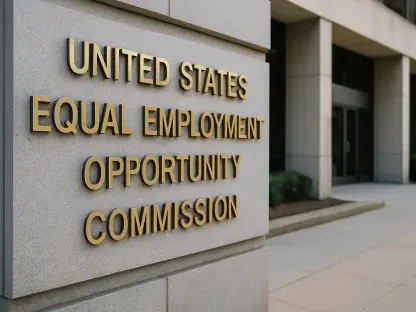

A seemingly routine employee announcement about an impending birth just cost one company $185,000, serving as a stark financial reminder that federal regulators are watching employers more closely than ever. This is not an isolated incident but a clear signal from the U.S. Equal Employment Opportunity Commission (EEOC) that corporate policies and practices surrounding pregnancy are under intense scrutiny. For businesses nationwide, the question is no longer if they will be affected, but whether they are prepared for the heightened enforcement environment. The financial and reputational stakes have never been higher.
When a Pregnancy Announcement Leads to a $185,000 Payout
The case of Eastridge Workforce Solutions, a California-based staffing agency, provides a powerful cautionary tale. The company recently agreed to a significant settlement to resolve a pregnancy discrimination lawsuit brought forth by the EEOC. The complaint detailed a disturbing pattern of discriminatory practices, which allegedly dated back several years. The case was brought to the forefront by a specific incident where a temporary worker was terminated by both the agency and its client, Feit Electric, shortly after she disclosed her pregnancy.
This settlement underscores the tangible financial risks of non-compliance. The $185,000 figure is not merely a penalty; it represents a direct cost that could have been avoided with robust policies and proper management training. For other employers, this outcome should serve as a wake-up call, illustrating how a single personnel decision can escalate into a costly federal lawsuit with far-reaching consequences for a company’s bottom line and public image.
More Than a Trend The Unwavering Federal Focus on Pregnancy Rights
The EEOC’s action against Eastridge is not a fleeting initiative but part of a sustained and strategic enforcement focus on protecting the rights of pregnant workers. This priority has remained a consistent point of emphasis for the agency, transcending changes in presidential administrations and demonstrating a long-term commitment to eradicating this form of discrimination. Employers who view this as a temporary trend do so at their own peril.
The commission’s enforcement power is bolstered by a formidable legal framework. It utilizes the long-standing Pregnancy Discrimination Act (PDA), which amended Title VII of the Civil Rights Act of 1964 to classify pregnancy discrimination as a form of sex discrimination. More recently, the Pregnant Workers Fairness Act (PWFA) has significantly expanded these protections, creating new obligations for employers regarding reasonable accommodations. Together, these laws provide the EEOC with powerful tools to pursue non-compliant organizations.
Anatomy of an EEOC Lawsuit What the Eastridge Settlement Reveals
A closer look at the Eastridge settlement reveals that the consequences of an EEOC lawsuit extend well beyond the financial payout. The company is now bound by a comprehensive three-year consent decree that mandates sweeping internal changes. These corrective actions include expunging the personnel files of affected former employees, providing them with neutral job references, and even considering them for reinstatement, fundamentally altering the aftermath of the discriminatory actions.
Furthermore, the decree imposes proactive measures designed to prevent future violations. Eastridge must conduct thorough training for its staff on pregnancy discrimination laws and review—and, where necessary, rewrite—its anti-discrimination policies to ensure full legal compliance. This demonstrates that the EEOC’s goal is not just punitive but rehabilitative, aiming to force systemic cultural and procedural shifts within an organization to safeguard employee rights moving forward.
The Official Warning Experts and the EEOC on Why You Should Be Concerned
Legal analysts suggest that the EEOC’s consistent pursuit of pregnancy discrimination cases may be strategic. These types of cases are sometimes viewed as “low-hanging fruit,” allowing the agency to secure clear victories and send strong messages to the employer community, even during periods when it may face internal operational constraints. This perspective implies that employers should expect this high level of enforcement to continue unabated.
The agency itself has issued direct warnings. An EEOC official recently emphasized that the PWFA has introduced significant new legal protections, urging all employers to promptly review and update their accommodation policies. This official guidance, coupled with ongoing litigation like the recent lawsuit against U.S. Steel for allegedly refusing to accommodate a pregnant worker, confirms that the commission is actively and aggressively enforcing these new standards.
Your Proactive Compliance Checklist Steps to Take Before the EEOC Knocks
The first and most critical step for any organization is to conduct a comprehensive audit of its existing policies. It is no longer sufficient to rely on outdated handbooks; policies must be explicitly updated to reflect the specific requirements of the Pregnant Workers Fairness Act. This includes clear procedures for how employees can request accommodations and a well-defined interactive process for evaluating and implementing those requests.
Beyond written policies, effective training is essential. Managers, supervisors, and human resources personnel must be educated on the nuances of the new laws, particularly the broad definition of “reasonable accommodation” for pregnancy, childbirth, and related medical conditions. This training should equip them to handle disclosure conversations sensitively and manage accommodation requests lawfully, reducing the risk of actions that could be perceived as discriminatory or retaliatory.
Ultimately, compliance is about more than just avoiding lawsuits; it is about cultivating an inclusive and supportive workplace culture. When employees feel secure in disclosing a pregnancy and requesting necessary support, it not only mitigates legal risk but also enhances morale, loyalty, and talent retention. Proactive compliance became a key differentiator for forward-thinking companies.
The series of high-profile settlements and the EEOC’s clear stance made it evident that ignorance of the law was no longer a viable defense. Companies that took decisive action to review their policies, train their managers, and foster a culture of support found themselves not only compliant but also better positioned as employers of choice. They understood that protecting the rights of pregnant workers was a fundamental aspect of modern corporate responsibility.