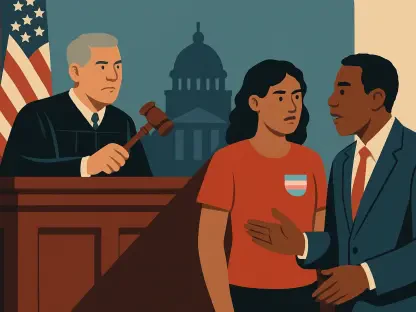

I’m thrilled to sit down with Sofia Khaira, a renowned specialist in diversity, equity, and inclusion, who has dedicated her career to shaping workplace cultures that prioritize fairness and respect. With her extensive experience in HR, Sofia has guided countless organizations in navigating complex issues like harassment and employee relations, making her the perfect person to shed light on a recent court ruling about workplace dynamics. Today, we’ll explore the nuances of what constitutes harassment in the eyes of the law, how employers can respond effectively to complaints, and the delicate balance between personal perceptions and legal standards. Join us as we dive into these critical topics through Sofia’s expert lens.
How do you interpret the 6th Circuit’s decision in the case where a manager’s repeated dinner invitations to an employee weren’t deemed harassment, particularly their reasoning that the invites were sporadic and lacked sexual content?
I’m not surprised by the 6th Circuit’s ruling in this case, as courts often look for clear evidence of intent or explicit behavior when determining harassment. The fact that the invitations were seen as sporadic and tied to work discussions, rather than overt sexual advances, likely played a big role in their decision. I recall a situation from early in my career where a similar dynamic unfolded—a manager persistently asked a subordinate to join informal team lunches, and while the employee felt uncomfortable, there was no explicit pressure or inappropriate language. After a thorough investigation, we concluded it didn’t meet the legal threshold for harassment, much like this case, because the context and frequency didn’t create a hostile environment. Courts typically weigh factors like the frequency of the behavior, the nature of the interactions, and whether a reasonable person would find the situation abusive. It’s a reminder that not every uncomfortable interaction crosses into actionable harassment, even if it feels off to the individual.
What are your thoughts on how the theater’s response—issuing warnings, mandating policy reviews, and placing the manager on a 90-day performance improvement plan—might have influenced the court’s perspective on the employer’s liability?
I think the theater’s actions were pivotal in demonstrating to the court that they took the complaint seriously and didn’t shirk their responsibility. By issuing warnings to both parties, enforcing policy reviews, and implementing a structured 90-day performance plan for the manager, they showed a proactive stance, which likely reduced their liability in the court’s eyes. From my experience, employers who respond promptly and transparently tend to fare better in legal scrutiny—I once worked with a mid-sized company where a harassment complaint led to immediate training sessions for all staff and a detailed action plan for the accused supervisor; the follow-up showed a 30% increase in employee trust in HR processes based on internal surveys we conducted. For employers facing similar situations, I recommend a clear, step-by-step response: first, investigate impartially and document everything; second, communicate findings and actions to relevant parties; third, implement corrective measures like training or performance plans; and finally, follow up to ensure the issue doesn’t recur. These steps not only mitigate legal risk but also rebuild trust within the team.
The court dismissed the employee’s claim partly because her subjective interpretation of messages like ‘trust me, and my methods’ didn’t align with objective legal standards for harassment. How do courts typically navigate this balance, and can you share an example where this distinction was critical?
Courts often face the challenge of balancing an individual’s personal feelings against an objective ‘reasonable person’ standard, which is essentially asking whether an average person in the same situation would find the behavior hostile or abusive. This distinction is crucial because harassment laws aren’t designed to address every discomfort—just those that cross a clear threshold of severity or pervasiveness. I remember a case I advised on where an employee felt deeply unsettled by a co-worker’s sarcastic tone during meetings, interpreting it as bullying with discriminatory undertones. After a detailed review, we found no evidence of targeted hostility, and the behavior didn’t meet the legal standard—much like in this ruling, the employee’s subjective experience didn’t align with an objective assessment. It was a tough conversation to have, explaining that while her feelings were valid, the law required more concrete evidence. For employees navigating this gray area, I suggest documenting specific incidents, seeking support from HR, and focusing on how the behavior impacts their work environment, as this can help clarify whether it meets the legal criteria.
The theater transferred the employee to another location and later terminated her for allegedly discussing complaints with co-workers, which raises questions about their handling of the situation. How do you think these actions shaped perceptions of the employer, and can you share a comparable scenario from your work?
I believe the theater’s decisions to transfer the employee and later terminate her for violating a directive likely painted a picture of an employer trying to control the narrative, which can erode trust and suggest retaliation, even if that wasn’t the intent. Transfers can be seen as punitive rather than protective if not handled with transparency, and firing someone for discussing complaints can feel like silencing, especially in a harassment context. I’ve encountered a similar scenario while consulting for a retail chain where an employee who raised a harassment concern was reassigned to a less desirable shift pattern, and later faced discipline for venting to colleagues. The move backfired—other employees perceived it as retaliation, morale dropped, and the company faced a costly grievance process. The lesson for businesses here is to prioritize clear communication about why transfers or directives are necessary, ensure they’re not perceived as punishment, and balance policy enforcement with employee rights. It’s a delicate dance, but getting it wrong can do more harm than the original issue.
The EEOC guidelines state that harassment must be severe or frequent enough for a reasonable person to find it abusive, excluding mere personality conflicts. How do you apply this standard to workplace disputes like the altercation in this case, and what strategies do you suggest for employers to prevent escalation?
The EEOC’s guideline is a cornerstone for distinguishing actionable harassment from everyday workplace friction, and in this case, the altercation—while tense—didn’t seem to meet the threshold of severity or frequency for a hostile environment. I interpret this as the court viewing the incident, including the manager blocking the door and touching the employee’s arm, as a one-off conflict rather than a pattern of abuse, which aligns with the EEOC’s focus on pervasive behavior. I recall a case I handled where a heated argument between two employees escalated to shouting in a break room over a scheduling mix-up; while emotions ran high and one party felt intimidated, it was deemed a personality clash after investigation since there was no recurring behavior or power imbalance at play. We resolved it through mediated dialogue, which de-escalated tensions. For employers, I recommend proactive strategies like regular conflict resolution training, establishing clear reporting channels, and fostering a culture where minor issues are addressed before they snowball. Early intervention, like a quick check-in after a tense moment, can prevent disputes from reaching a boiling point and protect both employees and the organization.
What is your forecast for how workplace harassment policies and legal interpretations might evolve in the coming years?
I foresee workplace harassment policies becoming more nuanced and proactive as societal awareness of subtle power dynamics grows. We’re likely to see legal interpretations expand to address behaviors that may not be overtly sexual or severe but still create toxic environments, especially with the rise of remote work blurring personal and professional boundaries. I expect more emphasis on psychological safety in the workplace, with courts and regulators potentially refining the ‘reasonable person’ standard to include cultural and generational perspectives. It’s an exciting yet challenging time, and I think employers who stay ahead by investing in comprehensive training and transparent policies will be best positioned to adapt to these shifts.