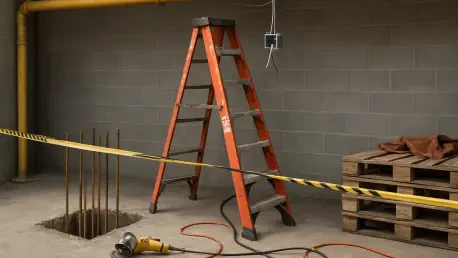

A routine workday on a construction site devolved into a scene of tragedy, culminating in a four-month federal investigation that has now cast a harsh spotlight on a local company’s safety practices. The probe by the U.S. Occupational Safety and Health Administration (OSHA) followed the catastrophic building collapse on July 31 at 305 E. Spring St. in St. Marys, an event that resulted in the death of worker Christopher R. Brown and left his colleague, Kevin Sharp, with severe injuries. In the aftermath, Pro Fit HVAC LLC and its owner, Todd Klosterman, are facing three serious safety citations and substantial fines totaling $41,706. The federal agency’s findings paint a grim picture, suggesting that the fatal incident was not a random accident but the predictable outcome of multiple, critical failures in safety protocol and oversight during preparatory work for a structural remodel. The investigation alleges a series of fundamental lapses that may have directly contributed to the building’s sudden and deadly structural failure.
The Anatomy of a Preventable Tragedy
At the heart of OSHA’s citations is the alleged failure to implement foundational safety measures designed to prevent the very type of disaster that occurred. Investigators determined that the employer did not conduct a mandatory engineering survey before commencing demolition activities. Such a survey, which must be performed by a qualified professional, is a critical first step to evaluate a building’s structural integrity, identify potential weaknesses, and assess the risk of an unplanned collapse. Without this expert analysis, workers were essentially operating blind to the inherent dangers within the aging structure. Furthermore, the investigation revealed the absence of a formal accident prevention program. A robust program of this nature would have mandated regular and frequent inspections of the job site by a competent person trained to recognize and mitigate hazards. This oversight could have identified the unstable conditions that led to the wall’s collapse, allowing for corrective measures to be taken before workers were placed in harm’s way. The lack of these two core procedural safeguards created an environment where foreseeable risks were neither identified nor addressed, exposing employees to grave danger.
A Pattern of Negligence
Beyond procedural lapses, the investigation uncovered a profound deficit in employee training, which directly contributed to the fatal outcome. OSHA concluded that the workers had not been adequately educated to recognize and avoid the specific hazards associated with demolition, excavation, and the installation of temporary shoring. Employees were exposed to severe struck-by and crushing hazards without receiving instruction on how to monitor structural stability or identify weakened walls that could give way without warning. This lack of knowledge left them defenseless against the imminent dangers of their work environment. Compounding this issue is the company’s history of safety violations. The recent citations mark the seventh overall violation for the company and the fourth in that year alone, suggesting a potential pattern of disregard for safety standards rather than an isolated oversight. As a result of the findings, owner Todd Klosterman has a 15-day period to comply with the $41,706 in penalties, request an informal conference with OSHA, or formally contest the citations. The investigation into the incident officially remained ongoing.