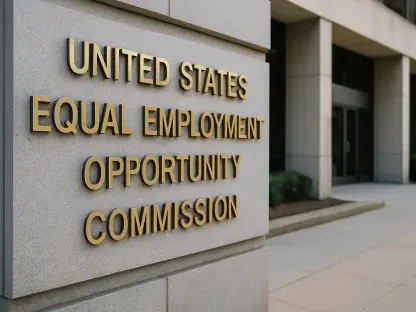

A contentious legal battle involving the U.S. Equal Employment Opportunity Commission and three law students has officially concluded, with the federal agency ceasing its wide-ranging investigation into the diversity, equity, and inclusion programs of twenty prominent law firms. The resolution, which legal advocacy group Democracy Forward Foundation is hailing as a significant victory, saw the EEOC formally end its inquiry after facing a lawsuit that challenged the very basis of its authority to launch such a broad probe. The foundation, representing the students, asserted that the agency ultimately “retreated” from its demands, marking a pivotal moment in the ongoing national debate over corporate DEI initiatives and the scope of governmental oversight. This outcome effectively closes a chapter that began with pointed letters and public declarations of concern from the EEOC but ended with a quiet dismissal in federal court.
The Genesis of the Inquiry
The controversy first ignited in March 2025, when the EEOC, under the direction of then-Acting Chair Andrea Lucas, dispatched a series of letters to the major law firms, requesting extensive details about their DEI programs. These requests were not merely for policy documents; they allegedly sought personally identifiable data on students who had participated in various diversity fellowships and initiatives. The agency publicly justified its actions by stating it had “concerns” that these programs might constitute “unlawful disparate treatment” or the illegal classification of employees based on protected characteristics, a potential violation of Title VII of the Civil Rights Act of 1964. Lucas articulated a firm stance, declaring that the EEOC was prepared to “root out discrimination anywhere it may rear its head” and underscoring that no entity, including the private bar, is above the law. This proactive approach signaled a significant shift in the agency’s enforcement priorities, placing established corporate diversity efforts directly in its crosshairs.
In direct response to the agency’s actions, three law students took the unprecedented step of filing a lawsuit in April 2025, arguing that the EEOC’s investigation represented a substantial overreach of its congressionally mandated authority. The central pillar of their legal claim was that the agency had initiated a sweeping, industry-wide investigation without a specific, formal charge of discrimination having been filed by an aggrieved party—a prerequisite they contended was firmly established in law. The students’ legal counsel from the Democracy Forward Foundation further contextualized the inquiry not as a legitimate anti-discrimination effort, but as a component of a much broader, politically motivated “campaign by the Trump administration to investigate and intimidate law firms.” They argued that such actions were designed to undermine the independence of the legal profession and chill the implementation of programs aimed at fostering greater diversity and inclusion within its ranks.
Resolution and Ramifications
The legal standoff reached its conclusion with a stipulation of dismissal filed on February 9, 2026, which formally ended the students’ lawsuit and the EEOC’s underlying investigation. Within this critical court document, the EEOC made several key concessions that effectively vindicated the position of the law firms and the students. The agency formally acknowledged that the firms’ response to its information-gathering letters was entirely voluntary and that compliance was not, and never had been, mandatory. More decisively, the EEOC stated that it “considers the matter of responding to those letters closed,” bringing an official end to the inquiry. This development came after the vast majority of the 20 targeted law firms had already chosen not to comply with the requests, signaling a unified front of resistance from the legal community against what was perceived as an unjustified governmental intrusion into their internal operations and diversity efforts.
The outcome was immediately celebrated by the Democracy Forward Foundation as a landmark win against governmental overreach. Skye Perryman, the foundation’s President and CEO, declared, “Because our brave clients fought back, the EEOC admitted that its demands were voluntary and closed the matter.” The foundation has framed the result not just as a legal victory but as a crucial defense of the privacy and future careers of law students and attorneys who participate in DEI programs. The case is now being presented as a blueprint for other institutions facing similar scrutiny, encouraging them to question and, if necessary, legally challenge what they perceive as “politically motivated investigatory demands” from government agencies. This successful challenge has bolstered the argument that proactive legal defense can be an effective tool in safeguarding institutional autonomy and diversity-focused initiatives from politically charged regulatory pressure.
A Broader Context of Scrutiny
This episode with the law firms did not occur in a vacuum; rather, it reflected a broader strategic pivot by the EEOC under the second Trump administration, which has explicitly prioritized investigating DEI programs it considers to be in violation of federal law. Following the dispatch of the letters, the agency reinforced its position by releasing new technical guidance on the topic, signaling its intent to continue scrutinizing such initiatives across various industries. This heightened focus is further exemplified by the agency’s separate but related pursuit of an investigation into Nike. In that case, the EEOC is actively seeking to enforce an administrative subpoena related to allegations of discrimination against White employees and job applicants, demonstrating a consistent and determined effort to apply its interpretation of Title VII to corporate diversity and hiring practices. The conclusion of the law firm investigation ultimately highlighted the complex interplay between regulatory enforcement, political influence, and corporate policy in the evolving landscape of employment law.