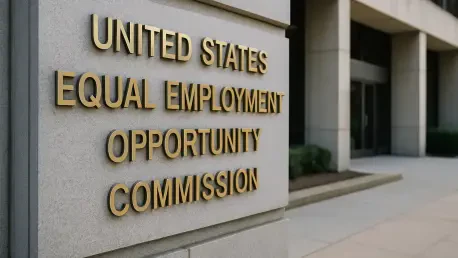

The landscape of federal employment enforcement has reached a significant turning point as recent data reveals that the U.S. Equal Employment Opportunity Commission has successfully secured over half a billion dollars through pre-litigation settlements alone. This unprecedented financial recovery underscores a fundamental transformation in how the agency approaches workplace accountability. By shifting away from long-term courtroom battles and toward aggressive early-stage negotiations, federal regulators are fundamentally altering the cost of doing business for American employers.
The New Landscape of Federal Employment Enforcement and Workplace Accountability
The agency recently celebrated a historic milestone by recovering a total of $660 million for victims of discrimination across all enforcement activities. Central to this achievement is the record-breaking $528 million secured specifically through pre-litigation efforts, such as mediation and conciliation. This massive sum indicates that the commission is successfully pressuring organizations to resolve disputes before they ever reach a judge, effectively streamlining the path to financial restitution for thousands of claimants.
Furthermore, the implementation of colorblind and merit-based enforcement models is actively reshaping standard HR compliance strategies. These frameworks prioritize individual qualifications and objective standards over broad identity-based initiatives. Consequently, the role of administrative settlements has become the cornerstone of the current enforcement cycle, forcing companies to reconsider their internal grievance procedures to avoid the high price of federal scrutiny.
Decoupling the Drivers of Record-Breaking Financial Recoveries
Emerging Enforcement Trends and the Shift Toward Administrative Settlements
A primary driver of this financial surge is the notable 115% increase in monetary benefits resulting from direct investigations. This spike suggests that the commission is identifying actionable violations much earlier in the process. Additionally, there has been a noticeable pivot toward addressing national origin bias and reverse discrimination claims, which have emerged as significant focal points in the current regulatory environment.
This transition from traditional litigation to aggressive pre-suit conciliation tactics has been heavily influenced by shifting social sentiments. As public discourse surrounding workplace rights evolves, employees are becoming more inclined to file formal grievances. The agency has capitalized on this trend by utilizing administrative tools to bypass the backlog of the federal court system, ensuring faster payouts and higher volumes of closed cases.
Analyzing Market Performance Metrics and Future Litigation Projections
The statistical reality is stark, with a 24% year-over-year increase in conciliation collections marking a clear upward trajectory for agency revenue. Projections for the coming years suggest that workplace discrimination claims will continue to rise as the current administration maintains its rigorous enforcement stance. Performance indicators show that nearly 18,000 individuals have already benefited from these activities, setting a high benchmark for future fiscal periods.
From an economic perspective, the cost of non-compliance for large-scale employers is becoming increasingly prohibitive. Financial forecasting suggests that organizations failing to adapt to this heightened oversight will face mounting legal liabilities. As the commission refines its data-driven approach, the likelihood of avoiding detection for systemic issues continues to diminish, making proactive risk management a financial imperative.
The Defense Deficit and Internal Documentation Vulnerabilities
Many organizations find themselves at a disadvantage because poor internal record-keeping creates unavoidable vulnerabilities during federal audits. When a company cannot produce clear, contemporaneous documentation to justify personnel decisions, its legal defenses often crumble before a trial can even begin. This documentation gap frequently forces a business necessity to settle, as the risk of losing a public lawsuit outweighs the cost of a private payout.
To mitigate these risks, HR leaders must prioritize early intervention and robust conflict resolution strategies. Addressing a grievance at the internal level before it escalates to a federal charge is the most effective way to protect the bottom line. However, many firms still struggle with vague internal policies that inadvertently trigger EEOC scrutiny, highlighting the need for more precise and legally sound corporate handbooks.
Navigating the Regulatory Pivot Toward Culture War Jurisprudence
Under the current leadership of Chair Andrea Lucas, the EEOC has redirected much of its energy toward contentious cultural and ideological issues within the workplace. This includes an increased focus on diversity training objections and niche grievances that were previously overlooked. This regulatory pivot represents a departure from traditional priorities, as the agency now scrutinizes how corporate DEI initiatives may infringe upon individual rights or specific ideological beliefs.
The tension between protecting workers from systemic bias and addressing these new partisan agendas creates a complex compliance environment. Employers are now caught between maintaining inclusive environments and avoiding charges of reverse discrimination. This shift suggests that the agency is increasingly being used to navigate the broader social conflicts of the day, making every corporate policy a potential lightning rod for federal investigation.
The Future of American Labor Law and the Risk of Institutional Politicization
Looking ahead, the long-term effects of using federal agencies as instruments for partisan priorities could fundamentally alter the stability of American labor law. If the commission continues to focus on ideologically charged claims, there is a distinct risk of eroding public trust in the neutrality of workplace protections. Market disruptors, specifically the rise of reverse discrimination claims, are already starting to redefine hiring and promotion practices across various sectors.
Moreover, the global economic implications for multinational firms are significant, as they must now reconcile international standards with an increasingly volatile U.S. regulatory environment. If federal enforcement becomes a seesaw of shifting political agendas, corporations may find it difficult to maintain consistent global operations. This uncertainty could lead to a more defensive and less innovative corporate culture as firms prioritize legal insulation over all else.
Reconciling Unprecedented Financial Success with Systemic Integrity
The divergence between the agency’s record financial recoveries and the criticisms regarding its ideological direction presents a complex picture for the future of employment law. While the dollar amounts suggest an era of high efficiency, the underlying motivations remain a subject of intense debate among legal scholars and industry experts. Moving forward, HR leaders had to fortify their legal defenses by implementing rigorous, evidence-based documentation systems that could withstand intense administrative scrutiny.
Strategic planning should have involved a total audit of diversity programs to ensure they remained compliant with the latest interpretations of federal law. By prioritizing transparency and objective decision-making, organizations were better positioned to navigate the high-stakes enforcement landscape. Ultimately, the balance between aggressive financial enforcement and the core mission of the EEOC will require a renewed focus on impartial justice to ensure the long-term integrity of the American workplace.