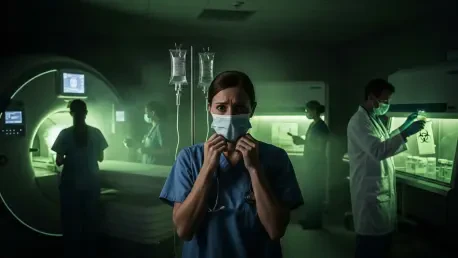

Healthcare professionals spend their careers safeguarding public health, yet they are often the ones quietly facing the most significant occupational threats from cancer-causing agents in the modern European landscape. Recent research conducted by the Barcelona Institute for Global Health has highlighted a startling discrepancy between the perceived safety of medical environments and the reality of daily exposures. Representing approximately eleven percent of the total labor force within the European Union, these individuals operate in a sector that is frequently overlooked by industrial safety regulators who typically focus on manufacturing or construction zones. The study, which appeared in a prominent public health journal, suggests that the Health and Social Care sector acts as a major, yet largely unaddressed, hotspot for oncogenic hazards. This research provides a critical evaluation of preventable cancer causes, aiming to protect a workforce that is fundamental to the stability of the modern European social infrastructure and economy.
Reevaluating Occupational Hazards in the Medical Sector
The data supporting these findings originated from the comprehensive Workers’ Exposure Survey, an ambitious project managed by the European Agency for Safety and Health at Work during recent survey cycles. This methodology distinguished itself from previous studies by moving away from broad, generic job titles that often mask the specific risks associated with individual roles within a hospital or clinic. Instead, the researchers utilized task-centric interviews with over 3,000 professionals across several nations, including Finland, France, Germany, Hungary, Ireland, and Spain. By asking employees about their specific daily activities rather than their official designations, the survey managed to pinpoint exactly where and how carcinogenic exposures occur in real-time. This granular approach ensures that the resulting data remains highly relevant to modern occupational safety standards, allowing for a more nuanced understanding of the hazards that currently define the medical landscape in 2026.
Statistical evidence gathered from this survey reveals a concerning reality where nearly thirty percent of healthcare professionals were exposed to at least one carcinogenic agent during their most recent working week. Perhaps even more alarming is the observation that eight percent of these workers faced concurrent exposure to multiple carcinogens, creating a cumulative risk that is rarely accounted for in traditional safety assessments. These figures indicate that the clinical environment is significantly more hazardous than public perception traditionally suggests, with risks originating from an intricate combination of advanced diagnostic technology and common chemical agents. The prevalence of these hazards underscores a critical gap in workplace monitoring, as the healthcare industry has historically prioritized immediate safety concerns over long-term oncogenic threats. Addressing these findings requires a reassessment of how safety protocols are integrated into the daily workflow of various medical departments.
Physical and Environmental Risk Factors
Ionizing radiation emerged as the most prevalent physical risk factor identified in the study, affecting approximately 7.4 percent of the workforce due to the sector’s heavy reliance on sophisticated imaging. Modern medicine depends heavily on X-rays, CT scanners, and various medical isotopes for both diagnosis and therapy, yet the staff operating or assisting with this equipment often face chronic, low-level exposure. While safety protocols and lead shielding are standard across the European Union, the data suggests that these safeguards might be inconsistently applied or may be insufficient to fully mitigate the risks for nurses and technicians working in close proximity to radiological sources. The persistent nature of these exposures demands a more rigorous application of the ALARA principle—keeping radiation as low as reasonably achievable—to ensure that the very tools used to save lives do not inadvertently shorten the lives of those who operate them daily.
Beyond the walls of the hospital, environmental hazards such as diesel engine exhaust and solar ultraviolet radiation present additional layers of risk for a significant portion of the medical and social care workforce. More than six percent of workers are exposed to diesel exhaust, which often originates from facility maintenance equipment, emergency generators, and transport vehicles used for patient relocation. This known Group 1 carcinogen bridges the gap between industrial-grade pollution and the clinical environment, affecting those in support roles who ensure the facility remains operational. Furthermore, solar UV radiation is a primary concern for over six percent of the cohort, particularly for home care providers and social workers who travel between patient residences or conduct outdoor duties. This finding broadens the definition of occupational health in healthcare, demonstrating that oncogenic risks are not confined to laboratories but extend into the wider community.
Chemical Vulnerabilities and Synergistic Toxicity
Chemical agents constitute a substantial portion of the carcinogenic burden within healthcare, with substances like formaldehyde and ethylene oxide remaining essential for modern disinfection and sterilization. Formaldehyde is a staple in tissue preservation and laboratory analysis, yet it is widely recognized for its genotoxic properties which have been linked to the development of leukemia in chronically exposed individuals. Similarly, ethylene oxide is indispensable for sterilizing heat-sensitive medical equipment that cannot withstand traditional autoclaving, but it poses a severe risk to the technicians who manage these systems. These DNA-altering agents require highly specialized ventilation and handling procedures to prevent inhalation or skin contact. Despite the availability of automated systems, the survey suggests that manual handling and inadequate ventilation in older facilities continue to leave a significant number of healthcare employees vulnerable to these potent chemicals.
A significant contribution of the research is the emphasis on the synergistic effects of combined exposures, where workers are frequently subjected to a “cocktail” of different carcinogenic hazards simultaneously. Many healthcare professionals do not face a single, isolated threat but are instead exposed to combinations such as diesel exhaust alongside solar radiation, or multiple cleaning chemicals used in succession. Current safety models typically calculate risk based on single-agent exposure, which fundamentally means the cumulative threat to healthcare workers is likely being underestimated by existing regulatory frameworks. This complexity requires a more sophisticated approach to workplace monitoring that accounts for how different hazards interact and potentially amplify one another’s toxic effects. Without a paradigm shift toward multi-exposure modeling, the true health cost of a career in the medical sector will remain obscured by outdated, one-dimensional safety calculations.
Gender Dynamics and Protective Policy Shifts
The research also highlighted a notable gender gap in exposure levels, with approximately 35.7 percent of male workers reporting contact with carcinogens compared to 26.1 percent of their female colleagues. While the study does not definitively conclude the cause of this discrepancy, it suggests that occupational segregation plays a significant role in determining risk profiles across the sector. Men in healthcare are often found in maintenance, transport, or specific technical radiological roles that naturally involve higher contact with industrial-grade chemicals and radiation sources. This finding underscores the necessity for gender-sensitive safety protocols that specifically address the tasks and roles most likely to involve contact with dangerous agents. By identifying these patterns, healthcare administrators can better tailor their interventions to protect the specific demographics that are currently most at risk within their specific institutional frameworks.
To improve the safety of the healthcare environment, policy makers and hospital administrators prioritized a fundamental shift in how worker health was managed compared to previous years. Historically, the focus remained predominantly on infectious diseases and needle-stick injuries, but the recent findings proved that carcinogenic risks demanded an equal level of institutional concern. Interventions were implemented to upgrade ventilation systems in high-risk areas like pathology labs and sterilization suites, while stricter administrative rotations were established to limit individual exposure time to radiation. Furthermore, the redesign of personal protective equipment was initiated to better shield staff from the specific chemical and radiological hazards identified in the research. These actionable steps moved the industry toward a future where the health of the caregiver was valued as highly as the health of the patient, ensuring long-term sustainability for the workforce.