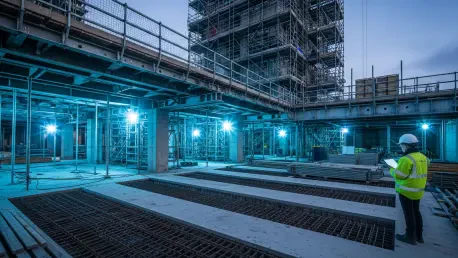

The renovation of high-profile commercial properties in the City of London requires a meticulous approach to safety that ensures even temporary structures are engineered with the same level of precision as permanent foundations. During a complex refurbishment project at Paxton House, this fundamental principle was catastrophically ignored, resulting in the failure of temporary wooden platforms during the installation of a new service riser shaft. Steve Zschoch, a sixty-year-old veteran operative with decades of experience, suffered life-altering injuries when the support structures beneath him suddenly gave way. This specific incident highlighted a severe disregard for established safety protocols regarding temporary works, where the pressure to maintain project timelines seemingly overshadowed the necessity of structural integrity. The subsequent fallout has forced a reckoning within the construction sector, as firms are now being held to higher standards of technical accountability to prevent such tragedies from occurring on active sites.
Engineering Failures: The Vacuum in Temporary Installations
Roots Contractors Limited, acting as the principal contractor for the Paxton House renovation, failed to implement a rigorous structural design process for the temporary platforms used in the riser shaft. Investigations by the Health and Safety Executive revealed that the firm did not employ professional engineering calculations to verify the load-bearing capacity of the wooden decks installed to catch concrete debris. Instead of relying on data-driven engineering, the company utilized informal methods that were wholly inadequate for the technical demands of the project. This lack of structural verification meant that the platforms were essentially unrated for the specific tasks they were intended to support during the drilling process. Furthermore, the internal inspection routine was found to be a superficial exercise, as the personnel assigned to clear these structures for use lacked the necessary training to identify critical design flaws. Without a formal design, the safety of every worker on the site was left to chance.
The mechanics of the collapse itself illustrated the danger of accumulating heavy debris on unverified temporary platforms across multiple floor levels. While Mr. Zschoch was performing his duties on the third floor of the building, a massive section of concrete debris from the drilling above overloaded the temporary wooden structure. The platform failed instantly, causing the operative to fall through the opening and become pinned by the very materials he was tasked with managing. The physical toll was immense, as he sustained multiple fractures to his neck and back, alongside a severe brain hemorrhage that necessitated immediate medical intervention. These injuries effectively ended his career, leaving him with permanent mobility challenges and deep-seated psychological trauma that persists today. The failure was not just a mechanical break but a total systemic collapse of safety barriers that should have protected an experienced worker from foreseeable risks. The weight of the concrete simply exceeded the uncalculated limits of the timber.
Management Oversight: Supervisory Gaps and Site Safety
In addition to the primary contractor’s failings, the subcontractor, Diacutt Limited, was found to have significantly neglected its supervisory duties during the hazardous drilling phase. The safety documentation provided by the firm was characterized by inconsistency and ambiguity, particularly concerning the responsibility for installing heavy-duty crash decks. This lack of clarity created a dangerous vacuum where essential safety measures were either ignored or improperly implemented because no single entity took ownership of the riser shaft’s integrity. The investigation highlighted that the firm failed to provide a clear method statement that could be understood and followed by the operatives on the ground. Such administrative failures often precede physical accidents, as they reflect a broader culture where safety is treated as a secondary concern to operational speed. Without precise instructions and assigned responsibilities, the onsite teams were left to navigate complex structural risks without the necessary guidance from their management.
The lack of direct supervision on the day of the collapse allowed for a hazardous environment where workers were routinely positioned in high-risk drop zones. While active drilling was occurring on the upper floors, workers below were not shielded from the potential fall of heavy debris, creating a scenario where a mechanical failure was guaranteed to result in human injury. Diacutt Limited failed to ensure that a competent supervisor was present to monitor the loading of the platforms and to halt work if the debris accumulation reached dangerous levels. This absence of oversight meant that the drilling team operated without a safety buffer, moving between floors that were structurally compromised by the very work they were performing. Coordination between the different teams on-site was virtually nonexistent, leading to a breakdown in communication that prevented the identification of the platform’s visible distress before the final failure. This disconnection between management and the work face was a primary factor in the severity of the incident.
Regulatory Outcomes: Legal Accountability and Industry Reforms
The legal proceedings at Westminster Magistrates’ Court resulted in significant financial penalties for both firms, reflecting the severity of their regulatory breaches. Roots Contractors Limited pleaded guilty to violating the Construction (Design and Management) Regulations 2015 and was ordered to pay a fine of £19,333 along with substantial legal costs. Similarly, Diacutt Limited admitted to failing in its duty to ensure the health and safety of its workers, resulting in a fine of £13,000 plus costs. These penalties served as a stark reminder that the legal system views temporary works with the same level of importance as permanent structural elements. The court emphasized that the financial cost to the companies, while significant, paled in comparison to the human cost borne by the injured operative. The verdict underscored the non-negotiable obligation of contractors to provide a safe working environment through meticulous planning and proactive risk management. This case has since become a benchmark for prosecuting negligence in the refurbishment of London’s aging commercial infrastructure.
To mitigate future risks, the construction industry adopted more stringent digital monitoring systems for temporary load tracking and mandated third-party engineering audits for all riser shaft installations. Firms transitioned from using traditional timber platforms to using certified steel crash decks that provided a guaranteed weight capacity for heavy demolition tasks. This change was supported by the widespread appointment of temporary works coordinators who managed the technical interface between designers and site operatives. The legal outcomes of the Paxton House incident served as a catalyst for these structural reforms, ensuring that the health and safety of the workforce remained the primary metric of project success. By integrating these comprehensive safety measures into the earliest stages of construction planning, the industry successfully reduced the incidence of infrastructure failure on high-rise refurbishment sites. This systemic shift toward engineering accountability ensured that veteran workers like Mr. Zschoch would no longer be subjected to unverified and hazardous environments.