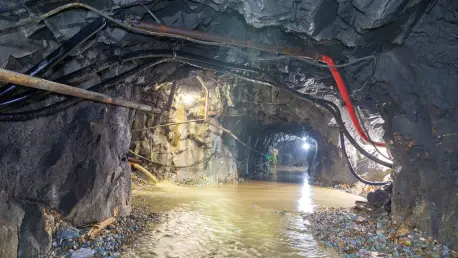

Thin-seam mining practices in Kentucky, Virginia, and West Virginia frequently require cutting through surrounding rock, which releases toxic levels of respirable crystalline silica into the air. This environmental reality serves as the backdrop for a comprehensive study of American underground coal miners conducted from 1991 to 2024. By examining the health records of over 30,000 active workers, researchers have uncovered a persistent and deepening crisis of Coal Workers’ Pneumoconiosis (CWP) and its most lethal variation, Progressive Massive Fibrosis (PMF). The surveillance data, gathered through the National Institute for Occupational Safety and Health, provides a granular look at how specific job functions and regional geological conditions dictate the health outcomes of those working beneath the surface. This analysis is not merely a historical record but a vital diagnostic tool for an industry struggling to reconcile modern extraction efficiency with the biological limits of the human respiratory system as we navigate the safety challenges of 2026.
Occupational Hazards and High-Risk Roles
Analysis: The Most Dangerous Jobs in the Mine
The distribution of respiratory disease is far from uniform across the mining workforce, with data indicating that those at the cutting edge of production face the highest stakes. Continuous miner operators, who command the massive rotating drums that chew through coal seams and rock layers, are positioned at the epicenter of dust generation. The study revealed that these individuals are approximately 1.8 times more likely to develop CWP and 3.0 times more likely to suffer from PMF compared to their coworkers who do not hold this specific role. This disparity is attributed to the immediate proximity to the machine’s cutting head, where the concentration of fine, inhalable particulates is at its peak. Despite the use of water sprays and ventilation curtains designed to suppress dust, the volume of material displaced during the extraction process often overwhelms standard engineering controls, leaving these specialized operators in a state of chronic, high-intensity exposure throughout their daily shifts.
Roof bolters represent another high-risk category, as their work involves drilling deep into the overhead strata to secure the mine ceiling with steel bolts. This process inherently targets rock layers rather than coal, producing a higher percentage of crystalline silica dust, which is significantly more abrasive and inflammatory to lung tissue than coal dust alone. The research indicates that roof bolters have an adjusted prevalence ratio of 1.4 for both CWP and PMF, a statistic that underscores the dangers of mechanical rock penetration. While the industry has implemented various dust collection systems for bolting machines, the fine silica particles often bypass filtration or escape during the cleaning of dust boxes. The cumulative effect of this exposure is a permanent scarring of the lungs, as the body’s immune system fails to clear the jagged mineral fragments. These findings suggest that the specific mechanics of rock drilling create a unique hazard profile that requires specialized respiratory protection beyond traditional coal dust mitigation.
Comparative Risks: Different Mining Positions
In contrast to the heavy machinery operators, roles such as shuttle car drivers, general laborers, and belt conveyor workers showed lower adjusted prevalence ratios for lung disease. For example, general laborers exhibited a CWP ratio of only 0.7, while those working on conveyor systems were at 0.8. However, experts are quick to clarify that these lower figures should not be mistaken for a lack of environmental risk. Instead, these statistics reflect the relative intensity of exposure between different occupational categories within the same subterranean environment. Even in roles considered less hazardous, the baseline of respirable dust remains high enough to cause significant health issues over a long career. The study’s methodology adjusted for total tenure but did not account for the specific amount of time spent in each job, meaning many workers in lower-risk roles may have previously occupied higher-risk positions. This movement between jobs makes it difficult to isolate the exact moment of injury, pointing to a widespread industry danger.
The comparative analysis also highlights the limitations of current surveillance when dealing with the healthy-worker survivor effect. Miners who develop early-stage symptoms or find themselves unable to keep up with the physical demands of high-dust roles often transition into lighter jobs like belt maintenance or general labor. This movement can skew the data, making these secondary roles appear safer than they actually are. Furthermore, the persistent presence of disease among general workers suggests that ambient dust levels in the return air and travelways are still reaching dangerous concentrations. While an operator faces the direct plume of dust from a cutting face, every worker in the mine is breathing air that has been filtered through miles of dusty tunnels. This reality challenges the notion of safe zones within an underground coal mine, suggesting that until the source of dust is completely controlled, no position is entirely free from the threat of pneumoconiosis. The focus must remain on systemic ventilation rather than just individual job safety.
Regional Crisis and Tenure Trends
Geographical Disparities: Central Appalachian Epidemic
The most striking revelation of the 1991–2024 surveillance data is the extreme geographic concentration of lung disease within the Central Appalachian region. Specifically, miners working in Kentucky, Virginia, and West Virginia are facing a health crisis that far exceeds the national average for the industry. Among the thousands screened in this area, the prevalence of CWP was recorded at 8.4%, a figure that stands in stark contrast to the 1.5% seen in all other American coalfields combined. This nearly six-fold difference points to localized factors that make mining in this part of the country uniquely hazardous. The disparity is even more catastrophic when looking at Progressive Massive Fibrosis, the most advanced and debilitating stage of the disease. In Central Appalachia, the risk of PMF is ten times higher than in other regions, suggesting that the conditions in these specific states are not just causing more illness, but are causing more severe, life-threatening damage at an accelerated rate.
These regional disparities persist even when the data is adjusted for the number of years spent underground, meaning that an Appalachian miner with 20 years of experience is at significantly higher risk than a miner in the Midwest or West with the same tenure. This suggests that the environment itself, rather than just the duration of work, is the primary driver of the epidemic. The high concentration of cases across all job types in this region indicates a systemic exposure problem that transcends individual work habits or company-specific safety cultures. It paints a picture of a regional industry where the air quality is fundamentally compromised by geological and operational realities. As the coal industry continues to operate through 2026 and beyond, these findings demand a regionalized approach to health regulations that recognizes the extraordinary burden placed on Appalachian workers. The data serves as a call for targeted interventions that address why certain states have become the epicenter of a disease.
Progression: Tenure and Silica Exposure
The study confirms the long-held understanding that pneumoconiosis is primarily a disease of cumulative exposure, with the risk of severe lung damage increasing steadily alongside years of service. Over 63% of CWP cases and a staggering 76% of PMF cases were identified in miners who had spent at least 25 years working underground. For these veterans, the disease is the result of decades of inhaling fine particles that the body simply cannot expel. The median age for those diagnosed with CWP was 51, with a median tenure of 28 years, illustrating a slow but relentless progression of tissue damage. This traditional trajectory of the disease has historically allowed for a period of monitoring and potential intervention before the most severe symptoms manifest. However, the sheer volume of cases among long-term workers indicates that even with decades of safety improvements, the cumulative dust load eventually overcomes the lungs’ natural defenses. It reinforces the necessity of life-long surveillance for anyone in the industry.
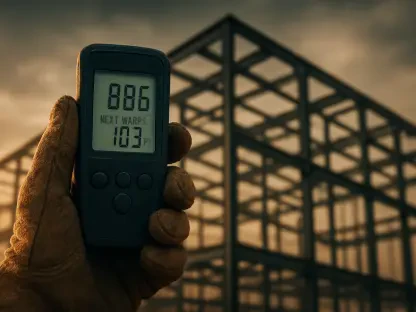
Looking back at the data, it became clear that the path forward for the mining industry required a multifaceted strategy to protect the next generation of workers. Regulatory bodies and mining companies prioritized the implementation of real-time dust monitoring technology, which provided workers with immediate feedback on their exposure levels. This shift allowed for instantaneous adjustments to ventilation and water sprays, rather than waiting for laboratory results. Furthermore, the industry moved toward mandatory, more frequent radiographic screenings for those working in thin-seam environments or high-risk roles. These actions were coupled with a focus on engineering out the hazard by developing autonomous mining systems that removed operators from the immediate vicinity of the cutting face. By acknowledging the specific risks of silica and the regional crisis, stakeholders established a framework for a safer underground environment and protected the respiratory health of the modern workforce through 2026.