
Sofia Khaira is a dedicated specialist in diversity, equity, and inclusion, renowned for her ability to help businesses modernize their talent management and development practices. As a core HR expert, she drives initiatives that go beyond mere compliance, focusing on fostering inclusive and equitable work environments where every employee feels valued. In this discussion, we explore the complex intersection of personal expression and professional responsibility, examining how organizations can navigate the legal and cultural minefields of political speech in the modern workplace while maintaining a cohesive and productive atmosphere.
The following conversation delves into the nuances of state-specific labor laws, the protections afforded by the National Labor Relations Act, and the delicate balance required when political advocacy overlaps with protected identities. We discuss the legal risks of executive partisan messaging, the necessity of viewpoint-neutral enforcement, and provide a strategic forecast for the future of political discourse in professional settings.
Private companies often have broad authority to regulate speech, yet state laws in places like California or New York offer specific safeguards for off-duty conduct. How should HR distinguish between protected personal expression and actionable workplace disruption, and what specific documentation steps are necessary to justify discipline while accounting for these regional legal nuances?
The distinction really lies in the nexus between the conduct and the business’s legitimate operations. In states like California, the labor code explicitly bars employers from making rules that forbid political participation or coerce employees into a specific line of political action. To navigate this, HR must focus on whether the expression causes a material impact, such as a protest that is so divisive it leads customers to take their accounts elsewhere or political rants that consume valuable team headspace. Documentation is your strongest shield here; you must meticulously record the specific business disruptions, such as lost billable hours or documented client complaints, rather than the content of the speech itself. By framing the issue around behavior and objective impact—such as a violation of a neutral off-duty conduct policy—you can justify discipline while respecting the statutory protections found in places like New York or Colorado.
Political advocacy frequently overlaps with protected characteristics such as race, gender, or religion. When an employee’s political activity is tied to their identity, what framework should HR use to evaluate discrimination risks, and how can they ensure that disciplinary actions do not inadvertently trigger Title VII retaliation claims?
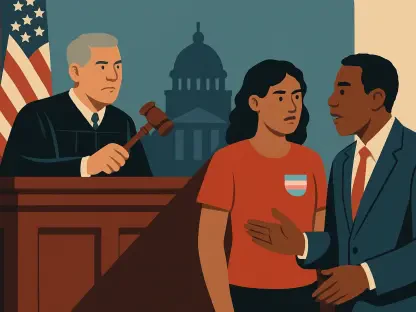
When an employee endorses a candidate specifically because that candidate supports the interests of their race, religion, or sexual orientation, the political act becomes inextricably linked to their protected status. In these cases, HR must apply a framework that evaluates whether the disciplinary action could be perceived as targeting the identity rather than the behavior. Title VII and many state laws protect employees who oppose unlawful discrimination, so if an employee is protesting in support of their own classification, any adverse action could be seen as retaliatory. To mitigate this risk, HR should ensure that any discipline is rooted in a clear violation of a neutral policy, such as harassment or misuse of company resources, and that similar actions have been taken against employees outside of that protected group. It is vital to remember that targeting an individual for political activity that doubles as identity advocacy is a high-risk area for discrimination claims.
The National Labor Relations Act protects “concerted activities” regarding wages, safety, or benefits, even if the speech has a political dimension. In what ways do these labor laws limit an employer’s right to censor speech, and what specific criteria help determine if an individual’s social media post constitutes protected group advocacy?
The NLRA significantly limits an employer’s ability to censor speech if that speech touches on the “terms and conditions” of employment, even if it is shared in a sharp or critical manner on social media. The primary criteria for protection is that the activity must be “concerted,” meaning it is tied to group action or shared concerns about working conditions like minimum wage laws or workplace safety. An individual’s social media post is likely protected if it seeks to initiate or prepare for group action, or if it brings group complaints to the attention of management. If an employee posts about how a specific political policy affects their department’s scheduling or benefits, HR cannot simply label it a “political rant” to justify a firing. Doing so could trigger an unfair labor practice claim, as the National Labor Relations Board has consistently upheld the right of employees to communicate about these issues with the media and the public.
Maintaining neutrality is difficult when management or executives express partisan views that could be seen as coercive to staff. What are the potential legal liabilities for leadership in states with strict political affiliation protections, and what step-by-step guidance should HR provide to keep corporate messaging focused strictly on business objectives?
Leadership expression of partisan views is incredibly risky because, in jurisdictions like California, it can be argued as an attempt to “control or direct” the political activities of the workforce. Legal liability can arise if an employee feels coerced to adopt a certain political line to ensure job security or career advancement, potentially leading to lawsuits over political affiliation discrimination. To prevent this, HR should provide a step-by-step guide for executives that mandates a “business-first” communication strategy, where all official statements are vetted for partisan neutrality. Managers should be coached to avoid written statements on divisive political issues and to keep all corporate messaging tied directly to the company’s mission and operational goals. By maintaining a strict boundary between personal belief and corporate identity, the organization protects itself from claims of a coercive work environment.
Enforcement consistency is a vital legal defense, but applying rules neutrally across different ideologies is a common challenge. How can organizations structure dress code or social media policies to be truly viewpoint-neutral, and what specific training should front-line managers receive to de-escalate political friction without showing personal bias?
To achieve true viewpoint neutrality, policies must be structured to address the medium and the disruption, not the message; for example, if a dress code prohibits political slogans, it must be applied to every slogan regardless of whether management agrees with the sentiment. We recommend using very specific language in social media policies that focuses on the unauthorized use of company logos or the impact on professional duties rather than the opinions expressed. Front-line managers need specialized training on de-escalation techniques that focus on redirecting heated political debates back to work-related tasks without validating or condemning any specific viewpoint. This training should include role-playing scenarios where managers practice using neutral language to address workplace friction, ensuring they involve HR promptly whenever a dispute begins to affect team productivity. Consistency is the goal, as a single instance of biased enforcement can dismantle an otherwise solid legal defense.
What is your forecast for politics in the workplace?
I forecast that the boundary between an individual’s political identity and their professional life will continue to blur, requiring HR to become even more adept at managing “identity-based politics” rather than just partisan debates. As more states adopt protections for off-duty conduct and the NLRB continues to broaden the definition of concerted activity, employers will find it increasingly difficult to maintain a completely “politics-free” zone. The future successful organization will not be the one that tries to silence all political speech, but the one that creates a robust framework for civil discourse while strictly enforcing behavioral standards. We will see a greater reliance on objective metrics of “workplace disruption” to justify disciplinary actions, and HR professionals will need to stay ahead of a rapidly evolving patchwork of state-level protections to avoid costly litigation. Ultimately, the focus will shift from policing beliefs to managing the tangible impact of those beliefs on the collective work environment.