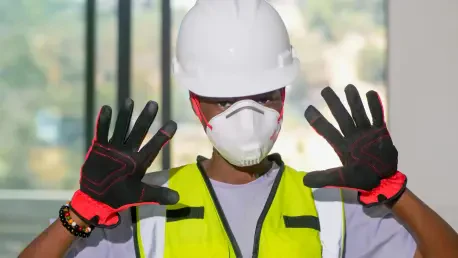

The rapid intensification of high-risk industrial environments has forced a fundamental shift in how personal protective equipment is evaluated, moving the industry far beyond simple compliance toward a regime of exhaustive performance verification. As global safety forums like the A+A Trade Fair in Düsseldorf showcase the latest breakthroughs in March 2026, the traditional model of meeting minimum entry requirements is rapidly becoming obsolete. Manufacturers and safety officers now demand granular data that explains exactly how a material will respond under the stress of chemical exposure, extreme thermal fluctuations, or mechanical impact. This new era of safety is characterized by a transition from qualitative “pass or fail” assessments to quantitative, data-driven insights that prioritize the life of the worker above all else. In this context, the role of testing equipment suppliers has evolved from providing simple laboratory tools to becoming essential partners in the quest for absolute industrial reliability.
Advancing Regulatory Compliance Through Precision
Navigating Global Regulatory Frameworks
Modern safety standards issued by organizations such as ISO, EN, and ASTM are no longer satisfied with broad-spectrum generalizations regarding material durability. Recent updates to standards like EN 388:2016 for mechanical risks and ISO 13688 for general protective clothing requirements now demand a comprehensive breakdown of how fibers and composites behave under specific, isolated stressors. This regulatory maturation forces laboratories to move away from binary results, focusing instead on the narrative of performance—how a glove loses its integrity after three thousand cycles of abrasion or how a fire-resistant suit maintains its thermal barrier during a sustained flash fire event. By adopting these more sophisticated protocols, manufacturers can demonstrate a level of transparency that was previously impossible, providing end-users with a clear understanding of the safety margins inherent in the products they wear every day in hazardous zones.
Furthermore, the pressure to maintain a competitive edge in a tightening regulatory environment has led to a surge in the adoption of specialized testing instrumentation. These tools allow safety engineers to identify the exact point of failure within a material’s structure, enabling a more iterative and scientific approach to product development. Instead of relying on anecdotal evidence or historical precedent, the industry now uses high-precision data to justify material choices and design modifications. This shift is particularly evident in sectors where the consequences of equipment failure are catastrophic, such as high-voltage electrical work or chemical processing. By aligning laboratory outputs with the precise requirements of modern international standards, companies are not just checking a regulatory box; they are building a foundation of trust with their workforce that is rooted in irrefutable scientific evidence and consistent performance metrics.
Integrating Multi-Standard Compatibility
For global manufacturers operating in 2026, the complexity of navigating diverse international markets presents a significant logistical and technical hurdle. A single product line often needs to satisfy the European CE marking requirements while simultaneously meeting the rigorous ANSI/ISEA certifications used across North America. To manage this diversity without inflating operational costs, laboratories are increasingly turning to testing hardware that features multi-standard compatibility. This technical flexibility allows a single piece of equipment to execute various testing protocols by simply adjusting software parameters or swapping modular components. Such versatility is essential for maintaining a fast speed-to-market, as it eliminates the need for redundant testing cycles across different machines, ensuring that products are validated for global distribution with surgical accuracy and minimal downtime.
Beyond the logistical benefits, the integration of multi-standard testing capabilities ensures a higher level of uniformity in safety data across different geographic regions. When a manufacturer can test a safety boot or a respirator using the same core instrumentation for both ISO and ASTM benchmarks, the risk of data discrepancy caused by hardware variation is virtually eliminated. This consistency is vital for maintaining brand reputation and ensuring that a worker in a refinery in Germany receives the same level of protection as a technician in a chemical plant in Texas. The ability to harmonize these data sets through advanced instrumentation allows safety directors to make more informed procurement decisions on a global scale. Ultimately, the move toward multi-standard compatibility is a strategic response to the globalization of industrial labor, ensuring that safety remains a universal constant regardless of regional regulatory nuances.
Integrating Automation into Performance Verification
Bridging Theoretical Standards and Practical Application
The specialized equipment supplier serves as the critical bridge that transforms theoretical safety benchmarks into tangible, real-world protection. While a standard might dictate that a medical gown must resist fluid penetration at a certain pressure, it is the testing hardware that must recreate those exact conditions with perfect repeatability. Instruments such as the GT-RC01 blood penetration resistance tester are engineered to simulate high-risk clinical environments by evaluating fluid barriers under precise pressure profiles. This level of technical application ensures that a safety standard has practical utility rather than remaining a mere abstract guideline. By bridging this gap, laboratories can verify that the theoretical protective qualities of a design are actually present in the finished product, providing a necessary layer of verification before gear reaches the frontline.
Moreover, the application of advanced testing series often involves modular structures that can be customized to evaluate diverse safety metrics across different industries. For instance, a facility might use a single base system to test for cut resistance in safety gloves while utilizing specialized attachments to measure thermal protection in firefighting helmets. This modular approach allows for a more holistic assessment of PPE, recognizing that a worker’s safety often depends on a combination of protective factors rather than a single attribute. By scrutinizing every protective layer against mandatory benchmarks through high-precision instrumentation, suppliers help manufacturers refine their products to meet the specific needs of niche industrial roles. This practical implementation of safety science ensures that every piece of equipment is optimized for the unique hazards of its intended environment, from construction sites to laboratories.
Reducing Human Variability Through Automated Systems
A defining trend in the current industrial safety landscape is the rapid shift toward fully automated testing systems designed to minimize human intervention. In traditional laboratory settings, repetitive tasks such as the thousands of cycles required for a Martindale abrasion test were prone to human error, which frequently led to inconsistent data and unreliable certification results. By automating these processes, modern testing hardware ensures that every cycle is executed with identical force, speed, and orientation, effectively eliminating the variability that plagues manual testing methods. This shift toward automation allows Research and Development teams to focus their efforts on material innovation and design optimization, confident in the knowledge that their prototypes are being measured against mandatory benchmarks with total reliability and precision.
The benefits of automation extend beyond the removal of human error; they also encompass the ability to collect and analyze vast amounts of data in real-time. Automated systems like the GT-KC29 cutting tester provide instantaneous feedback on material performance, allowing for immediate adjustments during the prototyping phase. This accelerated feedback loop is essential for staying ahead in a fast-paced market where new hazards are constantly emerging. Furthermore, automated reporting features ensure that the data generated is tamper-proof and ready for inclusion in official certification filings. This level of digital integrity is becoming a standard requirement for major certification bodies, as it provides a transparent and verifiable audit trail. By prioritizing automation, laboratories are not only increasing their efficiency but are also elevating the standard of evidence required to prove that a piece of safety equipment is truly fit for its intended purpose.
Ensuring Data Traceability and Long-Term Reliability
The Importance of Quality Management Systems
In an era where industrial accidents can lead to significant legal liability and the tragic loss of human life, the necessity for absolute data traceability cannot be overstated. Professional testing equipment suppliers must operate under rigorous quality management systems, such as ISO 9001, to ensure that their own manufacturing processes are as consistent as the gear they help validate. This commitment to internal quality ensures that every sensor, motor, and software algorithm within a testing machine functions according to strict specifications. When a laboratory produces a safety report, that document must be backed by hardware that has its own verified history of accuracy and calibration. This systemic focus on quality ensures that the hardware used to test personal protective equipment is just as reliable and trustworthy as the protective gear itself.
This culture of quality management creates a ripple effect throughout the entire safety supply chain, establishing a standard of accountability that benefits the end-user. For a safety director, knowing that their testing partner adheres to global quality standards provides peace of mind that the performance data they receive is accurate and legally defensible. Traceability also plays a crucial role in post-market surveillance, allowing manufacturers to track the performance of specific batches of equipment over time. If a failure occurs in the field, a traceable data history allows investigators to return to the original testing parameters to identify potential discrepancies. This proactive approach to quality management transforms safety testing from a static requirement into a dynamic system of continuous improvement, where every data point contributes to the long-term goal of zero workplace fatalities through better gear.
Collaborative Calibration and Support Networks
The long-term viability of any industrial safety program is heavily dependent on the ongoing relationship between equipment suppliers and major international certification bodies such as SGS, TUV, and Intertek. Because even a minute misalignment in a testing machine can result in the erroneous certification of unsafe products, the role of continuous calibration is paramount. A comprehensive service network provided by a reputable supplier ensures that hardware remains within its narrow operational tolerances throughout its entire lifespan. This chain of reliability starts with professional on-site installation and continues through scheduled maintenance and expert staff training. By maintaining this close collaboration, laboratories ensure that their safety verification process remains beyond reproach, providing the scientific foundation for every safety claim made by a manufacturer.
In addition to technical maintenance, these collaborative networks serve as a vital conduit for knowledge transfer within the safety industry. Suppliers who work closely with certification bodies are often the first to understand upcoming changes in regulatory requirements, allowing them to advise their clients on how to adapt their testing protocols. This proactive support helps laboratories avoid obsolescence and ensures that they are always prepared for the next wave of safety standards. Furthermore, professional training for laboratory technicians ensures that the sophisticated features of modern instrumentation are utilized to their full potential, maximizing the return on investment for the manufacturer. In the complex world of safety verification, the machine is only as effective as the support system that surrounds it, making these collaborative networks a fundamental component of the global industrial safety infrastructure.
Predictive Safety and Strategic Innovation
Modern Instrumentation and Real-Time Monitoring
Recent technological advancements in safety testing have introduced a new era of “predictive” safety, where high-resolution LCD displays and integrated microcomputer control systems allow for the real-time monitoring of critical environmental variables. Specialized tools, such as the GT-RA02 respirator BFE tester and the GT-RC02B thermal protection tester, provide safety engineers with a detailed look at how materials degrade under continuous stress. Rather than simply waiting for a material to fail, modern laboratories use high-precision data to observe the subtle physical changes that occur before a breach happens. This capability is particularly vital for products like high-voltage gloves or fire-resistant clothing, where the degradation of protective properties may not be visible to the naked eye but could prove fatal in a real-world emergency.
The ability to visualize and record these variables in real-time allows for a much more nuanced understanding of material fatigue. By analyzing how heat transfer increases or how filtration efficiency drops over hours of continuous use, manufacturers can establish more accurate expiration dates and maintenance schedules for their gear. This predictive approach moves the industry away from a reactive stance toward a proactive safety model that anticipates failure before it occurs. Furthermore, the digital integration of these systems allows for the easy export of data to cloud-based management platforms, where it can be analyzed using advanced algorithms to identify broader trends in material performance. This high-tech approach to safety verification ensures that the next generation of PPE will be smarter, more durable, and more capable of protecting workers in the most extreme conditions imaginable.
Strategic Procurement and Future-Proofing Assets
Procuring sophisticated PPE testing equipment has transitioned from a simple budgetary line item into a strategic investment that defines a company’s long-term safety trajectory. Decision-makers are now prioritizing hardware that is “future-proofed,” meaning it possesses the processing power and modular design necessary to handle upcoming software updates and hardware upgrades as global standards continue to tighten. Choosing a supplier with extensive technical depth and a history of engineering refinement, such as those with over twenty years of industry experience, ensures that a laboratory benefits from a legacy of reliability while remaining on the cutting edge of innovation. This strategic focus on longevity ensures that a facility’s testing capabilities will remain relevant and compliant even as the regulatory landscape shifts in the coming years.
Furthermore, the emphasis on strategic procurement includes the requirement for digital data management and paperless audit trails, which are essential for modern, high-tier safety certification. Manufacturers who invest in equipment with automated reporting and digital export capabilities are better positioned to handle the rigorous audits required by global certification bodies. This transition to a digital-first testing environment not only increases operational efficiency but also enhances the transparency and credibility of a company’s safety program. By viewing testing hardware as a long-term asset rather than a disposable tool, organizations can build a more resilient safety infrastructure that is capable of evolving alongside the materials and hazards of the future. Ultimately, the choice of testing equipment is a choice about the future of worker protection, where precision, data, and reliability are the ultimate metrics of success.
The landscape of industrial safety was fundamentally reshaped by the integration of high-precision testing hardware and automated verification protocols. By moving beyond basic regulatory compliance, the industry achieved a state where every safety claim was backed by irrefutable, granular data. Manufacturers successfully navigated the complexities of global markets by adopting multi-standard compatible equipment, which allowed for a more streamlined and accurate certification process. The shift toward automation proved to be a turning point, as it eliminated the human variability that previously compromised the integrity of material performance reports. These advancements ensured that the protective gear used in the most hazardous environments was validated with a level of scientific rigor that prioritized the physical well-being of the worker above all else.
Moving forward, the focus must remain on the continuous calibration and digital integration of safety systems to maintain this hard-won reliability. Companies should prioritize the acquisition of modular, future-proofed instrumentation that can adapt to the inevitable tightening of global safety standards. It is recommended that safety directors foster deeper partnerships with equipment suppliers who offer comprehensive service networks, as the long-term accuracy of data depends on the technical support behind the machine. By embracing a predictive approach to material degradation and maintaining rigorous data traceability, the industry can ensure that the safety protocols established today will continue to protect lives in the face of tomorrow’s industrial challenges. The transition to a data-driven safety culture was not just a technical upgrade; it was a commitment to the absolute protection of human life through scientific excellence.