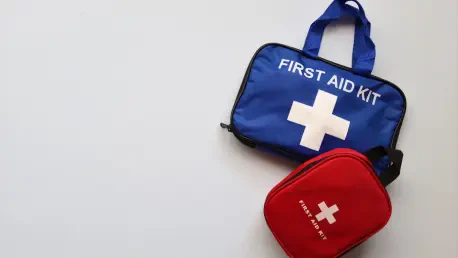

While federal OSHA standards do not yet mandate naloxone, the FDA’s 2023 approval of over-the-counter nasal sprays has made these life-saving tools widely accessible to businesses. For years, workplace first-aid kits remained relatively static, containing bandages, antiseptics, and perhaps an automated external defibrillator. However, the shifting landscape of public health has forced a reconsideration of what constitutes an essential emergency supply in a professional setting. As the prevalence of synthetic opioids has increased, the boundary between community health crises and workplace safety has blurred, leading to a surge in interest regarding opioid-reversal agents. Managers and safety officers now face a critical decision: whether to remain compliant with the bare minimum requirements or to adopt a proactive stance that acknowledges modern risks. This evolution reflects a broader trend in corporate responsibility where health interventions once reserved for clinical environments are becoming standardized in offices, factories, and retail spaces. The current environment demands that organizations weigh the logistical challenges of implementation against the potential for preventing a fatality on their premises, a calculation that is increasingly leaning toward inclusion.
1. The Legislative Landscape: State-Level Mandates and Federal Guidance
The regulatory environment regarding opioid antagonists is currently experiencing a period of significant transformation at the state level. In New York, Labor Law § 27-f represents a pivotal shift, requiring employers who are already mandated to provide first-aid kits under existing OSHA standards to include an opioid antagonist within those supplies. This law, which is scheduled to take full effect in December 2026, marks one of the most direct legislative interventions into private-sector first-aid requirements seen in recent years. By tying the requirement to established OSHA frameworks, the state ensures that a wide swath of industries, particularly those with higher risk profiles or larger workforces, are adequately prepared for potential emergencies. This legislative move suggests that state governments are no longer content to wait for federal mandates to address the rising frequency of overdose events in public and private spaces. Employers operating within New York must now evaluate their current inventory and procurement processes to ensure they are compliant before the end of the calendar year, highlighting the urgency of the situation.
While New York has taken the lead with immediate legislation, California is following a similar trajectory with Assembly Bill 1976. This bill tasks the California Division of Occupational Safety and Health, commonly known as Cal/OSHA, with the development of new regulations by December 2027 that will mandate the inclusion of naloxone in workplace first-aid materials. This staggered timeline gives California businesses a window to prepare, but it also signals a clear national trend toward mandatory inclusion. At the federal level, the Occupational Safety and Health Administration has not yet established a universal requirement for naloxone, but it has not remained silent on the issue either. The National Institute for Occupational Safety and Health continues to provide voluntary guidelines that help organizations develop their own response programs. These guidelines serve as a blueprint for companies that wish to exceed the current federal minimums, offering advice on how to integrate opioid reversal agents into broader health and safety management systems. The disparity between state and federal rules creates a complex compliance environment for multistate operators who must now balance different sets of requirements.
2. Liability and Legal Protection: Understanding the Good Samaritan Framework
One of the primary concerns for many business owners considering the introduction of naloxone is the potential for legal liability should an employee administer the medication incorrectly. Fortunately, the legal framework in the United States provides robust protections through Good Samaritan laws, which are currently active in some form in all fifty states. These laws are specifically designed to encourage bystanders and non-medical professionals to provide life-saving assistance during emergencies without the fear of being sued for unintended consequences. In the context of an opioid overdose, these statutes typically protect individuals who administer naloxone in good faith, provided that their actions do not constitute gross negligence or willful misconduct. This means that if an employee identifies a colleague or visitor who appears to be experiencing an overdose and uses the nasal spray according to their training, both the employee and the employer are generally shielded from civil liability. Understanding these protections is vital for fostering a workplace culture where staff members feel empowered to act rather than hesitant due to legal uncertainties.
Furthermore, the nature of naloxone itself adds an extra layer of safety for those who might be worried about misdiagnosis. The medication is an opioid antagonist, meaning it only interacts with opioid receptors in the brain; if it is administered to someone who is not experiencing an opioid-related medical emergency, it typically has no physiological effect. This medical reality significantly lowers the stakes for non-clinical responders, as the risk of doing harm is remarkably low compared to the risk of inaction. Legal experts often point out that the existence of these protections, combined with the over-the-counter status of the medication, makes the inclusion of naloxone in first-aid kits a low-risk, high-reward strategy. However, employers must still ensure that their specific state’s version of the Good Samaritan law covers the workplace setting, as some variations in language exist between jurisdictions. By documenting that the medication was provided as part of a formal safety program and that employees received appropriate guidance, companies can further solidify their legal standing and demonstrate a commitment to the duty of care they owe to their workforce and the public.
3. Implementing an Opioid Response Program: Strategic Preparation Steps
For multistate employers and those looking to stay ahead of the regulatory curve, a systematic approach to implementation is essential for both compliance and effectiveness. The first critical step involves performing a comprehensive workplace evaluation. This process requires identifying which specific facilities fall under OSHA first-aid requirements and determining if any current state-level mandates apply to those locations. Because the triggers for compliance can vary—ranging from the number of employees on-site to the proximity of the facility to a hospital—a site-by-site assessment is necessary. Once the applicable locations are identified, businesses must stay updated on local regulations as they evolve over the next two years. Monitoring the rulemaking processes in states like California and New York is vital for understanding the fine details, such as the exact number of doses required per kit and the specific type of training that might be deemed acceptable by state auditors. This proactive monitoring prevents last-minute scrambles and ensures that the organization remains in lockstep with the latest legal standards.
After the initial evaluation, the focus must shift toward revising internal emergency protocols and integrating these new tools into the company’s written safety manuals. It is not enough to simply place a nasal spray in a box; the organization must define when and how it should be used within its official first-aid procedures. This involves updating safety handbooks and ensuring that all emergency response plans explicitly mention the location and availability of opioid-reversal agents. By formalizing these procedures, the company creates a clear framework for action that minimizes confusion during a high-stress event. Additionally, these revised protocols should be reviewed by legal counsel to ensure they align with the immunity protections offered in each operating state. This holistic approach ensures that the program is not just a reactive measure to a specific law, but a well-integrated component of the broader safety culture. When policies are clearly documented and accessible, they serve as a reliable reference point for managers and employees alike, fostering a sense of readiness and organizational stability in the face of modern health challenges.
4. Training and Infrastructure: Moving from Policy to Practical Application
The success of any first-aid intervention relies heavily on the education of the personnel expected to carry it out. Employers should focus on educating chosen first responders within their workforce, ensuring they are trained to recognize the specific symptoms of an opioid overdose, such as pinpoint pupils, blue-tinted lips, or shallow breathing. Training must also cover the use of personal protective equipment to ensure the safety of the responder, as well as the importance of calling emergency services immediately before or after administering the medication. Because naloxone is temporary and can wear off before the opioids are fully out of a person’s system, professional medical follow-up is mandatory. This training should be practical and hands-on where possible, allowing employees to familiarize themselves with the delivery mechanism of the nasal spray. By designating specific individuals for this role, the company ensures that there is always someone on-site who feels confident and prepared to lead the response, which is far more effective than a generalized, unfocused awareness campaign.
Beyond training, the physical management of the medication requires a diligent inventory and storage system. Naloxone is sensitive to environmental conditions and should be stored at room temperature, away from direct light, to maintain its efficacy. Employers must establish a recurring schedule to check expiration dates and replace supplies before they become ineffective. Furthermore, a clear protocol must be in place for replacing the medication immediately after it has been used in an emergency. This operational oversight is often where programs fail, but it is easily managed through a centralized safety log or a digital inventory tracking system. Maintaining thorough documentation of all training sessions, safety inspections, and any instances of medication use is also a critical requirement. These records serve as evidence of compliance for state regulators and provide a clear history of the program’s activity for internal reviews. When an organization treats naloxone with the same logistical rigor as its fire extinguishers or AEDs, it ensures that the tool is ready to perform exactly when it is needed most.
5. Navigating Regulatory Compliance and Corporate Responsibility
The integration of opioid-reversal agents into the workplace was a direct response to a changing public health landscape that eventually reached the office door. Organizations that successfully transitioned to this new standard did so by moving away from purely reactive policies and toward a comprehensive model of employee care. By the time many state laws became active, the most forward-thinking businesses had already established the necessary infrastructure to manage these life-saving tools. They recognized that the cost of procurement and the time spent on training were minimal compared to the potential consequences of being unprepared for a medical emergency on their premises. This shift reflected a broader understanding that workplace safety must evolve alongside the risks present in society. Managers who took the initiative to consult with legal counsel and safety experts found that the barriers to implementation were far lower than initially perceived, especially with the support of Good Samaritan protections and the availability of over-the-counter options.
Looking toward the future of workplace safety, the next steps for any business involve a continuous review of state-level legalities and a commitment to refining emergency response capabilities. Employers must remain vigilant as more jurisdictions consider following the precedents set by New York and California. The most effective strategy remains the development of a flexible safety program that can be easily scaled or adjusted as new regulations are introduced over the next several years. This includes not only the physical presence of naloxone but also a culture that prioritizes rapid response and the destigmatization of medical emergencies. By integrating these practices into the core safety mission, companies can ensure they are providing the highest level of protection for their employees and visitors. Ultimately, the transition to including naloxone in first-aid kits has demonstrated that when the private sector aligns its safety protocols with public health needs, it creates a more resilient environment for everyone. Actionable steps now include conducting a final audit of all first-aid kits and ensuring that every designated responder has completed their most recent training module.