
Sofia Khaira is a distinguished specialist in diversity, equity, and inclusion, renowned for her ability to transform how organizations manage talent and foster equitable work environments. With a background deeply rooted in human resources strategy, she provides a critical lens on the intersection of civil rights and the burgeoning field of algorithmic hiring. In this discussion, we explore the landmark legal developments surrounding Workday’s artificial intelligence screening tools, examining how a company’s geographical footprint can dictate its legal liabilities across the country. We delve into the concept of a “sufficient nexus,” the emotional weight of automated rejection, and the evolving standards for disability protections in the digital age.
The interview explores the legal accountability of software vendors whose products are designed and maintained in California, even when the job seekers are located elsewhere. It addresses the emotional impact on candidates who feel “screened out” by invisible algorithms, the specific challenges of medical-related leave in automated systems, and the defense strategies employed by tech giants who claim their customers maintain the ultimate decision-making power.
How does the location of a company’s headquarters and the design of its software influence whether state-specific nondiscrimination laws apply to individuals living far outside those borders?
The recent ruling on June 22, 2026, by Judge Rita Lin clarifies that a company’s physical and operational presence in California creates a powerful “sufficient nexus” for legal accountability. Because Workday is headquartered in Pleasanton, California, and its artificial intelligence tools were designed, developed, maintained, and controlled from that specific location, the court determined that the Fair Employment and Housing Act could apply to nonresidents. This is a significant shift because it suggests that the “conduct” of the software—the screening and rejection—originates at the headquarters, not necessarily where the applicant is sitting. For a developer, this means the legal standards of their home state might follow their product into every jurisdiction it reaches. It forces companies to realize that their internal design choices in a California office can lead to litigation from an applicant thousands of miles away who feels the sting of a digital rejection.
What does the experience of a candidate applying for over 100 positions only to receive immediate, late-night rejections tell us about the perceived transparency of AI-driven recruitment?
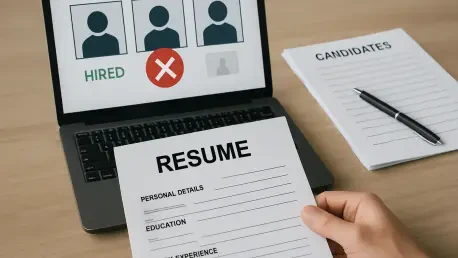
The narrative of the lead plaintiff, who applied for more than 100 positions since 2017 without a single success, highlights a profound sense of alienation in the modern job market. When rejections arrive in the middle of the night, it strips away the “human” element of hiring, leaving candidates with the cold realization that their resume likely never touched a person’s desk. This automated immediacy creates a sensory experience of being ghosted by a machine, leading to the inference that the technology is making snap judgments based on hidden criteria. These candidates aren’t just looking for a job; they are looking for a fair shot, and receiving an instant rejection at 2:00 AM feels like a door being slammed by an invisible hand. It raises serious questions about whether these tools are truly looking at job qualifications or if they are simply identifying patterns that inadvertently exclude qualified, diverse talent.
How do the specific claims regarding medical conditions like asthma and cancer survivorship change the way we view the potential for bias in automated screening?
The inclusion of the ADA claim involving asthma and cancer survivorship is a pivotal moment in this case, as it highlights how AI might interpret “gaps” or “patterns” in a medical history. Judge Lin allowed this claim to proceed because the plaintiff successfully connected her rejections to screening processes that potentially flags medical-related leave or specific treatment and recovery patterns. In the eyes of an algorithm, a period of recovery from cancer might look like a simple lack of productivity or an inconsistent work history, rather than a protected medical event. This creates a terrifying reality for survivors who are ready to return to the workforce but find themselves filtered out by a system that doesn’t understand the context of their journey. It moves the conversation beyond just race and age, forcing us to look at how “neutral” data points about time and attendance can actually be proxies for disability discrimination.
Looking at the potential scale of this case involving hundreds of millions of people, what are the implications for software vendors who claim their customers hold the ultimate decision-making power?
The scale of this collective action, which was approved in May 2025, is staggering, potentially involving hundreds of millions of individuals who have interacted with these tools. Workday has argued that their customers—the actual employers—maintain full control of the hiring process and that their tools are designed with human oversight at their core. However, the court’s refusal to dismiss the case suggests that if the tool itself is designed in a way that facilitates or automates discrimination, the vendor cannot simply wash their hands of the outcome. If a vendor provides a “black box” that consistently rejects certain demographics, they may be held liable as an intermediary, regardless of who pushed the final “hire” button. This creates a high-stakes environment where the “Responsible AI” programs mentioned by company spokespeople must be more than just marketing; they must be legally bulletproof and transparent.
What is your forecast for the future of AI-driven recruitment regulation?
I forecast a major shift where the “black box” of recruitment technology will be forced open by both judicial rulings and new legislative frameworks. We are likely to see a surge in “algorithmic auditing” requirements, where companies must prove with concrete data that their tools do not produce a disparate impact on protected groups. The era of claiming that technology is a neutral tool is coming to an end, as cases like Mobley v. Workday demonstrate that the design of the code is just as subject to the law as a human manager’s decision. I expect that by 2027, we will see more states adopting “nexus” logic similar to California’s, creating a national standard that prioritizes candidate protection over proprietary software secrets. Ultimately, the industry will have to move toward a model where “human oversight” isn’t just a defensive talking point, but a documented, rigorous part of every automated hiring decision.