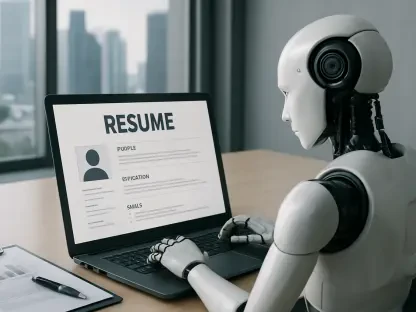

The rapid integration of automated systems into the corporate world has moved beyond simple data entry to complex decision-making, leaving millions of employees wondering if their roles will exist by the next fiscal quarter. As artificial intelligence transitions from a futuristic concept to a daily operational tool, the American workforce is facing an unprecedented era of uncertainty. The “Safeguarding Human Intelligence and Employment in Labor Displacement Act” (HF4369), recently introduced in the Minnesota House of Representatives, stands as a landmark legislative attempt to get ahead of this shift. This article explores how Minnesota is attempting to lead the nation in workforce protection, shifting the conversation from the fear of technological replacement to a structured framework of transparency and transition. By examining the mechanics of this proposed law, we can better understand the emerging balance between corporate innovation and the preservation of human livelihood.
The Evolution of Labor Protections in the Age of Automation
To understand the significance of HF4369, one must look at the history of labor laws designed to protect workers from sudden economic shocks. Historically, the federal Worker Adjustment and Retraining Notification (WARN) Act established the precedent that employees deserve a “heads-up” before mass layoffs or plant closures. However, those traditional laws were designed for a manufacturing-heavy economy where displacement was caused by physical relocation or bankruptcy. Today, the catalyst for displacement is often invisible code rather than a closing factory door.
Current market data shows that worker apprehension regarding AI-driven job loss has doubled in a very short period, signaling that existing labor protections are no longer sufficient to address the rapid deployment of generative AI and machine learning. This legislation acknowledges that the digital shift requires a modern update to the social contract. By drawing on the spirit of previous labor wins while adapting to the intangible nature of software, the bill attempts to stabilize a volatile job market that is increasingly dictated by algorithmic efficiency.
Mandating Transparency and Corporate Accountability
The Requirement for Advanced Notification and Clear Communication
A central pillar of the Minnesota proposal is the requirement for employers to provide a 90-day notice before deploying any AI technology that could lead to job displacement. This isn’t just about a courtesy email; the bill requires that notifications be distributed to labor representatives, the Minnesota Department of Labor and Industry, and regional workforce boards. By enforcing this timeline, the state aims to eliminate the “surprise” element of automation, giving workers a critical window to evaluate their options and seek counsel.
Furthermore, this level of transparency forces companies to be intentional about their technological integrations, ensuring that AI is not used as a tool for sudden, mass terminations without public oversight. This mandatory cooling-off period allows for a dialogue between stakeholders, potentially uncovering ways to integrate technology alongside humans rather than as a total replacement. It moves the decision-making process out of the shadows of the IT department and into the light of the human resources and legal offices.
Bridging the Gap Through Reskilling and Transitional Employment
Beyond mere notification, the bill introduces the concept of a “transitional employment period.” This mandate requires employers to provide opportunities for affected workers to upskill or reskill, allowing them to pivot into new roles within the organization or prepare for the broader labor market. This approach acknowledges that while specific tasks may be automated, the human worker’s value remains if they are given the tools to adapt to a changing environment.
By prioritizing education over severance, the legislation seeks to foster a “just transition” that keeps the labor force competitive rather than leaving displaced individuals to navigate a shrinking job market without updated skills. This proactive investment in human capital ensures that the local economy does not suffer from a sudden spike in unemployment, but instead benefits from a more technologically literate workforce capable of managing the very systems that initially threatened their roles.
Enforcing Compliance Through Significant Financial Penalties
To ensure that these protections are more than just suggestions, the proposed law includes stiff penalties for non-compliance. Employers who fail to provide the required notice or transition support could face fines of up to $10,000 per affected employee. Furthermore, negligent companies may be disqualified from receiving lucrative state contracts. These measures treat AI-driven displacement with the same gravity as traditional labor violations, sending a clear message to corporate actors.
These financial deterrents are designed to make the cost of “moving fast and breaking things” prohibitively expensive when those things are human lives and community stability. By linking compliance to state procurement eligibility, Minnesota leverages its economic power to set a high standard for corporate social responsibility. This ensures that the efficiency gains promised by AI cannot be achieved at the direct expense of the state’s social and economic health.
Future Trends in the Regulatory Landscape of Artificial Intelligence
The Minnesota bill is likely a harbinger of a broader national trend where state-level “AI WARN” laws become the standard for the modern economy. As federal regulation often lags behind technological leaps, states are stepping in to define the ethical boundaries of the workplace. We are moving toward a future where the focus shifts from regulating the algorithms themselves to regulating the impact of those algorithms on human society. This shift reflects a maturing understanding of how digital tools interact with physical labor markets.
Expectations are high that more states will adopt similar frameworks that emphasize “human-in-the-loop” transitions, potentially leading to a patchwork of regional laws. This legislative fragmentation might eventually force a more comprehensive federal update to labor standards for the 21st century. As corporations seek consistency across state lines, the pressure for a unified national policy on AI displacement will likely intensify, making Minnesota’s early experiment a blueprint for future federal action.
Actionable Strategies for Navigating Technological Shifts
For businesses and professionals, the introduction of HF4369 served as a wake-up call to prioritize “AI fluency” and proactive planning. Companies began auditing their technological roadmaps, identifying areas of high exposure and developing internal retraining programs long before legislation mandated them. This foresight allowed early adopters to maintain morale and retain institutional knowledge that would have otherwise been lost to automation-driven turnover.
For workers, the best defense against displacement remains a proactive approach to lifelong learning, focusing on “soft skills” like critical thinking, emotional intelligence, and complex problem-solving. These are the areas where AI still struggles to match human performance. By viewing these legislative guardrails as a blueprint for a more collaborative workplace, both employers and employees mitigated risks while still reaping the benefits of innovation. The focus shifted from resisting the machine to mastering the interface between silicon and strategy.
Sustaining the Value of Human Intelligence in a Digital Economy
Minnesota’s proposed law represented a vital step in humanizing the digital revolution at a time when technology seemed to outpace policy. By mandating transparency, transition periods, and accountability, the state ensured that technological progress did not lead to social regression. Since Minnesota ranked tenth in the nation for the highest risk of AI-related job replacement, the urgency of this bill proved to be a necessary intervention for regional stability.
Ultimately, the goal was not to stop the clock on innovation, but to ensure that as society built smarter machines, it did not leave behind the human intelligence that built them in the first place. This legislation served as a reminder that the most successful economies of the future were those that protected their most valuable asset: their people. By establishing these guardrails, Minnesota provided a case study in how to balance the relentless drive for efficiency with the enduring necessity of human dignity.