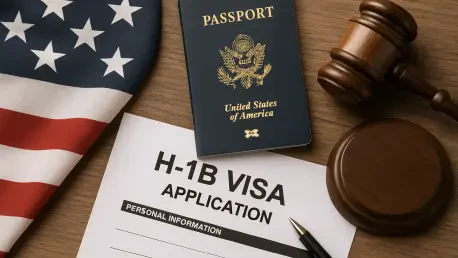

The very architecture of American technological supremacy, long built on a foundation of attracting the world’s brightest minds through programs like the H-1B visa, now faces a direct legislative challenge aimed at dismantling one of its primary pillars. This roundup of recent developments explores the escalating tensions surrounding high-skilled immigration, examining the multiple fronts on which this debate is being fought—from the halls of Congress to the corridors of federal agencies and the nation’s courtrooms. At stake is not just a visa category but the fundamental direction of U.S. economic and innovation policy in an increasingly competitive global landscape.
A High-Stakes Crossroads for American Innovation
The H-1B program has become a flashpoint in a charged political climate, symbolizing the deep ideological divide over immigration’s role in the American economy. For decades, it has served as a critical bridge connecting U.S. industries with a global talent pool, enabling companies to fill specialized roles in science, technology, engineering, and medicine. However, it is now caught in a pincer movement of legislative threats seeking its outright abolition and administrative reforms designed to severely restrict its use, creating a pivotal moment for the nation’s standing as a leader in technology and commerce.
This convergence of pressures places powerful stakeholders on a collision course. On one side are advocates of a nationalist, protectionist approach who view the program as a threat to domestic jobs. On the other is a broad coalition of business leaders, university administrators, and state governments who argue that severing this talent pipeline would inflict irreparable harm on American competitiveness. The outcome of this struggle will not only determine the future of countless companies and skilled professionals but also shape the national identity for years to come—defining whether the U.S. remains a magnet for global innovators or turns inward.
The Multi-Front Assault on High-Skilled Immigration
The Legislative Gambit a Push for Full Abolition
The most direct assault on the H-1B program comes from a legislative proposal introduced in the House of Representatives that seeks its complete and total elimination. The bill, championed by a Georgia congresswoman, represents a significant escalation from previous calls for reform, framing the visa not as a tool for economic growth but as a mechanism for the “mass replacement of American workers.” This perspective is rooted in an “America First” rationale that posits foreign professionals as direct competitors who suppress wages and opportunities for U.S. citizens.
This legislative gambit has intensified a long-simmering political debate, pitting the principles of nationalist protectionism against the operational realities of a globalized economy. Supporters of the bill argue that industries, particularly in the tech and healthcare sectors, have systematically abused the program to secure cheaper labor, creating a system that disadvantages the domestic workforce. In contrast, opponents warn that such a drastic measure would be an act of economic self-sabotage, severing access to specialized skills that are in short supply and essential for driving innovation in fields like artificial intelligence and cybersecurity.
The Administrative Gauntlet New Fees and Heightened Scrutiny
Parallel to the legislative push, the executive branch has erected a formidable administrative gauntlet for H-1B applicants and their employers. Recent executive actions have introduced a controversial and steep application fee, reportedly as high as $100,000, creating an unprecedented financial barrier for companies seeking to hire foreign talent. The administration justifies this measure as necessary to protect American jobs and fund border security initiatives, but it has been met with immediate and fierce legal opposition.
The immediate impact of these policies has been felt across the business spectrum, from nimble startups that rely on global talent to innovate to Fortune 500 corporations that need to fill critical skills gaps. Furthermore, heightened scrutiny now extends to the personal lives of applicants, with new rules requiring the disclosure of social media accounts for extensive vetting. While the stated goal is to prevent fraud and protect national interests, critics argue these policies risk creating a chilling effect, making the U.S. a less attractive destination for the world’s best and brightest and potentially ceding a competitive advantage to rival nations.
Reshaping the Rules of Entry From Random Lottery to Wage-Based Selection
A more structural transformation is also underway, set to fundamentally alter how H-1B visas are allocated. The Department of Homeland Security has finalized a rule that will replace the long-standing random lottery with a wage-based selection system, slated for implementation in 2027. Under the new framework, petitions will be prioritized based on the proffered salary within a specific occupation and geographic area, effectively giving preference to the highest-paid positions.
This shift is intended to incentivize employers to recruit for higher-skilled roles and curb the potential for the program to be used to fill entry-level positions at lower wages. However, this approach has drawn criticism for its narrow definition of value. Analysts challenge the assumption that a higher salary is always a proxy for higher skill or greater economic contribution. They warn that such a system could disadvantage non-profit organizations, academic institutions, research facilities, and companies in emerging industries or lower-cost regions, which may not be able to compete on salary alone but are nonetheless vital to the nation’s innovation ecosystem.
The Counteroffensive a Coalition’s Fight for Economic Competitiveness
In response to these restrictive measures, a powerful counteroffensive has been mobilized. The U.S. Chamber of Commerce is leading a legal challenge against the new application fee, arguing that it illegally circumvents the immigration framework established by Congress and imposes an unsustainable burden on American businesses. This legal battle is reinforced by a separate lawsuit from a coalition of 20 states, which contends the fee was implemented without due process and is arbitrary, lacking any connection to the actual costs of processing applications.
This opposition is built on the economic argument that H-1B visa holders are not displacing workers but filling critical skills gaps that cannot be met by the domestic labor force alone. Policy experts emphasize that a significant percentage of graduate students in key STEM fields at U.S. universities are international students. The H-1B program has traditionally been the primary pathway for retaining this highly trained talent after graduation. Severing this pipeline, they argue, would effectively mean educating the world’s top minds only to send them to competitor nations to innovate and build their economies.
Navigating the New Landscape Strategies for an Uncertain Future
The confluence of these legislative, administrative, and legal pressures is transforming the H-1B program into a highly uncertain and complex landscape. The combined weight of a potential legislative veto, prohibitive new fees, and a restructured selection process creates a challenging environment for employers and foreign professionals alike. Navigating this new reality requires a proactive and informed approach.
For employers, this means re-evaluating hiring strategies, exploring alternative visa pathways where possible, and engaging in robust long-term workforce planning. For high-skilled foreign nationals, it necessitates a deeper understanding of the evolving requirements and a clear-eyed assessment of the shifting odds of securing a visa. Staying informed is paramount, and stakeholders on both sides can engage with the ongoing policy debates through industry associations, advocacy groups, and direct communication with elected officials to help shape the future of high-skilled immigration in America.
Defining America’s Future in the Global Talent War
The intense debate surrounding the H-1B visa program crystallized the central conflict between two competing visions for America’s future. The push for its elimination or severe restriction was rooted in a nationalist ideology that prioritized the protection of the domestic workforce above all else. This view saw global talent as a threat rather than an asset and advocated for building economic walls to shield American workers from foreign competition.
In stark contrast, the defense of the program was grounded in economic pragmatism. Its proponents argued that in the 21st-century global economy, a nation’s greatest asset is its human capital and that leadership in technology and innovation depended on the ability to attract and retain the best minds from around the world. The decisions made during this period had long-term consequences, ultimately setting the nation on a course that determined whether it would function as a fortress or a magnet in the intensifying global war for talent.