
A workplace that meets every regulatory standard on paper can still harbor significant, unseen dangers for its employees, a paradox that has forced a profound reevaluation of what it means to be truly safe. For decades, many organizations operated under the assumption that safety was a destination reached by checking off items on a compliance list, a philosophy that often prioritized legal documentation over genuine worker protection. This approach is rapidly being replaced by a more dynamic and intelligent framework, one that acknowledges the immense complexity and variability inherent in modern industrial environments. The future of occupational health and safety is not found in rigid adherence to minimum standards but in the sophistication of its assessment strategies, the integrity of its analytical data, and a deep-seated commitment to understanding the nuanced, real-world interactions between people, processes, and their environments. This shift represents a move from passive compliance to proactive, predictive protection.
The Inadequacy of a Pass or Fail Mindset
In the not-so-distant past, the prevailing approach to exposure assessment was often guided by what can best be described as a “checklist mentality.” This model reduced the complex discipline of industrial hygiene to a perfunctory exercise: a small number of air or personal samples would be collected, their results measured against established occupational exposure limits (OELs), and the assessment would be promptly closed if the values fell below the legally mandated threshold. While seemingly straightforward, this methodology is fundamentally flawed. It treats safety as a simple binary state—compliant or non-compliant—and in doing so, it creates a dangerous illusion of security. This pass/fail system fails to capture the dynamic, fluctuating nature of workplace hazards and often misses the subtle but critical variables that can lead to overexposure. It represents a superficial engagement with regulatory requirements rather than a robust, living system designed to actively safeguard employee health over the long term.
The primary weakness of this traditional, compliance-driven model is its inability to account for the extreme variability of real-world exposures. Textbook examples of uniform exposure patterns rarely exist outside the classroom. In practice, it is remarkably common for workers performing identical tasks, often within the same job classification, to exhibit dramatically different exposure levels that can span several orders of magnitude. This is not random chance; it is the result of a constellation of often-overlooked determinants. Minor differences in an individual’s work technique, the current state of equipment maintenance, or the localized effectiveness of a ventilation system can have a profound impact on exposure. Recognizing and quantifying this inherent complexity is the central force driving the evolution toward more sophisticated assessment frameworks. The role of the contemporary industrial hygienist has expanded accordingly, demanding a professional who can navigate intricate regulations, address emerging contaminants, and adapt strategies to diverse and constantly changing workplace configurations.
A Strategic Framework for Real World Complexity
In direct response to the limitations of the traditional model, modern industrial hygiene has championed the concept of Similar Exposure Groups (SEGs) as a transformative and powerful strategy. This framework represents a significant departure from treating each worker as an isolated data point. Instead, it involves grouping employees based on a shared profile of exposure determinants, including similar tasks, work processes, environments, and potential sources of contaminants. By identifying and sampling within a statistically relevant cohort of workers, this approach yields data with far greater statistical power. It allows practitioners to draw more reliable and defensible conclusions about the exposure profile of the entire group, making it a highly effective and practical methodology. This is particularly valuable for organizations operating under resource constraints, as it allows for a more targeted and intelligent allocation of monitoring resources while enhancing the overall protective value of the safety program.
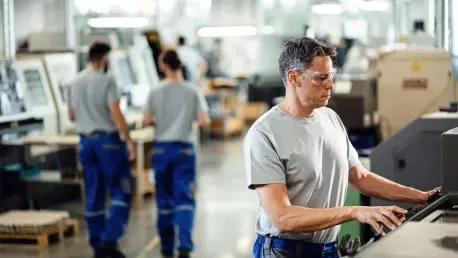
The development of meaningful and accurate SEGs is a process more akin to detective work than simple administrative classification. It demands a deep, qualitative understanding of the workplace that cannot be gleaned from job titles or formal process flow charts alone. To be effective, industrial hygienists must become investigators, meticulously observing actual work patterns to understand how tasks truly unfold throughout entire shifts. This immersive observation is critical for revealing the exposure determinants that are often invisible in official documentation. These can include specific employee-equipment interactions, informal work practices adopted for efficiency, and the subtle influence of surrounding environmental factors. It is this granular, on-the-ground intelligence that allows for the creation of robust SEGs, which in turn form the bedrock of a smarter, more predictive, and ultimately more effective exposure assessment program capable of protecting workers from the real risks they face daily.
The Convergence of Technology and Regulation
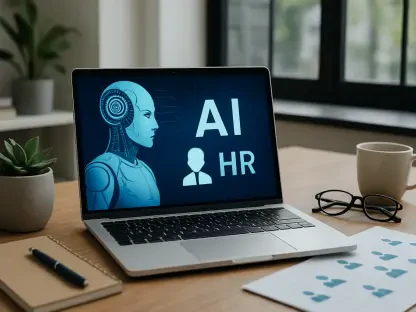
The strategic evolution in industrial hygiene is occurring in parallel with a technological revolution that is creating new possibilities for proactive, data-driven safety cultures. A prime example can be seen in logistics and manufacturing, where AI-powered cameras and advanced smart lighting systems are redefining forklift and pedestrian safety. By using predictive alerts and improving equipment visibility, these systems move safety from a reactive, incident-based model to one of proactive risk mitigation. This trend of integrating intelligent safety systems is transforming industrial operations, turning safety from a perceived compliance burden into a measurable performance advantage. When designed with a human-first approach, these technologies can improve operator confidence and workflow efficiency. However, this technological shift introduces new responsibilities, as EHS professionals must now balance the productivity benefits of AI adoption with the critical need to protect sensitive personal, operational, and proprietary information from potential misuse or data breaches.
While emerging technologies offer powerful new tools, the landscape of occupational safety remains firmly grounded in the reality of fundamental hazards and stringent regulatory oversight. Commonplace risks, such as damaged electrical wiring, overloaded circuits, and the failure to follow proper lockout/tagout procedures, continue to pose significant and often fatal threats that demand constant vigilance. The consequences for failing to manage these foundational risks are starkly illustrated by recent federal safety investigations. An Ohio commercial bakery, for instance, was cited for repeat and serious violations involving hazardous machinery, resulting in proposed penalties of nearly $395,000. In an even more severe case, a Connecticut contractor faced over $1 million in proposed penalties for repeated excavation and safety failures. These examples powerfully demonstrate that today’s complex regulatory frameworks are backed by significant enforcement actions, making the implementation of a genuine, effective safety program not just an ethical imperative but a critical financial and legal necessity for survival.
Redefining Protection for the Modern Workforce
The contemporary understanding of worker safety has broadened significantly, expanding beyond the immediate worksite to encompass a more holistic view of employee well-being. This expanded definition recognizes that factors outside of direct chemical or physical hazard exposure play a crucial role in overall safety outcomes. A notable reflection of this trend is the plan for the “Safety Stand Down 2026” to focus on physical fitness. This initiative acknowledges that an employee’s physical condition is a direct determinant in reducing preventable injuries, particularly within physically demanding fields such as emergency services and construction. By promoting fitness, organizations can enhance resilience, reduce the likelihood of strains and sprains, and improve an employee’s ability to respond effectively in critical situations. This holistic perspective complements the technical precision of industrial hygiene by addressing the human element of the safety equation, creating a more comprehensive and resilient safety culture that protects the whole person.
The successful transition from a rigid compliance checklist to a dynamic, intelligent safety paradigm was ultimately driven by a commitment to continuous learning and professional evolution. Industry forums and conferences, such as the “ASSP Safety 2026,” proved indispensable in this transformation by providing platforms where knowledge could be disseminated, best practices shared, and innovative solutions showcased. These professional communities connected practitioners with the cutting-edge tools and forward-thinking strategies necessary to build the smarter, more effective safety programs that now define the industry standard. By embracing a holistic view that integrated data analytics, advanced technology, and a deeper understanding of human factors, safety professionals successfully shifted their focus from merely avoiding penalties to proactively creating environments where workers could genuinely thrive. This evolution cemented the role of safety not as a cost center, but as an integral component of operational excellence and corporate responsibility.