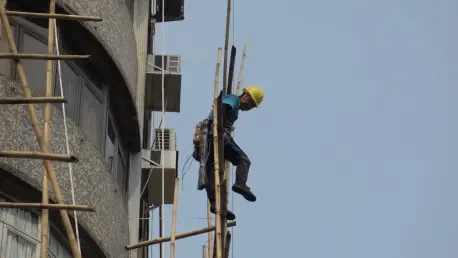

Although workers aged 55 and older account for only a small portion of total falls, they represent a disproportionate 13.3 percent of all occupational fall deaths in the country. This startling statistic highlights a critical vulnerability in Thailand’s labor force, where falls from heights remain the second leading cause of work-related fatalities nationwide. To address this crisis, researcher Preedee Banyatrachata conducted an extensive retrospective study that analyzed over 17,000 compensation claims filed with the Workmen’s Compensation Fund. By examining data from the Social Security Office of the Ministry of Labour, the study provides a granular view of how demographic traits, company size, and physical environments intersect to create life-threatening conditions for workers. This comprehensive mapping of occupational risks is intended to serve as a definitive blueprint for developing more effective national safety policies and targeted interventions. Through multivariate logistic regression, the research identifies the precise variables that transform a common workplace accident into a fatal tragedy, offering a sobering look at the real-world consequences of inadequate fall protection systems.
Demographic and Organizational Risks
Gender and Age Factors
The statistical breakdown of these incidents reveals a massive gender gap, with men comprising the overwhelming majority of both total fall cases and resulting fatalities. According to the data, 13,823 out of 17,046 reported falls involved male workers, creating a male-to-female ratio of approximately 4.3 to 1. However, the disparity becomes even more alarming when looking at deaths alone, where the ratio jumps to 25.6 to 1. This means that men are significantly more likely to die from a fall than their female counterparts, even after accounting for various environmental factors. The study suggests that this trend is partially driven by existing labor regulations in Thailand, which explicitly prohibit women from working on scaffolding that exceeds a height of ten meters. Consequently, men are more frequently placed in high-altitude environments where the margin for error is non-existent. This structural assignment of risk ensures that male workers bear the brunt of high-consequence accidents in the construction and maintenance sectors.
Age emerged as perhaps the most definitive predictor of whether a worker would survive a fall, with the risk of death rising steadily as employees get older. While the highest volume of total incidents occurred among those in the 35 to 44 age bracket, the fatality rates were significantly higher for those nearing or past traditional retirement ages. For instance, workers between the ages of 45 and 54 faced odds of death that were 2.62 times higher than the youngest cohort of 18 to 24-year-olds. This risk escalated dramatically for those aged 65 and older, who faced nearly seven times the likelihood of a fatal outcome. The physiological reality of aging plays a major role in these statistics, as older bodies generally possess a reduced capacity to withstand and recover from major traumatic impact. A fall that might result in a temporary injury for a younger worker can easily prove fatal for an older individual due to decreased bone density and a higher prevalence of underlying health conditions that complicate emergency medical treatment.
Enterprise Size and Safety Gaps
A critical discovery of the research is the disproportionate danger faced by those employed in micro-sized enterprises, defined as businesses with ten or fewer workers. Although these small operations accounted for only 13.3 percent of the total fall incidents recorded, they were responsible for a shocking 28.0 percent of all fatalities. This discrepancy indicates that while falls may be less frequent in smaller settings, they are far more likely to end in death when they do occur. Specifically, workers in these micro-firms have 1.75 times the odds of a fatal fall compared to those working for large corporations with over 200 employees. This suggests a significant divide in the safety infrastructure available to workers based on the size of their employer. Larger companies often have the capital to invest in sophisticated fall-protection gear, regular safety audits, and full-time safety officers who ensure compliance with national standards. In contrast, micro-enterprises often operate on thin margins where safety equipment may be viewed as an avoidable expense or a lack of oversight leads to improvisation.
The lack of formal safety training and professional oversight in micro-sized businesses creates a “safety gap” that leaves many workers without the knowledge or tools necessary to protect themselves. In these environments, safety protocols are often informal or non-existent, and workers may rely on outdated techniques or faulty equipment because no one is there to enforce modern safety regulations. The study found that the absolute number of deaths in micro-sized firms was nearly equal to that of the largest firms, despite the large corporations having a much higher total number of employees and reported incidents. This imbalance highlights the effectiveness of dedicated safety management systems in preventing deaths even when accidents occur. For the micro-enterprise sector, the challenge lies in providing access to professional safety resources that these small businesses cannot afford on their own. Without a targeted effort to bridge this gap, workers in Thailand’s smallest firms will continue to face a much higher risk of dying from a fall than their counterparts in the corporate world, perpetuating a two-tier system.
Physical Impacts and Strategic Solutions
Clinical Severity and Regional Trends
Clinical data from the compensation claims provides a grim look at the physical impact of these falls, with head and neck injuries standing out as the most lethal trauma. According to the findings, injuries to the head and neck carry 27.53 times the odds of death compared to injuries sustained by the back or spine. This highlights the absolute necessity of head protection and the high stakes involved when a fall occurs from a significant height. Additionally, a large majority of fatal cases involved injuries to multiple body parts, indicating that the force of impact is often distributed across the entire skeletal system, leading to systemic trauma that is difficult for emergency teams to manage. Internal organ damage was another high-risk category, showing eight times the odds of fatality. The study also highlighted the diagnosis of “multiple organ failure” as a condition that was almost always fatal. These medical outcomes suggest that while the speed and quality of post-fall medical intervention are critical, the severity of the initial trauma often makes survival unlikely regardless of the level of care.
Geographically, the study found a heavy concentration of reported fall incidents in Bangkok and its surrounding industrial provinces, which accounted for more than 57 percent of the national total. This concentration is largely due to the density of high-rise construction and industrial activity in the capital region. However, a closer look at the data revealed a concerning discrepancy in the Northeastern region of Thailand. While this area contributed only 6.3 percent of the total reported cases, it was responsible for 40 percent of all occupational disabilities. This suggests that while falls are reported less frequently in the Northeast, the ones that are documented tend to be much more severe. Researchers believe this could point to a significant underreporting of minor or non-fatal injuries in rural provinces, where workers in the informal sector may not have the same access to the compensation fund or may not be aware of their rights. This reporting bias can mask the true scale of the safety crisis in rural areas, making it difficult for the government to allocate inspectors.
Policy Recommendations and Future Systems
Given the clear link between aging and fatality risk, the researchers recommended the immediate implementation of safety programs specifically designed for older workers. These programs must move beyond general safety tips and instead focus on compensating for the physiological changes that occur with age, such as declining balance and strength. For example, older employees could be assigned to tasks that do not require working at extreme heights, or they could be provided with enhanced stability equipment like specialized anti-slip footwear and double-lanyard harnesses. Furthermore, regular physical assessments should be integrated into workplace wellness programs to help identify workers who may be at an increased risk of falling due to vision or mobility issues. Training should also include a component on safe falling techniques, although the primary goal remains complete prevention. By acknowledging the specific needs of an aging workforce, the industry can retain the valuable experience of veteran workers while significantly reducing the likelihood of a lethal accident.
The research concluded that a systemic overhaul was necessary to protect those working in micro-sized enterprises, suggesting the creation of pooled safety resources. This model allowed small businesses to share the costs of hiring a professional safety officer or purchasing expensive fall-arrest systems, which they previously found to be financially out of reach. Additionally, the study called for more rigorous enforcement of the Occupational Safety, Health and Environment Act, with a particular focus on the construction industry’s most lethal hazards. Policymakers recognized that simply having laws on the books was not enough; active inspection and stiff penalties for non-compliance were required to change industry behavior. There was also a push to refine national databases to ensure that every fall was accurately coded by its source and height, providing better data for future analysts. These steps were seen as vital for moving away from a reactive safety culture and toward a proactive system that identified and mitigated risks before a tragedy occurred. By focusing on these specific vulnerabilities, the government aimed to reduce the toll of fatal falls.