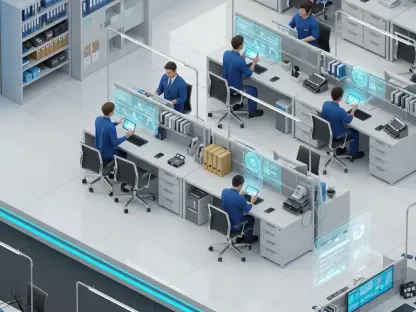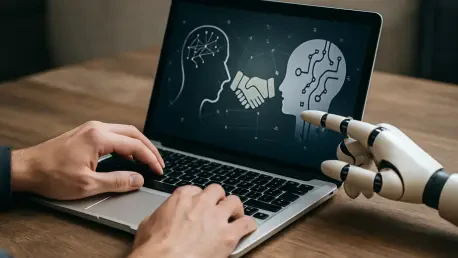

An overwhelming 80% of HR leaders now believe that most workforces will feature humans and artificial intelligence working in close collaboration within the next five years, signaling an inevitable and rapid transformation of the modern workplace. This fundamental shift reframes AI from a simple tool for automation into an active collaborative partner, set to influence everything from routine daily tasks to long-term business strategy. The following analysis explores the data driving this trend, its current applications, insights from industry leaders, and a forward-looking perspective on the future of this integrated workforce.
The Current Landscape of Human-AI Synergy
Unpacking the Growth and Adoption Data
The prediction from 80% of human resources leaders that a collaborative human-AI workforce is imminent establishes the blistering pace of this transformation. This rapid adoption is not happening in a vacuum; it corresponds with recent reports of record-low hiring confidence and rising redundancies. Consequently, organizations are increasingly turning toward AI-driven solutions to optimize efficiency, re-evaluate workforce structures, and maximize the productivity of their existing talent.
This integration is already becoming visible in core HR functions. For example, major corporations like HSBC are developing plans to incorporate technology-monitored data, such as office attendance, directly into performance management and compensation systems. Such moves illustrate a clear trend toward leveraging AI to gather and analyze workforce data, aiming to create more objective and data-informed operational decisions.
Human-AI Collaboration in Action
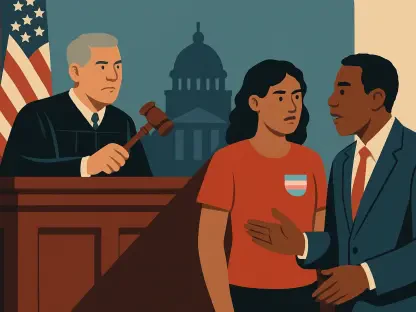
The need for balanced oversight is starkly illustrated in cases where human judgment falters. The recent tribunal involving Carmen Wood-Hope, who was awarded over £370,000 after a manager provided a “revenge” reference, highlights a scenario where AI-powered compliance tools could have intervened. Such systems can flag biased language or unsubstantiated claims, prompting human review and helping to prevent costly legal and reputational damage.
Beyond risk mitigation, AI is augmenting HR functions by providing deep, actionable insights into employee well-being. With a pervasive “always on” culture leading 48% of employees to work even while on vacation, AI tools can analyze anonymized communication data to identify teams or individuals at high risk of burnout. This allows HR professionals to intervene proactively. Moreover, by streamlining routine processes from recruitment to compliance, AI frees human partners to concentrate on strategic, people-centric initiatives that require empathy and complex problem-solving.
Insights from Industry Thought Leaders
Experts across the field emphasize that the success of human-AI integration hinges on more than just technology. For these partnerships to thrive, organizations must first cultivate a culture of profound trust and psychological safety. This means creating an environment where employees feel secure enough to disconnect without fear of reprisal, ensuring that AI serves as a support mechanism rather than a tool for constant surveillance.
Furthermore, compliance specialists offer a critical caution: any data generated or analyzed by AI, whether for performance reviews or professional references, must remain factual, unbiased, and legally defensible. This imperative places a significant responsibility on human oversight. Human judgment is still required to verify AI-generated conclusions, correct for potential biases in algorithms, and ensure all actions taken based on that data are fair and justifiable.
To prepare employees for this new reality, HR strategists advise moving beyond basic introductory training. The most effective approach involves creating practical, hands-on “sandboxed” environments. In these controlled settings, employees can freely experiment with AI tools relevant to their specific roles, learning to leverage their capabilities through direct application and building confidence in a low-risk context.
Projecting the Future of the Integrated Workforce
One of the most significant benefits of effective human-AI collaboration is the resulting elevation of uniquely human skills. As AI takes over more repetitive and data-intensive tasks, the demand for soft skills like critical thinking, emotional intelligence, creativity, and relationship building will inevitably increase. The future workplace will place a premium on employees who can effectively interpret AI insights and use them to drive collaborative and innovative outcomes.
However, this transition is not without its challenges. The primary risk lies in inadvertently fostering a culture of perpetual burnout. If not implemented with care, AI could be used to enforce an “always on” mentality, further blurring the boundaries between work and personal life. Therefore, ensuring that AI is deployed to support employees and enhance their well-being, rather than simply to monitor their activity, is a critical challenge for leadership to overcome.
Ultimately, a successful transition requires a fundamental evolution in leadership philosophy. Managers can no longer simply delegate tasks; they must actively model healthy work-life behaviors and champion a culture that values both technological efficiency and human well-being. This dual focus is essential for building a resilient, productive, and sustainable integrated workforce where both humans and AI can reach their full potential.
Conclusion: Navigating the New Collaborative Frontier
The analysis revealed that human-AI collaboration was no longer a distant concept but an accelerating and irreversible trend, which demanded a strategic focus on both technology adoption and a deeply human-centric culture. It became clear that the greatest challenge was not mastering the technology itself, but redesigning workplace cultures and leadership approaches to support a healthy, productive, and legally compliant hybrid workforce. This underscored the urgent need for leaders to proactively build frameworks that not only encourage practical AI experimentation but also safeguard employee well-being, thereby unlocking the true potential of this transformative partnership.