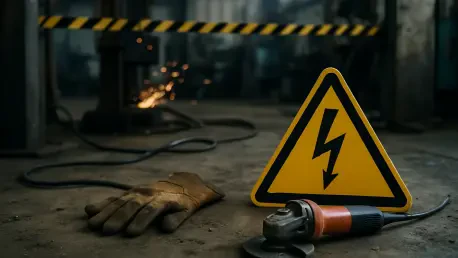

A comprehensive nationwide analysis of the American workforce has revealed a fundamental and unsettling evolution in the concept of occupational safety, moving far beyond the traditional calculus of physical risks to encompass a complex ecosystem of psychological, emotional, and social concerns. The findings from a survey of 1,000 U.S. citizens who have worked in person over the past year indicate a pervasive and deepening sense of unease among employees. This modern landscape of danger is fueled by a potent combination of widespread mental health challenges, economic instability, and the spillover of societal tensions into the professional sphere. What emerges is a clear imperative for employers to fundamentally reassess and expand their definition of a safe work environment to address the invisible threats that now define the employee experience.
The Redefined Boundaries of Occupational Safety
The most significant transformation in workplace safety is the integration of mental and emotional health as a core component, shifting the focus from purely physical protection to holistic well-being. This redefinition is a direct response to a burgeoning mental health crisis that has significant implications for both employees and employers. The data underscores the severity of this issue, with a striking 43% of all American workers having taken time off specifically to cope with burnout or stress. These are not minor disruptions; they are catalysts for major career decisions, as evidenced by the one in four workers who reported having resigned from a job due to such safety concerns. The primary drivers behind this widespread burnout are consistently identified as excessive workloads, unrealistic expectations from management, and a pervasive sense of being emotionally depleted, establishing a clear link between organizational culture and employee safety.
This escalating mental health crisis has a direct and quantifiable impact on daily operations and overall productivity, solidifying its status as a critical business concern rather than a peripheral human resources issue. Nearly one-third of American workers admit that safety-related anxieties cause them to lose focus on their tasks multiple times each week, creating a constant drag on efficiency and output. For a deeply concerning 10% of the workforce, the pressure is so extreme that they find themselves contemplating quitting their job on a daily basis. This state of perpetual stress and distraction demonstrates that an environment lacking psychological safety is inherently unproductive. Employers are now confronting the reality that a failure to address mental and emotional well-being is not just a moral failing but a direct threat to operational stability and long-term success.
A Deepening Generational Divide on Risk
A profound chasm in the perception and experience of workplace danger separates younger employees from their more tenured counterparts, with Generation Z reporting significantly higher levels of distress across the board. While the general workforce identifies health outbreaks such as the flu and COVID-19 as its primary safety concern, Gen Z’s fears are centered on physical injury and, most tellingly, mental burnout. This places the youngest generation of workers at the epicenter of the modern workplace health crisis. This divergence is starkly illustrated by the fact that an alarming 41% of Gen Z employees report experiencing emotional harm or a combination of physical and emotional injury on the job. This figure stands in sharp contrast to the 17% reported by baby boomers, highlighting a uniquely challenging reality for those newest to the workforce and signaling a generational shift in what constitutes a hazard.
The heightened distress experienced by Generation Z translates directly into increased job instability and absenteeism, posing a significant retention challenge for organizations. Nearly two-thirds (63%) of these younger workers consider quitting their jobs due to burnout at least a few times a month, a rate far exceeding the 47% reported by the overall workforce. Furthermore, 38% of this generation have actually followed through and resigned from a position over safety concerns, which is considerably higher than the national average of 25%. Their daily work experience is also more severely affected; 45% report that safety worries distract them from their duties several times a week, and 58% admit to calling out sick due to stress and burnout, far surpassing the 43% average. These statistics paint a picture of a generation struggling to find its footing in environments they perceive as fundamentally unsafe.
When Financial Precarity Becomes a Physical Threat
Economic insecurity is increasingly forcing a significant portion of the workforce into a perilous compromise, compelling them to prioritize their income over their personal safety and well-being. The survey reveals that nearly one in four American workers (23%) have accepted dangerous or high-stress work assignments out of a direct fear of being terminated. This disturbing trend is disproportionately concentrated among lower-income earners, creating a clear divide based on financial stability. Twenty-seven percent of workers earning under $50,000 annually have taken on such risky responsibilities because they could not afford to lose their job. This rate is nearly three times higher than that of their colleagues earning over $150,000, illustrating how financial vulnerability can directly translate into heightened physical and psychological risk in the workplace.
For the younger segment of the workforce, this pervasive economic anxiety is compounded by a uniquely modern fear: technological replacement. The specter of automation and artificial intelligence is creating a new layer of pressure that influences their decision-making around workplace risks. The data shows that 21% of Gen Z workers have admitted to taking on hazardous tasks specifically because they feared being made redundant by AI. This concern is far less prevalent among older generations, with only 5% of baby boomers sharing the same motivation. This highlights a critical intersection of economic and technological anxieties that is reshaping the risk calculus for younger employees, forcing them to weigh immediate physical and mental harm against the perceived long-term threat of obsolescence.
The Permeable Walls Between Society and the Office
The modern workplace no longer functions as an insulated environment, as external societal issues increasingly permeate its walls and directly affect employees’ sense of security. The report found that recent Immigration and Customs Enforcement (ICE) activity has made more than one-third of American workers (37%) feel less safe on the job, indicating that national policies have a tangible impact on the workplace atmosphere. Concurrently, an increase in political discourse is generating significant tension, with 48% of workers observing more political discussions at work and 18% stating that this trend has made them feel less secure. Furthermore, a perceived decline in corporate commitment to diversity, equity, and inclusion (DEI) initiatives is contributing to a growing sense of insecurity, particularly among younger generations, with 14% of Gen Z workers reporting a downturn in such efforts.
This climate of fear, fueled by external pressures, is exacerbated by a palpable threat of internal interpersonal conflict and a significant lack of trust in emergency preparedness. A majority of workers (53%) have witnessed a hostile verbal conflict at their place of employment, and more than a quarter were directly involved in such an altercation. This contributes to a broader fear of violence, as 46% of Americans worry that a coworker could become violent on the job. This pervasive anxiety is underpinned by a critical trust gap, with 15% of workers lacking confidence that their colleagues or leadership would effectively keep them safe during an emergency. This doubt appears to be well-founded, as there is a major discrepancy in readiness: while 84% of workers state their employer has an emergency or evacuation plan, only 55% report having a clear understanding of it.
Forging a Path Through a Fractured Landscape
The search for solutions to these modern workplace dangers revealed a workforce that is deeply divided, with opinions on technology and firearms split dramatically along generational lines. On the integration of artificial intelligence to enhance safety, the workforce is split evenly, with half supporting the move and the other half remaining hesitant. The contentious issue of firearms in the workplace exposes an even more profound chasm. While 38% of all Americans believe that permitting guns at work would make them feel less safe, Gen Z diverges from this view in a startling way. A plurality of this younger generation, 48%, stated that armed coworkers would actually make them feel safer. This perspective is in stark opposition to that of baby boomers, where only 15% felt the same. This fundamental disagreement highlights the immense challenge of implementing safety protocols that can satisfy a multigenerational workforce with vastly different perceptions of risk and protection.
The comprehensive analysis ultimately painted a vivid picture of a workforce operating under an unprecedented level of multifaceted strain. The traditional paradigms of workplace safety, focused on compliance with physical regulations, were shown to be insufficient for addressing the psychological, social, and economic pressures that defined the modern employee experience. Employers were therefore faced with a new and complex mandate: to cultivate a culture rooted in empathy, proactive communication, and genuine transparency. Success in this endeavor required moving beyond policy to practice, fostering an environment of psychological safety that could retain an engaged, focused, and resilient workforce capable of navigating the challenges of a rapidly changing professional world.