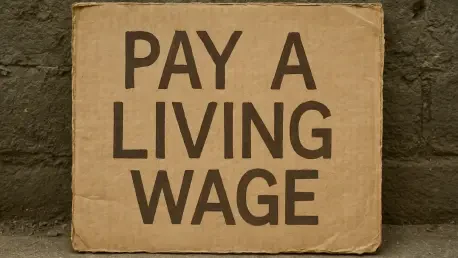

The glossy advertisements of high-street fashion houses often mask a disturbing financial reality where the hands that meticulously stitch luxury garments cannot afford the basic caloric intake necessary for survival. While global fashion brands report record-breaking profits and celebrate ethical marketing campaigns, the people physically assembling their garments remain trapped in a cycle of systemic poverty. This disconnect between corporate wealth and worker welfare has become the defining crisis of the modern apparel sector, revealing a industry where the human cost of production is frequently ignored in the pursuit of higher margins.
Despite years of corporate social responsibility initiatives, a fundamental mathematical impossibility dictates the current market. Procurement prices for garments have plummeted by roughly 30% over the last 25 years, yet the cost of living has surged globally. This downward pressure creates a environment where factory owners cannot realistically raise pay without facing bankruptcy, as brands continue to slash the prices they are willing to pay for finished goods. Consequently, the industry remains in a state of failure where only four out of 110 major global brands can verify that a living wage is paid anywhere within their vast supply chains.
The Hidden Cost: A Twenty-Dollar T-Shirt
The price tag on a simple cotton t-shirt rarely reflects the true expenditure of labor required to bring it to a retail shelf. While a brand might sell a shirt for twenty dollars, the portion of that revenue allocated to the person who sewed it is often negligible, sometimes amounting to mere cents. Because procurement prices are lower today than they were decades ago, factory owners are forced to choose between maintaining their operations and providing fair compensation to their staff. This economic race to the bottom ensures that the gains of the fashion industry are concentrated at the top of the pyramid.
This pricing structure is not an accident but a core component of the current business model. By squeezing suppliers, brands maintain the high-volume, low-cost production cycles that consumers have come to expect. However, this model effectively subsidizes cheap clothing through the underpayment of workers in manufacturing hubs. Without a significant shift in how brands negotiate these contracts, the financial gap between the retail price and the cost of labor will continue to widen, leaving workers to bear the brunt of the industry’s deflationary pricing strategies.
Defining the Chasm: Survival vs. Sustainability
A critical step in addressing this crisis involves distinguishing between a government-mandated minimum wage and a genuine living wage. Most apparel brands defend their practices by claiming adherence to local labor laws, yet these national minimums are frequently set at levels that fail to cover basic human needs. Governments in developing nations often keep these rates artificially low to remain competitive and attract foreign investment. A true living wage, by contrast, must provide for food, housing, healthcare, and education, with a small margin left for unexpected emergencies.
The disparity between these two figures is staggering in countries like Pakistan and Bangladesh, where garment workers often earn over 70% less than the benchmark required for a dignified life. This is not just a minor shortfall; it is a fundamental human rights issue affecting millions. When workers cannot meet their basic needs through a standard workweek, they are forced into a cycle of debt and exhaustion. This gap represents the difference between a worker who is merely surviving and one who has the resources to build a sustainable future for their family.
Systemic Barriers: Equitable Compensation
Modern supply chains suffer from a transparency paradox that allows brands to project an image of openness without revealing meaningful financial data. While approximately 41% of brands now disclose the physical locations of their primary factories, only 3% share the actual wage levels paid to the workers within those facilities. By sharing the “where” but hiding the “how much,” companies successfully shield their payroll practices from public scrutiny. This selective transparency allows brands to benefit from the appearance of ethical behavior while maintaining the status quo of low wages.
Furthermore, the fast fashion business model inherently devalues labor by prioritizing speed and volume over human welfare. Brands frequently cite gross average wages to suggest they pay well, but these figures often include 60 to 80 hours of work per week. A living wage should be attainable within a standard 40-hour workweek, yet the current system relies on an overtime trap to keep workers afloat. This reliance on excessive labor not only masks low hourly rates but also leads to long-term health issues and decreased productivity, further entrenching the cycle of poverty.
Corporate Narratives: Ground-Level Realities
There is a profound disconnect between the defensive narratives of major retailers and the independent research conducted on the ground. For example, while a brand might point to a monthly wage of $164 in a specific region as a sign of progress, independent benchmarks often show that the actual cost of living in that same area is closer to $244. This discrepancy highlights the performative nature of many corporate social responsibility programs. Many brands participate in voluntary collective bargaining agreements that critics argue produce negligible results, failing to keep pace with the reality of global inflation.
The performance of industry titans varies significantly, with a few leaders proving that better outcomes are possible. Smaller, specialized brands have reported that up to half of their suppliers pay a living wage, demonstrating that fair compensation is a viable business choice. In contrast, massive retailers like Amazon, Inditex, and Chanel provide no public evidence that any of their workers receive a living wage. This gap suggests that the failure to pay fair wages is not a necessity of the market, but rather a result of specific corporate priorities that favor shareholder returns over worker stability.
Strategies: Structural Reform and Accountability
The resolution of the wage crisis required a transition from voluntary corporate promises to binding legal frameworks that ensured accountability. Stakeholders recognized that “ring-fencing” labor costs during price negotiations was essential, preventing worker compensation from being sacrificed during procurement. This financial commitment ensured that a specific portion of every garment’s price went directly to the people who made it, rather than being absorbed by intermediate costs. Additionally, the establishment of anonymous grievance mechanisms allowed workers to report wage theft without the fear of immediate retaliation from factory management.
Governments and regulatory bodies eventually introduced the European Union’s Corporate Sustainability Due Diligence Directive, which mandated that large companies take legal responsibility for the living standards within their supply chains. This shift meant that brands had to map their wage gaps and implement time-bound action plans to avoid significant legal liabilities. The industry moved toward a model where transparency included payroll data, and ethical claims were verified by independent third parties. These structural changes transformed the “living wage” from a theoretical goal into a baseline requirement for doing business in the global economy.