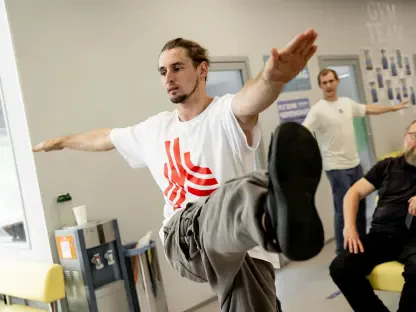

The realization that employees rarely quit their companies but frequently quit their managers has transformed how modern organizations approach human capital management in the current competitive labor market. While high-level perks like unlimited vacation or state-of-the-art office spaces might

The professional landscape has shifted toward a model where high-level earnings are increasingly decoupled from physical office spaces, allowing specialized workers to command rates exceeding forty-five dollars per hour from the comfort of their homes. This transition is not merely a matter of

High-growth companies are increasingly moving away from basic administrative oversight toward a sophisticated model of talent density that treats human capital as a dynamic, measurable engine for business success. This evolution has prompted a major update in HR technology, emphasizing a deep

Rapid organizational expansion often forces leadership teams to confront a significant paradox: the more people an enterprise hires, the harder it becomes to maintain a unified standard of excellence across diverse departments. While the global investment in employee development has reached record

Recent socio-economic data across North American markets indicates a staggering paradox where women are ascending into executive leadership roles and specialized technical positions at record-breaking rates, yet the aggregate compensation disparity between genders remains stubbornly persistent and

The corporate landscape currently undergoes a seismic shift as legacy annual reviews are replaced by sophisticated algorithms capable of tracking employee contributions in real time across fragmented digital workspaces. This transition represents more than a simple technological upgrade; it