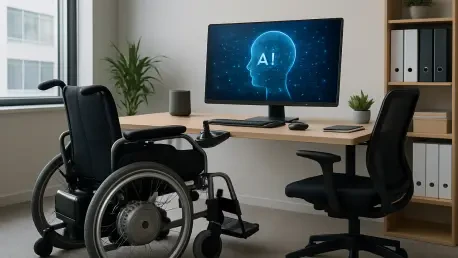

The rapid integration of generative artificial intelligence is forcing a radical shift in how organizations support their diverse workforces by turning digital accessibility from a secondary concern into a primary business imperative. Recent observations among professionals engaged in continuous education suggest that these automated tools are becoming indispensable for dismantling the persistent barriers that have historically excluded individuals with visual, auditory, or cognitive impairments. As organizations transition toward more inclusive digital ecosystems, the friction between automated efficiency and the necessity of human verification is becoming a central theme in the modern professional landscape. The promise of a truly equitable workplace is closer than ever before, yet the journey reveals deep-seated gaps in institutional policy and technical implementation that require immediate attention from leadership. Navigating this transition successfully demands more than just installing new software; it requires a cultural shift toward proactive inclusion where technology serves as a bridge rather than a barrier to entry.
Corporate Policy and Workflow Integration
Awareness: The Governance and Knowledge Gap
One of the most striking developments in the current professional landscape is how artificial intelligence functions as an unexpected educational resource for the broader workforce. Many employees who previously viewed accessibility as a niche technical requirement are now using AI to understand and implement complex standards like the Web Content Accessibility Guidelines. By interacting with generative models to create alternative text or simplify dense technical jargon, workers are gaining a hands-on education in the principles of inclusive design. This democratization of expertise ensures that accessibility is no longer confined to a small department of specialists but is instead becoming a shared responsibility across various roles. As these tools provide real-time feedback and suggestions, they effectively bridge the knowledge gap that often prevents well-intentioned staff from producing inclusive content. This organic learning process is fundamental to building a more aware culture across all levels.
Despite the growing individual enthusiasm for AI-driven accessibility tools, a significant disconnect persists between employee actions and formal corporate governance. Many organizations have yet to establish clear policies regarding the use of artificial intelligence for inclusive design, leaving a governance gap that creates legal and ethical risks. Without centralized guidance, employees may rely on unvetted tools that produce inaccurate or even biased results, potentially undermining the very accessibility they aim to improve. This lack of structure often leads to inconsistent application of standards across different departments, making it difficult for individuals with disabilities to navigate a fragmented digital workspace. Leadership must recognize that while AI can accelerate progress, it cannot replace a well-defined institutional framework that mandates specific outcomes and provides clear ethical boundaries. Closing this gap is essential for ensuring that technological benefits are realized.
Performance: Streamlining Workflows and Tool Compatibility
Artificial intelligence has proven to be an exceptionally powerful tool for streamlining professional workflows, particularly for those who must balance rigorous academic studies with full-time careers. In the current environment, the ability to rapidly convert text-heavy documents into concise summaries or audio formats has significantly increased the productivity of individuals with diverse learning styles. For instance, an employee with dyslexia might use an AI tool to restructure a complex report into a more readable format, while a colleague with visual impairments might rely on automated image descriptions to participate fully in visual presentations. These applications are not merely conveniences; they are essential adaptations that allow a broader range of talent to contribute effectively to their organizations. By automating the most labor-intensive aspects of accessibility, AI enables professionals to focus their energy on high-level strategy and creative problem-solving rather than manual formatting.
While the potential of AI is immense, the reality of its implementation often reveals significant shortcomings in how current software interacts with legacy assistive technologies. Many professionals report that while AI can generate descriptions or summaries, the platforms housing these tools are not always compatible with standard screen readers or voice-to-text software. This discrepancy creates a technical bottleneck where the accessibility content exists but is unreachable for the very people who need it most. Furthermore, the tendency of AI to produce logically sound but factually incorrect information poses a unique threat to digital equity. If an automated tool generates an incorrect summary of a safety protocol for a worker who relies on that summary, the consequences could be severe. Addressing these technical limitations requires a renewed focus on interoperability and rigorous testing to ensure all new tools meet established benchmarks for reliability and cross-platform function.
Professional Growth and Strategic Implementation
Career Development: Universal Usability and Professional Growth
The concept of universal usability has gained significant traction as organizations realize that features originally designed for accessibility often provide broad benefits to the entire workforce. In the present professional climate, tools like automated captions and text-to-speech are used by a wide variety of employees to manage information in different environments. For example, a professional working in a noisy airport or a parent balancing household duties might rely on captions to stay engaged with a training video without needing a quiet space. Similarly, busy executives often use AI-generated summaries to quickly digest the key points of lengthy reports before a meeting. This shift demonstrates that making digital tools more accessible does not just help a small group; it increases the overall efficiency and flexibility of the entire organization. By embracing universal design, companies create a more resilient environment that can adapt to the diverse needs of all staff.
In the current labor market, the ability to effectively utilize and oversee artificial intelligence is becoming a non-negotiable skill for career advancement and long-term professional longevity. Working learners increasingly recognize that mastering these tools—particularly in the context of accessibility—is essential for staying competitive as roles evolve. This goes beyond simple prompt engineering; it involves a deep understanding of how to audit AI outputs for accuracy, bias, and inclusive formatting. Professionals who can demonstrate proficiency in these areas are highly valued by organizations that are wary of the risks associated with automated systems. As businesses continue to automate routine tasks, the human capacity for critical oversight and ethical judgment becomes a premium asset. Those who invest in developing these hybrid skills are positioning themselves as leaders who can bridge the gap between technological potential and responsible, human-centered implementation for the future.
Strategic Oversight: Human-Centered AI Strategy and Roadmaps
The successful integration of artificial intelligence into the workplace depends heavily on the human-in-the-loop principle, which asserts that automated systems must always be subject to human review. While AI can process vast amounts of data and generate content at unprecedented speeds, it lacks the lived experience and nuanced judgment required to ensure that outputs are truly inclusive and ethical. For example, an AI might generate a summary of a document but fail to capture the specific tone or cultural context necessary for it to be accessible to a particular audience. Human oversight is the critical safeguard that prevents the propagation of biases and inaccuracies that can be inherent in large language models. By maintaining a balance between machine efficiency and human empathy, organizations can leverage the strengths of both to create a more equitable digital environment. This approach ensures that technology remains a tool for empowerment rather than a source of new barriers.
To effectively bridge the gap between AI’s theoretical potential and its practical application, organizations must develop clear implementation roadmaps that prioritize hands-on training and policy updates. These roadmaps should begin with a comprehensive audit of existing digital tools to identify where AI can provide the most immediate benefit for accessibility. Once these areas are identified, leadership should establish explicit guidelines for how AI should be used, including mandatory human review of all automated content. Training programs must focus on real-world scenarios, providing employees with step-by-step demonstrations of how to use AI to enhance their workflows without sacrificing accuracy or inclusion. By focusing on these practical applications, organizations can ensure that their staff is not just using new technology but is using it in a way that aligns with the broader goals of the business. This strategic approach is the only way to ensure a successful and sustainable digital transformation.
The transition toward AI-enhanced workplace accessibility demonstrated that while technology offered immense speed, human discernment remained the most valuable asset in the professional ecosystem. Organizations that prioritized proactive policy updates and comprehensive training programs successfully moved beyond theoretical discussions into practical, inclusive implementations. These leaders recognized that digital equity required more than just the latest software; it demanded a fundamental restructuring of how tools were procured and audited. Moving forward, the most effective strategy involved establishing a permanent human-in-the-loop framework to verify every automated output for accuracy and bias. This approach not only mitigated the risks of algorithmic error but also fostered a more empathetic culture where technology served diverse human needs. By integrating accessibility as a core competency for all employees, forward-thinking businesses secured their competitive edge and ensured that their digital infrastructure supported the full potential of every team member.