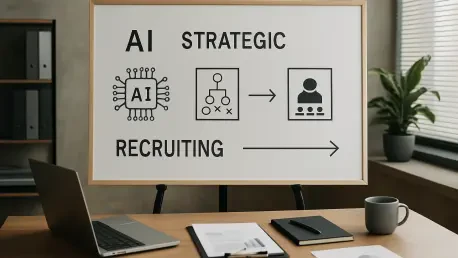

The hidden cost of a misaligned hire can ripple through an organization, derailing projects and draining momentum, yet many businesses continue to rely on hiring practices that are fundamentally broken. The traditional approach—sifting through mountains of resumes, relying on keyword-matching, and navigating inherent human biases—is a slow, manual, and often inefficient process that fails to identify the true potential of candidates. This systemic flaw is not merely an inconvenience for human resources departments; it represents a significant, often overlooked, strategic barrier that can lead to costly “people problems” and stifle a company’s growth. The challenge lies in shifting the focus from simply filling a vacant position to strategically acquiring talent that will drive specific business outcomes. The integration of advanced artificial intelligence is now offering a powerful solution, transforming talent acquisition from a reactive administrative task into a proactive, data-driven, and surprisingly more human endeavor.
Redefining the Foundations of Talent Acquisition
The impetus for this transformation often comes from outside the traditional HR sphere, as exemplified by the philosophy of Carol Xie, founder of the AI recruiting company Brix. With a background in finance and consulting, Xie approached the challenge of hiring not as a personnel issue but as a critical business variable, recognizing that many corporate failures stem directly from poorly constructed teams. From this vantage point, the conventional hiring process appeared outdated and inefficient, heavily reliant on the resume as a primary data source—a document that often fails to capture a candidate’s true capabilities or potential. This over-reliance on static resumes, combined with slow, manual screening processes and unconscious bias, frequently results in misinformed hiring decisions. Such mismatches are not only expensive in terms of salary and recruitment costs but also carry a significant opportunity cost, hindering a company’s ability to innovate and maintain momentum in a competitive market. This critique identifies the root problem: a process that prioritizes credentials over accomplishments.
The solution proposed is a fundamental strategic pivot toward an outcome-driven approach to talent acquisition. This methodology inverts the traditional hiring model. Instead of starting with a vague job description and a list of required skills, the process begins by clearly defining what a new hire is expected to accomplish for the business within a specific timeframe. For example, rather than seeking a “marketing manager,” a company defines the goal as needing an individual who can “increase lead generation by 30% in the next two quarters.” By establishing a clear, measurable business outcome as the primary criterion, the entire search is reoriented. From this defined objective, a company can work backward to identify the specific competencies, experiences, and proven accomplishments that would make a candidate successful in that role. This strategic foundation, which is central to platforms like Brix, moves beyond simple keyword matching and forces a deeper, more thoughtful consideration of a role’s true purpose and its direct impact on the organization’s success.
The Synergy of Human Expertise and AI Augmentation
Artificial intelligence serves as the engine that makes this outcome-driven model scalable and effective, acting as a powerful tool to augment, not replace, human recruiters and hiring managers. Unlike many automated systems that are built solely to increase the speed of hiring, this new generation of contextual AI is engineered to optimize for “match quality.” The technology assists in the initial, crucial step of defining a role’s strategic purpose and its key performance indicators. Once the desired outcomes are established, the AI can process vast amounts of contextual information from a candidate’s professional history, surfacing individuals based on verifiable evidence of their past accomplishments. This is a significant leap beyond scanning resumes for keywords; it involves identifying patterns of success and tangible results that align with the new role’s objectives, providing a more holistic and accurate assessment of a candidate’s potential to deliver value. This allows for a faster, fairer, and more precise initial screening process.
This human-AI partnership ultimately enhances the strategic and personal aspects of recruiting by freeing human stakeholders from administrative burdens. While the AI excels at processing data at a scale impossible for any human team—identifying top-tier candidates and reducing bias in the initial screening—the final, nuanced hiring decision remains a distinctly human one. With a pre-vetted shortlist of candidates who have demonstrated the ability to achieve relevant outcomes, recruiters and hiring managers can dedicate their time and energy to more valuable activities: building relationships, assessing cultural fit, and conducting in-depth, strategic interviews. The measurable success of this integrated approach is significant, leading to shorter hiring cycles, reduced fatigue and burnout for hiring teams, and, most importantly, new employees who are better aligned with the company’s goals from day one. This synergy ensures technology promotes and enhances vital human judgment, leading to more strategic team-building.
Forging a New Era of Talent Strategy
The adoption of this strategic, AI-augmented approach to recruiting marked a significant evolution in how organizations viewed human capital. It represented a deliberate shift away from the transactional nature of filling vacant roles toward the more profound goal of architecting high-impact, cohesive teams. The core insight was that technology, when designed with the right philosophy, could expand opportunities rather than narrow them. By focusing on verifiable accomplishments over traditional credentials, this model created a more equitable and meritocratic landscape where a candidate’s proven ability to deliver results became the primary currency. This process ultimately elevated the role of human judgment, as recruiters were empowered with better data to make more informed, strategic decisions. The result was a future of work where talent acquisition became a central pillar of business strategy, fostering a more dynamic and effective workforce.