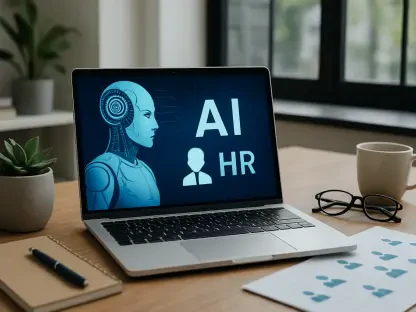

Long regarded as steadfast pillars of tradition, higher education institutions are now navigating a profound operational evolution, transforming from conventional centers of learning into multifaceted enterprises where the principles of modern business—efficiency, employee well-being, and talent retention—are becoming mission-critical. To thrive in a competitive landscape, universities are strategically embracing smart technology not merely as an academic tool, but as a catalyst for revitalizing their own workplaces. This strategic pivot involves optimizing both physical and digital environments to create a more supportive, productive, and engaging atmosphere for faculty and administrative staff. By adopting a dynamic, employee-centric model that borrows from corporate best practices while adapting them to the unique cadence of academia, these institutions are fortifying their ability to attract and retain the brilliant minds essential to their core educational mission.
The New Digital Campus a Human-Centered Approach
Redefining the Academic Work Environment
The most impactful technological transformations in higher education are anchored in a human-centered philosophy, prioritizing people over platforms. Rather than pursuing innovation for its own sake, leading institutions are strategically deploying digital tools to address specific and persistent pain points experienced by faculty and staff. These challenges, including overwhelming administrative burdens, chronic burnout, and the communication barriers created by departmental silos, have long hampered productivity and morale. The objective is to cultivate a seamless, supportive, and adaptive work ecosystem that directly counters these issues. This trend gained significant momentum during the recent global shift toward remote and hybrid work, which solidified the necessity for technologies capable of supporting distributed teams and promoting a healthier work-life balance. The ultimate goal is a cultural shift away from rigid, hierarchical structures toward a more fluid and responsive environment where technology serves as an enabler of well-being and focused, high-value work.
This evolution is fundamentally about creating a cohesive and responsive work environment where every element, from software interfaces to the physical layout of an office, is designed with the end-user in mind. A key component of this approach is the establishment of continuous feedback loops, such as regular employee surveys and open forums, which empower staff to voice their needs and shape the technological landscape they inhabit. This participatory model ensures that solutions are not imposed from the top down but are co-created to solve real-world problems. By doing so, universities can foster a powerful sense of ownership and engagement among their employees. This move beyond simple efficiency metrics toward a holistic focus on the employee experience is proving critical for retaining top academic and administrative talent in a post-pandemic era where flexibility, support, and purpose are more valued than ever. The result is a more resilient and loyal workforce, better equipped to advance the institution’s mission.
The Tools of Transformation
At the forefront of this digital renaissance are unified communication and cloud-based platforms, which have rapidly become the connective tissue of the modern campus. Tools like Microsoft Teams and Zoom, when deeply integrated with other institutional systems, have proven instrumental in dissolving the communication barriers that traditionally existed across sprawling university grounds and between disparate departments. This digital connectivity empowers faculty and staff to collaborate on research, participate in committee meetings, and access essential resources seamlessly, regardless of their physical location. By removing the friction inherent in conventional, office-centric workflows, these platforms facilitate a more agile and collaborative culture. This newfound flexibility not only supports hybrid work models but also fosters a more inclusive environment where contributions are not limited by physical presence, ultimately leading to more dynamic and efficient operations across the entire institution.
Beyond communication, the integration of Artificial Intelligence (AI) and automation is profoundly reshaping daily operations and unlocking significant productivity gains. AI-driven systems are increasingly being deployed to manage routine, time-consuming administrative duties, such as coordinating complex schedules, processing paperwork, and even providing assistance with grading preliminary assignments. This automation liberates faculty and staff from mundane tasks, allowing them to redirect their expertise and energy toward higher-value activities central to the academic mission, including innovative research, immersive teaching, and meaningful student mentorship. Expert analyses suggest that the implementation of AI-assisted workload management tools can boost productivity by as much as 25%. Simultaneously, the physical workspace is undergoing its own reinvention with the advent of “smart buildings.” Outfitted with Internet of Things (IoT) sensors, these facilities can monitor occupancy, light levels, and temperature in real time, automatically adjusting environmental controls to optimize comfort and energy efficiency. This level of personalization and automation provides employees with a greater sense of agency and well-being, directly countering the often impersonal nature of traditional academic buildings.
Overcoming Barriers to a Smarter Workplace
Implementation and Adoption Challenges
Despite the clear benefits, the path to a technologically optimized academic workplace is paved with significant challenges that demand strategic navigation. A primary and persistent obstacle is budget constraints, an issue particularly acute for public universities where funding is often precarious and tied more closely to enrollment figures than to infrastructure modernization. Institutional leaders are therefore tasked with the difficult responsibility of justifying substantial upfront capital expenditures for new technologies. To secure buy-in, they must articulate a compelling case for the long-term return on investment, demonstrating how these tools will translate into tangible benefits like improved employee retention, reduced operational costs, and enhanced overall efficiency. This often requires a forward-thinking financial model that quantifies the high cost of employee turnover—estimated to be around $50,000 per employee in academia—and positions technology as a strategic investment in human capital.
Equally challenging is the human side of the transition, which encompasses user training and adoption. The diverse demographics of a university workforce mean that digital literacy and comfort with new technologies can vary widely among employees. Overcoming potential resistance to change requires a far more nuanced approach than simply deploying new software. Success hinges on the development of comprehensive and ongoing training programs, including hands-on workshops, accessible one-on-one support, and intuitive digital resources. Furthermore, the increasing interconnectedness of digital systems magnifies concerns around data privacy and cybersecurity. As custodians of vast amounts of sensitive student, faculty, and research data, universities become prime targets for cyberattacks. Consequently, any workplace optimization strategy must be built upon a robust and unbreachable foundation of cybersecurity measures to protect against data breaches, safeguard institutional integrity, and maintain the trust of the entire academic community.
Proving the Value and Looking Ahead
The most successful workplace transformations remained grounded in the principle that technology must ultimately serve people. Initiatives that prioritized empathy and inclusivity in their design consistently yielded the most positive results. By embedding accessibility features directly into software and fostering a culture of continuous dialogue through town halls and feedback surveys, institutions ensured that technological solutions were tailored to the genuine needs of their diverse workforce. This human-centered approach was validated by real-world outcomes. For instance, Stanford University leveraged AI-powered analytics to optimize resource allocation, which led to a reported 15% increase in employee satisfaction scores. Meanwhile, the University of Michigan’s successful implementation of a hybrid work model, supported by flexible scheduling tools, was credited with reducing employee stress and enhancing cross-departmental collaboration. These examples illustrated that meaningful improvements were achievable and could be scaled to fit different institutional contexts.
Looking back at this period of intense innovation, it became clear that emerging technologies positioned universities for even greater advancements. Virtual and augmented reality (VR/AR) held promise for creating immersive training modules and simplifying campus navigation, while the evolution of AI pointed toward predictive analytics capable of proactively managing workloads to prevent employee burnout. Sustainability also became an integral component of workplace design, with institutions like Yale integrating green technologies that reduced their carbon footprint while promoting employee wellness. To validate these forward-thinking investments, universities adopted more holistic metrics for success. Beyond traditional financial KPIs, they tracked employee net promoter scores (eNPS), retention rates, and engagement survey data to paint a complete picture of workplace health. The synthesis of advanced technology and human-centered design ultimately positioned the higher education sector to be more resilient, dynamic, and supportive, ready to meet the challenges of the future.