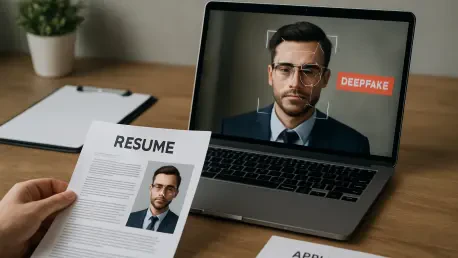

The flickering digital shadow cast across a candidate’s cheek during a high-stakes interview was the first sign that the person on the screen was not actually there. During this virtual encounter, a recruiter became suspicious of the applicant’s uncanny perfection and requested a simple “three-finger test,” asking the individual to hold their hand in front of their face. As the fingers moved across the frame, the real-time AI rendering stuttered, revealing a distorted, glitchy mess where a human features should have been.
This viral incident serves as a stark warning for modern talent acquisition teams that the barrier between authentic human interaction and synthetic deception has effectively dissolved. While the glitch provided a momentary victory for the hiring manager, it highlighted a profound vulnerability in the remote workforce pipeline. The era where a high-definition video call guaranteed identity is over, replaced by a sophisticated landscape of digital impersonation.
The Viral Glitch That Exposed the Modern Recruiter’s Nightmare
The three-finger test became an overnight sensation because it tapped into a collective anxiety regarding the integrity of the digital workspace. Fraudulent professionals are now using real-time generative models to overlay the likeness of a qualified expert onto their own faces, allowing them to speak with borrowed authority. This tactic is specifically designed to bypass initial screenings and secure lucrative roles that the “pilot” of the deepfake is unqualified to perform.
However, the efficacy of simple physical obstructions is a dwindling asset for HR departments. Developers are already refining AI models to handle occlusions and complex lighting with greater precision, meaning the visual “tells” of 2026 will likely vanish by 2027. Relying on a candidate’s inability to wave their hand across a camera is a temporary stopgap rather than a sustainable security strategy for global enterprises.
The Rapid Evolution of Fraud in the Digital Workspace
As remote-first culture cements itself as the standard for international business, the recruitment pipeline has become an attractive surface for cybercrime. Scammers are no longer content with mere resume padding; they are engineering entire synthetic personas to infiltrate secure corporate networks. This evolution represents a shift from simple dishonesty to a structured threat against organizational data security and intellectual property.
The danger extends beyond the individual hire to the very foundation of corporate trust. When a deepfake successfully navigates the onboarding process, the company essentially hands the keys to its internal systems to an unverified actor. This transformation of the hiring process into a primary target for sophisticated fraud necessitates a total overhaul of how identity is established in a virtual environment.
Navigating the Risks and Rewards of AI-Generated Sameness
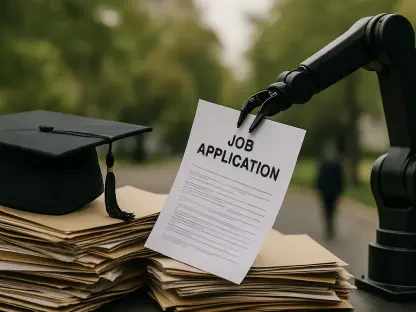
Recruiters are currently trapped in a paradox where the same tools meant to streamline their work are facilitating massive deception. While automation helps manage thousands of applications, candidates are utilizing generative AI to produce “perfect” responses that mirror the exact keywords of a job description. This creates a haze of AI-generated sameness, where every applicant appears equally qualified on paper, providing the perfect cover for deepfake actors to operate.
This environment obscures the human element that traditional interviews were designed to capture. When technical proficiency can be pre-programmed or rendered in real-time, the standard verbal exchange loses its predictive value. Moving toward a proactive hiring stance requires acknowledging that a candidate’s ability to “look the part” and “say the right things” is no longer a reliable indicator of their actual presence or capability.
Expert Perspectives on the Impending Authentication Arms Race
Cybersecurity specialists and veteran recruitment leaders agree that the days of passive interviewing have officially ended. Experts emphasize that treating a standard video call as a secure point of verification is a critical liability. The consensus among technical consultants suggests that the tools used by fraudulent actors are evolving at a pace that far exceeds the traditional HR department’s ability to adapt or detect subtle technical anomalies.
Observations from the field indicate that the most resilient organizations are those that treat candidate verification as a collaborative effort between human resources and IT security. These teams are beginning to look past the visual image, focusing instead on network metadata and behavioral consistency. Industry leaders argue that the authentication process must now be treated with the same rigor as a high-level security clearance check.
Building a Multi-Layered Defense Against Synthetic Identity Fraud
To effectively safeguard the talent pipeline, companies must integrate specialized fraud-detection software that analyzes resume metadata and video authenticity from the moment of first contact. HR teams are encouraged to move away from scripted interviews in favor of unscripted, scenario-based tasks. These assessments force candidates to demonstrate critical thinking in real-time, a feat that remains difficult for current AI models to maintain without showing significant lag or logic errors.
Successful organizations established a culture of continuous education, training hiring managers to identify the subtle physiological discrepancies that synthetic media often misses. These include unnatural eye movement patterns or a lack of synchronicity between audio and micro-expressions. By combining these human insights with multi-signal digital safeguards, enterprises ensured that their final selection was based on authentic talent rather than a well-rendered illusion.