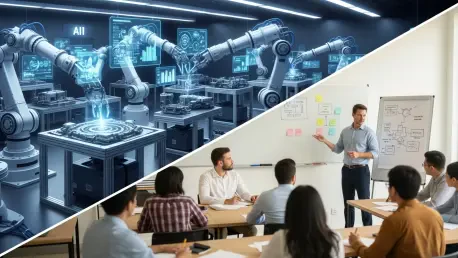

The modern corporate environment has undergone a radical transformation where sophisticated algorithmic systems are now the primary drivers of daily operations across nearly every major sector. While the integration of these advanced technologies promised a new era of unprecedented efficiency, many organizations have inadvertently created a structural deficit by failing to match their capital investments in software with equivalent investments in their human capital. Research indicates a stark consensus between leadership and the workforce regarding the current “sink or swim” mentality that governs artificial intelligence implementation. This approach forces employees to navigate complex neural networks and generative models without formal instruction, leading to a fragmented work culture where productivity gains are often stifled by a lack of fundamental comprehension. Consequently, the disconnect between available technology and worker proficiency has become one of the most significant challenges for business leaders today.
The Velocity of Implementation: Rapid Integration and Institutional Lag
The speed at which American enterprises have incorporated automated intelligence into their core workflows has reached an inflection point where adoption now outpaces organizational readiness by a significant margin. Within the current landscape, the proportion of companies utilizing these sophisticated tools has surged from 66 percent to nearly 80 percent, reflecting a desperate race to maintain competitive parity in an increasingly digitized global market. Large-scale employers and white-collar industries lead this charge, with nearly 90 percent of hiring managers reporting a heightened reliance on these systems compared to the previous operational cycle. However, this aggressive expansion often occurs without a corresponding update to internal training manuals or safety protocols, leaving the workforce to interpret complex outputs without a standardized framework. This trend suggests that while the hardware and software are ready for the demands of 2026, the administrative structures required to manage them remain outdated.
A secondary but equally concerning aspect of this rapid deployment is the absence of practical governance at the departmental level, which often leaves individual contributors to fend for themselves. While many executive boards have drafted high-level policy statements regarding the ethical use of artificial intelligence, only about 36 percent of organizations have provided employees with a definitive list of approved tools or specific use cases. This lack of direction has led to a widespread reliance on unvetted third-party software, as workers attempt to meet rising performance expectations by using any digital resource they can find online. Such decentralized technology adoption introduces significant risks to data privacy and intellectual property, yet managers continue to prioritize the immediate output over the long-term stability that comes from structured training. Without a centralized repository of vetted resources and clear operational boundaries, the workforce remains caught between the pressure to perform and the risk of utilizing insecure technologies.
Cultivating Competence: Transforming Optimism Into Tangible Skills
Despite the evident lack of institutional support, the general sentiment among the labor force remains remarkably optimistic, with many professionals viewing these technological shifts as opportunities for personal advancement. Approximately 75 percent of current job seekers express a strong belief that automated systems can help bridge existing gaps in their technical knowledge, provided they receive the necessary instruction to harness these tools effectively. Hiring managers frequently echo this sentiment, acknowledging that the resources required to facilitate comprehensive learning programs are often already available within the company’s budget. The primary obstacle is not a lack of funding or interest, but rather a persistent deficiency in strategic follow-through and the prioritization of short-term quarterly goals over sustainable workforce development. This gap suggests that employees are ready and willing to evolve alongside their digital counterparts, yet they are currently being held back by a lack of formalized pathways for skill acquisition.
To effectively address this imbalance, organizations must transition toward employer-led initiatives that focus specifically on the nuances of human-machine collaboration rather than simple tool access. Modernized apprenticeship models and dedicated on-the-job training programs can provide the hands-on experience necessary for workers to master skills that algorithms cannot easily replicate, such as critical decision-making and empathetic communication. These initiatives should emphasize the practical application of technology within the context of specific roles, moving away from generic webinars toward integrated learning environments where feedback is immediate. By fostering an atmosphere of continuous education, companies can ensure that their staff members are not merely passive users of technology but active participants in the optimization of digital workflows. This approach not only enhances individual performance but also builds a more resilient organizational structure that can adapt to the inevitable technological shifts projected from 2026 through the end of the decade.
Strategic Evolution: Integrating Human Expertise With Digital Power
Looking back at the initial phases of this transition, it became evident that the early focus on pure technological acquisition served as a necessary but ultimately incomplete strategy for long-term growth. Successful enterprises recognized that for these tools to become genuine drivers of productivity rather than sources of workplace frustration, the human element required a fundamental repositioning within the corporate hierarchy. Organizations eventually moved toward a model where proficiency in automated systems was treated as a core competency, similar to literacy or financial acumen, rather than an optional skill set for technical specialists. This shift involved the implementation of standardized certification programs and the creation of roles specifically designed to manage the interface between human intuition and algorithmic logic. By investing in the workforce, leaders ensured that the technological infrastructure they built remained stable and capable of delivering its promised value across all levels of the business.
Moving forward into the next operational cycle, companies must prioritize the establishment of a robust internal education ecosystem that anticipates the evolving needs of an AI-driven economy. Actionable steps include the creation of specialized “digital fluency” labs where employees can experiment with new models in a safe, sandbox environment before full-scale deployment occurs. Furthermore, leadership teams should integrate training outcomes into performance reviews, signaling that the mastery of new technological tools is just as vital as meeting traditional production targets. For the period spanning from 2026 to 2028, the focus should shift from mere adoption toward the deep integration of human-centric design in every automated process. By developing a comprehensive roadmap that balances technological advancement with personalized professional growth, organizations will be better positioned to navigate the complexities of the modern labor market while maintaining a motivated and highly capable workforce.