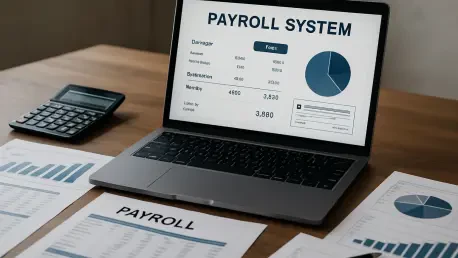

The Department of Public Services in Washington, D.C., currently stands at a critical juncture as it prepares to transition its entire workforce to a modernized digital infrastructure starting this coming Monday. For decades, the administrative backbone of the federal government has relied on fragmented legacy systems that frequently struggle to process complex salary structures or maintain real-time accuracy across diverse agencies. This upcoming pilot launch is not merely a software update; it represents an ambitious attempt to synchronize vast government databases with sophisticated payroll algorithms designed to eliminate human error and bureaucratic bottlenecks. While the official objective is to provide a more reliable financial experience for thousands of public servants, the scale of the overhaul has generated a palpable sense of unease within the halls of federal offices. Many workers are watching the calendar with a mix of hope and apprehension, wondering if the promised efficiency will materialize or if they are about to experience a period of unprecedented administrative instability that could impact their ability to meet personal financial obligations in an increasingly expensive economic environment.
The Push for Modernization
Replacing Outdated Infrastructure
The current state of federal payroll management is characterized by a patchwork of aging technologies that have reached their functional limits, causing persistent issues for both administrators and employees. For several years, the Department of Public Services has documented an increasing number of salary discrepancies, where specialized pay scales and overtime calculations are often misapplied or delayed by weeks. The new platform, which serves as the centerpiece of this modernization effort, utilizes advanced cloud-based software to integrate with various departmental databases, ensuring that data flows seamlessly between human resources and financial disbursement offices. By automating these once-manual verification processes, the administration intends to create a transparent environment where every transaction is traceable and every calculation is verified against the latest federal regulations. This shift is viewed as an essential step toward professionalizing government operations and moving away from the high-maintenance costs associated with keeping obsolete hardware and software functional in a digital-first era.
Transitioning to this new framework is expected to significantly reduce the time required to resolve payroll inquiries, which currently languish in a backlog of manual reviews and paper-based tracking systems. Officials argue that the legacy infrastructure is not only prone to error but also acts as a barrier to implementing modern employee benefits and flexible work arrangements that require dynamic pay adjustments. The integration of modern software allows for real-time reporting and analytics, giving leadership a clearer view of budgetary allocations while providing workers with a more intuitive interface to track their earnings. By prioritizing this digital transformation from 2026 to 2028, the government aims to establish a standard of excellence that matches the private sector’s capabilities, ultimately reducing the long-term tax burden caused by inefficient administrative overhead. This technological leap is framed as a necessary evolution for a government that must remain competitive and responsive in a rapidly changing labor market, ensuring that the public sector can attract and retain top-tier talent.
Employee Fears of Financial Instability
Despite the logical necessity of upgrading these systems, a growing number of federal employees feel that the human cost of this transition has been dangerously underestimated by high-level planners. Jane Doe, a veteran public servant who has become a prominent voice for her colleagues, argues that the workforce is being treated as collateral damage in a race to implement technology without sufficient safeguards. The primary concern is not the software itself, but the potential for systemic failures during the initial pilot phase that could lead to a massive accumulation of unpaid wages or incorrect deductions. For employees who manage tight household budgets, the prospect of waiting weeks for a payroll correction is not just an inconvenience; it is a financial crisis that threatens their ability to pay for housing, childcare, and basic necessities. These workers point to previous government tech rollouts as cautionary tales where ambitious plans were undermined by technical glitches that left thousands of families in financial limbo.
The anxiety radiating through the department is further intensified by the lack of a clear, publicized “Plan B” should the system encounter a critical failure during its first live run. Employees have expressed deep skepticism regarding the administration’s ability to handle a sudden surge in support tickets if the software fails to recognize specific pay grades or regional adjustments. This fear is rooted in the reality that many frontline workers do not have the personal savings to act as a buffer against institutional incompetence, making the accuracy of their bi-weekly paycheck a matter of survival. As Doe and others advocate for more rigorous testing and a slower rollout, the tension between the administration’s timeline and the workforce’s need for security continues to mount. The sentiment among the rank-and-file is that while innovation is inevitable and even desirable, it should never come at the expense of the financial stability of the very people who keep the government functioning on a daily basis, especially when inflation continues to erode purchasing power.
Critical Barriers to Success
Issues with Timing and Transparency
One of the most significant obstacles to a smooth transition has been the perceived lack of transparency regarding the technical specifics and the contingency measures in place for the upcoming Monday launch. Many staff members report that they have received only surface-level briefings that fail to address the complexities of individual agency needs or the specific steps required to report a discrepancy. This communication gap has fostered a culture of uncertainty, where rumors of potential system crashes and data loss circulate more frequently than official updates. The absence of a detailed roadmap for troubleshooting has left many feeling that the administration is prioritizing the optics of modernization over the practicalities of implementation. Without a clear understanding of how the new software will interface with their specific roles, employees find it difficult to prepare for the change, leading to a sense of powerlessness that is actively damaging morale across the department.
Compounding the transparency issue is the controversial decision to launch the pilot during the late summer months, a period when several federal agencies are managing peak seasonal workloads and staffing shortages due to vacations. Critics have labeled this timing a strategic error, noting that introducing a high-stakes, unproven system during a high-stress period creates a “perfect storm” for administrative collapse. Labor representatives argue that the department should have waited for a more stable period when supervisors and IT support staff would be more readily available to address the inevitable learning curve. By moving forward with the Monday deadline, the administration is seen as ignoring the operational realities of its workforce, potentially setting the stage for a rollout that is defined by frustration rather than progress. The intersection of a new, complex interface and a strained workforce creates a volatile environment where even minor technical errors could snowball into a departmental crisis that takes months to untangle.
The Administration’s Commitment to Support
In the face of mounting criticism, federal officials have remained steadfast in their commitment to the pilot, maintaining that the long-term advantages of the system far outweigh the temporary hurdles of the transition. A spokesperson for the Department of Public Services recently emphasized that the modernization project is a vital component of a broader strategy to enhance employee engagement by providing a more precise and user-friendly experience. To support this goal, the department has allocated significant resources toward training programs, including interactive webinars and digital manuals designed to guide staff through the new interface. Officials contend that these resources, combined with a dedicated help desk that will be operational around the clock during the pilot phase, will provide a sufficient safety net for any issues that arise. They view the Monday launch as an opportunity to gather real-world data that will be used to fine-tune the system before a department-wide implementation.
The administration’s stance is built on the belief that a successful pilot will ultimately prove the critics wrong by demonstrating a level of accuracy and speed that the legacy systems could never achieve. By streamlining the payroll process, the government hopes to free up administrative personnel to focus on more complex human resource tasks, thereby improving the overall efficiency of the Department of Public Services. Leadership has promised that any financial discrepancies caused by the new system will be prioritized for immediate resolution, with a specialized task force standing by to issue manual payments if necessary. This proactive approach is intended to reassure the workforce that their livelihoods are not being gambled away, but rather being secured through the adoption of superior technology. For the administration, the success of this pilot is a matter of institutional credibility, representing a shift toward a more agile and tech-savvy government that is capable of managing the needs of its employees with the same precision found in the private sector.
Expert Analysis and Advocacy
The Importance of the Human Element
Labor relations experts have closely monitored the situation, offering a more nuanced perspective on the risks associated with large-scale digital transformations in the public sector. Dr. Emma Thompson, a specialist in organizational behavior, notes that the success of such projects is often determined more by the “human element” than by the quality of the underlying code. According to Thompson, when organizations fail to incorporate robust feedback mechanisms or ignore the psychological impact of sudden change, they risk creating a “trust deficit” that can take years to repair. Drawing on past failures in both the public and private sectors, she argues that transparency is the most effective tool for mitigating the anxiety that naturally accompanies technological shifts. If the government fails to demonstrate that it values employee input and security as much as it values technical efficiency, the resulting friction could lead to decreased productivity and a higher turnover rate among experienced federal staff.
Furthermore, experts suggest that a truly successful transition requires a collaborative approach where employees are treated as partners in innovation rather than mere end-users of a new product. This involves not only providing training but also creating platforms where workers can report bugs and suggest improvements without fear of administrative pushback. The current top-down implementation strategy employed by the Department of Public Services may be missing this critical component, potentially leading to a system that is technically sound but practically flawed in the eyes of those who use it daily. Dr. Thompson emphasizes that the government has a unique responsibility to set a high standard for labor relations, especially during periods of upheaval. By prioritizing the human side of the equation, the administration could transform a potentially volatile situation into a model for future public-sector reforms, ensuring that technology serves to empower the workforce rather than undermining the stability of the people who represent the backbone of government services.
Grassroots Organizing and Future Accountability
The perceived lack of adequate institutional support has catalyzed a grassroots movement among federal employees, who are now organizing to demand a higher level of accountability from their leadership. What began as individual expressions of concern has evolved into a structured internal network dedicated to monitoring the pilot’s progress and documenting every error that occurs. This collective effort, spearheaded by figures like Jane Doe, seeks to ensure that the administration remains answerable for any financial hardship caused by the new system. By holding regular meetings and creating shared databases to track payroll issues, the workforce is building a “united front” that can speak with a single, powerful voice to congressional committees and labor boards. This shift toward self-advocacy reflects a broader trend within the public sector where employees are increasingly unwilling to accept technological change at any cost, insisting instead on a transition that respects their rights and financial security.
The path forward for the Department of Public Services will likely be defined by how well it responds to this organized advocacy in the coming weeks. To ensure a successful long-term implementation, the administration should consider establishing a permanent employee-led oversight committee that has a direct line of communication with the technical teams managing the payroll software. This would provide a formal mechanism for feedback and ensure that the “human element” is integrated into every stage of the system’s evolution. Additionally, leadership should implement a “no-fault” policy for financial discrepancies arising during the transition, guaranteeing that no employee will face penalties for late payments or administrative errors beyond their control. By taking these concrete steps toward transparency and cooperation, the government can bridge the gap between its technological ambitions and the practical needs of its workforce. The Monday pilot launch serves as a high-stakes test of leadership, where the ultimate measure of success will not be the absence of glitches, but the empathy and efficiency with which those glitches are resolved for the people affected.