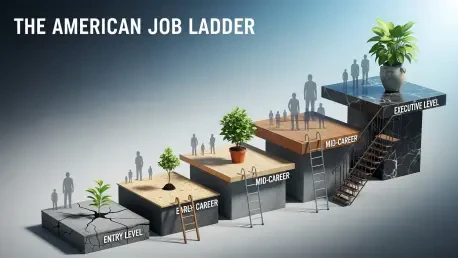

Young professionals entering the workforce today encounter a landscape that feels increasingly disconnected from the historical promises of meritocracy and steady career advancement. While many analysts point to the rapid integration of generative artificial intelligence or temporary post-pandemic fluctuations as the primary culprits for this difficulty, the reality is far more systemic and deeply rooted in decades of economic cooling. This sense of stasis, where the traditional job ladder appears to have lost its rungs, has created a workforce where individuals are neither being hired into new roles nor transitioning out of old ones at the rates seen in previous generations. This lack of fluidity is not merely a temporary glitch but the culmination of a structural shift that began long before the current decade. For the newest entrants to the labor market, the experience is often described as a form of economic arrested development where financial milestones remain perpetually out of reach regardless of their specific field or academic pedigree.
Structural Realities of the Modern Workforce
The Disintegration of Vertical Mobility
The erosion of the American career path is clearly documented in recent findings from the National Bureau of Economic Research, which indicate a significant decline in labor market dynamism. Workers today are roughly fifty percent less likely to receive a high-paying job offer from an outside firm compared to their counterparts who entered the workforce during the mid-1980s. This statistic is particularly alarming because the most substantial salary increases have historically been achieved through external movement rather than internal promotions. When employees remain trapped in their current roles due to a lack of competitive alternatives, their bargaining power evaporates, leading to the long-term wage stagnation that has affected both Millennials and the rising Generation Z. This trend suggests that the internal structures of corporations have become more rigid, prioritizing cost-saving stability over the talent acquisition wars that once fueled rapid professional growth and middle-class expansion across the country.
Long-Term Economic Consequences and Next Steps
Addressing the historical lack of job market fluidity required a fundamental shift in how both public policy and private recruitment strategies prioritize labor mobility and worker development. The historical data proved that a healthy economy depends on the constant circulation of talent, yet the recent decades prioritized retention and overhead reduction to the detriment of the broader economic ladder. To revitalize this broken system, organizations moved toward more transparent hiring practices and decoupled benefits from specific employers to allow for easier transitions between companies. Policy changes that incentivized competitive hiring rather than non-compete agreements became essential for restoring the leverage that individual contributors once held. By refocusing on these structural adjustments, the economy began to move away from the stagnant vibes of the early 2020s toward a more dynamic environment where career progression was once again a predictable outcome of skill acquisition and professional risk-taking for the next generation.